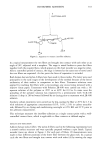
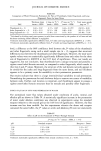
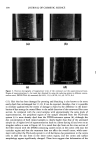
METHOD FOR PERMANENT HAIR STRAIGHTENING 381 Reduction process. Reduction was carried out by using an aqueous TGA solution contain- ing appropriate amounts of DTDG, 1.05% potassium hydroxide, 0.5% EDTA, and MEA used as a pH-adjusting agent at either 9.20 or 9.30. The concentration of TGA varied from 3% to 9%, and that of DTDG was 0% to 4%. The concentration ratio of DTDG to TGA was within the range of 0 to 0.60. A small tress of hairs with a length of about 17 cm (0.5 g) was treated in the reducing solution (30 ml) at 45øC for 15 min. The treated fibers were washed with distilled water at 35 øC for 1 min, then pressed with a towel to remove excess water, and finally dried by using a hair dryer at about 100øC for 2 min. The water content of the treated hairs at this stage was 14 + 1% by weight. The reduced fibers thus obtained were subjected to hot iron treatment. Heat treatment process. The reduced hairs were continuously pressed for 3 sec along the fibers by using a special iron with a pair of heating plates at 180øC unless otherwise specified. The heating plate was rectangular, 42 mm in width, 90 mm in length, and 1 mm in thickness. Pressing with an iron along a tress of the reduced fibers was repeated three times before subjecting the hair to oxidation. Oxidation process. The heat-treated hairs were immersed at 35øC for 15 min in a 7% (w/v) solution of sodium bromate (30 ml) adjusted to pH 8.0 with phosphate buffer, rinsed with water at 35øC for 1 min, blotted with a towel to remove excess water, and dried at about 100øC for 2 min as described above. PREPARATION OF OPTICAL MICROSCOPE SAMPLES Untreated and cured hairs were dyed in a bath at 45øC for 15 min with a 0.01% (w/w) aqueous solution of acid black 1 (C.I.20470) containing 8% benzyl alcohol, 16% etha- nol, and 6% glycolic acid (70% aqueous solution), washed with water at 45øC for 2 min, and then air-dried. The dyed hairs thus obtained were subjected to cross-sectioning by a glass knife to prepare optical microscope samples about 18 t•m in thickness. EVALUATION OF HAIR SUPERCONTRACTION The extent of supercontraction was determined by measuring the length of the straight hair in a microcapillary before reduction and after oxidation treatments. The extent of supercontraction, L c was calculated as the ratio of the percentage of the length change, (L o - L) to the initial dry length before reduction, Lo, as equation 1: L c = 100(L o - L)/L o (1) where L is the dry length after oxidation treatment. The value of Lc was a mean value of five specimens. EVALUATION OF HAIR STRAIGHTENING EFFICIENCY Kinky hair fibers were used for evaluation of hair straightening efficiency. According to the method of Wong et al. (4), the degree of hair straightening was determined visually by the appearance of the fiber retained in a straight conformation after immersion of the cured hair in water at 35øC for 5 min and then dried.

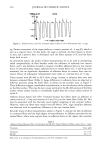
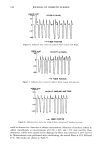
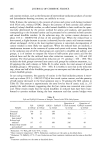
382 JOURNAL OF COSMETIC SCIENCE DETERMINATION OF AMINO ACID CONTENT The chemically modified and unmodified hairs (10 mg) were hydrolyzed with 6M HCI (2 ml) for 24 h at 110øC under a deaerated condition after repeating the three cycles of freezing, evacuating, and melting. The hydrolysates were diluted to 25 ml with 0.02 M HCI after removal of the acid by a rotary evaporator at room temperature. Usual amino acids including cystine (CyS) and cysteic acid (CySO3H) were analyzed by an automatic high-speed amino acid analyzer (Model L-8800, Hitachi). ESTIMATION OF THE tx-CRYSTALLITES IN HAIR High-pressure differential scanning calorimetry (PDSC) was applied to determine the amount of ot-crystallites in the hair (6,7). A Model 2920 differential scanning calorim- eter (TA Instruments) was used in this study. The instrument was calibrated using indium. The measurements were performed over a range of temperatures from around 20øC to 210øC at a heating rate of 20øC/min. An empty aluminum sample pan was used as reference. Exothermic or endothermic effects were represented by an increase or a decrease in the baseline position as well as a usual DSC practice in calorimetry. Endo- therms with a peak temperature of melting at a range of about 176 ø to 183øC were used to estimate the amount of ot-crystallites in hair. The enthalpy of melting was defined by the heat of absorption per gram of dry hair sample as J/g. PREPARATION OF PDSC SAMPLE The hair samples were cut to a fine powder to eliminate the effect of fiber orientation and also to maintain the sample in good contact with the sample pan. This procedure leads to a reduction of the temperature gradients within the sample at higher heating rates (8). The samples were dried under evacuated conditions at 100øC for 2 h over P205 and weighed. The dried samples were then stored and equilibrated in a desiccator adjusted to 65% RH at 20øC for 2 weeks and weighed. From the difference between the weights measured, the equilibrium water content of the hair, We, was determined. About 2 mg of the equilibrated sample was weighed in an aluminum pan. The dry weight of the DSC sample, wd, was calculated by equation 2: W d = Weq/(! + Wc) (2) where Weq is the weight of the DSC sample equilibrated and Wc is the equilibrium water content defined as grams water/grams dry sample. X-RAY DIFFRACTION X-ray diffraction traces were recorded with a Rigaku diffractometer (type D9-C), in- corporating a scintillation counter whose output is fed through a pulse-height analyzer to a chart recorder. Nickel-filtered copper radiation was used at 30 kV and 20 mA. The incident beam through a pinhole collimeter had an irradiated area of 2 mm 2 of the specimen, at approximately 18.5 cm from the x-ray source. The constancy of the radia- tion from this source was periodically checked throughout the work. The x-ray tests were carried out at 60% RH and at 20øC.
Purchased for the exclusive use of nofirst nolast (unknown)
From: SCC Media Library & Resource Center (library.scconline.org)