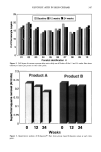
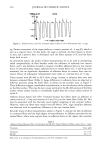
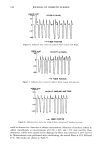
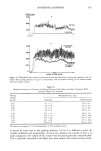
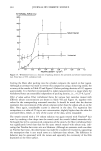
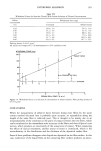
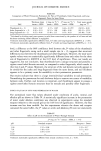
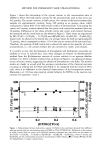
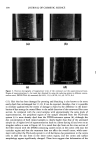
GLYCOLIC ACID IN SKIN CREAMS 345 RESULTS SUNBURN CELL FORMATION Histological evaluation of irradiated untreated skin sites showed the presence of SBCs in all but one subject (Table I). The number of SBCs was low and consistent with numbers published previously (10). In sites treated with test products for 6, 12, or 24 weeks, no SBCs were observed. STRATUM CORNEUM THICKNESS After six months of treatment with AHA products, the number of cell layers in the stratum corneum showed no significant change (Table II). Any trend in the data is in the direction of increased stratum corneum cell layers after six months of treatment with the AHA products (Figures 1, 2). D-SQUAME © EVALUATION D-Squame © samples provide an index of the looseness of corneocytes near the surface in readiness for desquamation. The greater the dryness the greater the number of squames that were removed. D-Squames were taken at baseline and at 12 and 24 weeks. The scale removed was quantified using an image analysis technique reported previously (9). There was a small reduction in readily removable squames after 12 and 24 weeks of treatment, with the effect somewhat greater for 8% glycolic acid (Figure 3). STRATUM CORNEUM BARRIER INTEGRITY There was no change in response to Trafuril challenge after 12 and 24 weeks of treatment with either product (Figure 4). Table I Sunburn Cells 24 Hours After One MED* Subject I.D. Baseline 6 Weeks 12 Weeks 24 Weeks 01 1.5 0 0 0 02 2.2 0 0 0 03 1.8 0 0 0 O4 3.2 0 0 0 O5 2.4 0 0 0 06 0.0 0 0 0 07 3.1 0 0 0 08 2.8 0 0 0 09 1.5 0 0 0 10 2.3 0 0 0 Mean 2.8 0 0 0 * Mean count per five high-power fields per subject.

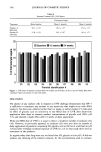
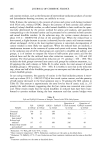
346 JOURNAL OF COSMETIC SCIENCE Table II Stratum Corneum (S.C.) Cell Layers Corneocyte layers Treatment Mean baseline Mean 3 months Mean 6 months Product A 16.5 ñ 1.65 16.9 ñ 1.37 17.0 ñ 1.15 (8% GA) Product B 15.8 + 1.93 16.1 + 1.97 16.4 * 1.71 (4% GA) 25 • 20 w,,.._ •15 o ,... 10 o o • 5 Baseline I 12 weeks 1 24 weeks .. 01 02 03 04 05 06 07 08 09 10 Panelist identification # Figure 1. Cell layers of stratum corneum after twice-daily use of Product A for 12 and 24 weeks. Bars show corneocyte layers per person at each time point. DISCUSSION The absence of any sunburn cells in response to UVR challenge demonstrates that SPF 4 is sufficient to counteract any increase in sun sensitivity that might occur with AHA products. No data were collected earlier than six weeks, as earlier studies (15) indicated no effect of glycolic acid on sensitivity to one MED dose of UVR after short-term application (four days) at cosmetic product concentrations of glycolic acid (10%, pH 3.5), and showed a slight effect after 12 weeks of daily application. With one MED dose of UVR it is usual to detect a moderate number of sunburn cells (10). However, as previously reported, no sunburn cells were seen after six months of daily application of products containing 8% glycolic acid or 8% lactic acid (both at pH 3.8) and after everyday incidental exposure to UVR (11,12). In that study there were no sunscreens in the products. As regards safety after long-term use, we found that 8% glycolic acid at pH 3.8 did not produce any thinning of the stratum corneum. At the concentrations used in cosmetic
Purchased for the exclusive use of nofirst nolast (unknown)
From: SCC Media Library & Resource Center (library.scconline.org)