j. Cosmet. sci., 54, 335-351 (July/August 2003) Optical properties of hair: Effect of treatments on luster as quantified by image analysis R. McMULLEN and J. JACHOWICZ, International Specialty Products, Wayne, NJ 07470. Accepted for publication August 19, 2002. Synopsis Image analysis has been employed to measure the luster of hair simulated by light reflected from a curved hair tress. Hair samples (up to four) were mounted side-by-side in a special sample holder in the form of a cylinder and illuminated by a uniform beam of white light. Digital images of hair tresses were captured with a high-resolution camera and were analyzed by scanning across highlighted and dark areas of the resultant image using image analysis software with developed macros. Plots, similar to goniophotometric scattering curves, were used to calculate luster values according to previously published work by Nickerson, Stamm, and Reich-Robbins. Both the Stamm and Reich-Robbins approaches were found to give similar results, while the Nickerson gloss parameter exhibited less sensitivity to hair modification with cosmetic ingredi- ents. The procedure was employed to assess the luster of natural white, light blonde, light brown, medium brown, and dark brown hair, and revealed an increase in luster indices in proportion to an increase in fiber pigmentation. Cosmetic oils such as phenyl trimethicone, amodimethicone, and castor oil were also found to increase the luster of hair as a result of the change in contrast between specular and diffuse reflection. Styling resins such as butyl ester of PVM/MA copolymer, vinyl caprolactam/PVP/dimethylaminoethyl methacrylate copolymer, and isobutylene/ethylmaleimide/hydroxyethylmaleimide copolymer were shown to increase hair gloss by a similar mechanism, as evidenced by calculated higher values of the Stamm and Reich-Robbins luster parameters. An effect of hair dulling by deposition of micronized ZnO at various concentrations, as well as by synthetic sebum, is also discussed. INTRODUCTION The attribute of hair luster has been of significant concern to the consumer and mar- keters for quite some time, especially recently because of the proliferation of reactive and damaging hair treatments. Luster is commonly defined as the ability of a given material to produce a bright reflection. A quantitative analysis of luster and comparison with theoretical models was carried out as recently as the seventies by Stammet al. (1,2). In the last twenty years there have been a number of studies published in this area that employed improved instrumentation. Stammet al. (1,2) employed a goniophotometer and multiple fibers to record the light distribution curves necessary to calculate luster parameters. This work was later expanded by Czepluch et al. (3), who constructed a computerized goniophotometer. Reich and Robbins (4) and Bustard and Smith (5), who also utilized a goniophotometer, employed single fibers to study the effects of sham- 335

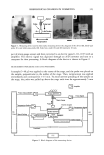
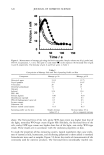
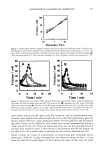
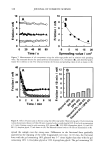
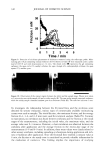
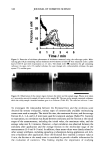
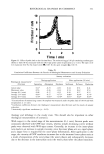
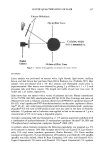
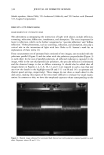
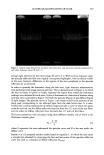
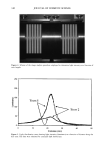
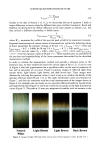
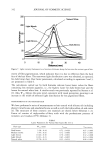
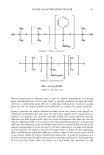
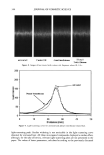
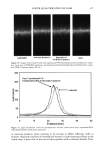
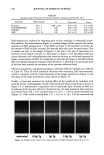
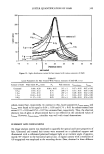
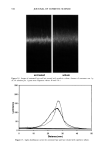
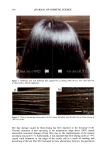
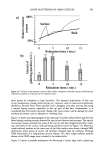
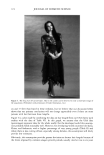
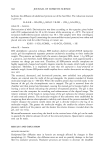
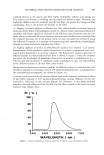
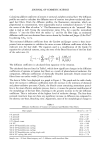
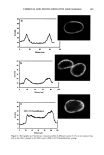
336 JOURNAL OF COSMETIC SCIENCE pooing and dyeing on the luster of hair. Maeda et al. (6) have presented luster measure- ments performed by using a color image processor, which analyzed the pattern of light reflected by a natural-hair wig on a model head. The data were obtained by scanning across highlighted and dark areas of the obtained image, and could be presented in a plot similar to a goniophotometric scattering curve. The authors reported good agreement between calculated luster and the rating of luster obtained by visual inspection of hair tresses. Recently, hair luster was measured using diffuse reflectance spectrophotometry in which the color difference parameter, AE, was used as an indicator of luster (7). The method of subjective shine evaluation is also commonly used and can provide a useful guidance for formulators. The results can be in good agreement with instrumental methods provided the experimental setup assures uniform orientation of hair samples and reproducible (from sample to sample) illumination conditions. In this paper we discuss the experimental details of luster measurements by employing image analysis for quantifying the light distributions of hair illuminated with white, collimated light. The results for various types of untreated hair, as well as for dark brown hair modified with polymers and oils, are discussed. The interpretation of the data is based on the character (shape) of the light-scattering curves, calculated luster parameters, and visual examination of the digital images of hair. EXPERIMENTAL METHODS The entire luster evaluation apparatus was housed in a wooden box coated with black Formica and having the dimensions of 2 ft in width, 21/2 ft in depth, and 3 ft in height. As shown in Figure 1, hair tresses were mounted on an anodized aluminum cylinder, 31/2 inches in diameter. A collimated halogen light source was placed 7l/2 inches above the digital camera, providing an incident angle of approximately 30 ø relative to the optical axis. Linear polarizers were placed in front of the light source and the camera. This allowed us to view all reflected light (specular and diffuse) when the polarizers were parallel and diffuse reflection when they were perpendicular. The camera, the polarizer, and the mounting cylinder were attached to aluminum posts that were mounted to an anodized optical peg board, which provided the underlying support for the instrument. An Olympus Camedia El0 digital camera with a resolution of 4 megapixels was em- ployed as the image collection device for all studies presented in this report. Image analysis was carried out using Sigma Scan Pro 5.0 (SPSS) software, which enabled us to obtain the light intensity (luminance) distributions along a given hair tress. The method was previously described by Maeda et al. (6). Based on this procedure we are able to plot the data in Excel 2000 (Microsoft) in the form of a two-dimensional graph, providing luminance as a function of distance along the hair tress. The data were further analyzed by integrating the area under the luminance curves in order to obtain the values of the luster parameters. All luster data represent an average of the results obtained on at least three tresses except for Nickerson contrast gloss data, which were not analyzed statistically. On the other hand, the luster parameters for untreated hair represent an average of measurements obtained on 28 tresses.
Purchased for the exclusive use of nofirst nolast (unknown)
From: SCC Media Library & Resource Center (library.scconline.org)