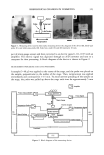
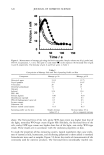
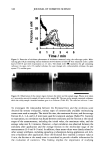
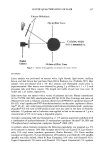
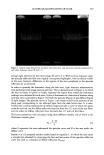
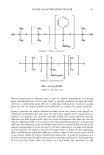
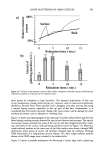
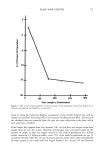
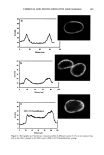
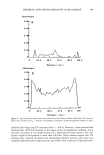
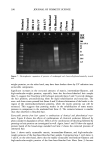
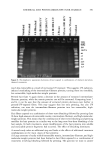
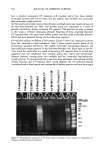
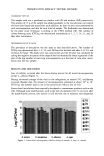
LUSTER QUANTIFICATION OF HAIR 337 Linear Polarizers • Top of Hair Tress Cylinder, which hair is mounted to. Digital Camera Bottom of Hair Tress Figure 1. Scheme of an apparatus to measure the luster of hair. MATERIALS Luster analysis was performed on natural white, light blonde, light brown, medium brown, and dark brown hair purchased from IHI & Products, Inc. (Valhalla, NY). Hair samples were pre-cleaned with a 3% ALS solution and thoroughly rinsed prior to experimentation. Hair tresses were obtained by gluing 3 g of fibers to 1.5 x 1.5-inch plexiglass tabs with Duco cement. The length and width of each hair tress were 10 inches and 1.25 inches, respectively. Dark brown hair was treated with a variety of polymers and oils. Phenyl trimethicone (Si Tec TM PTM 200, ISP), amodimethicone (DC Q2-8220, Dow Corning), and castor oil (Hanson) were used as ethanolic solutions. Butyl ester of PVM/MA copolymer (Gantrez © ES-425), vinyl caprolactam/PVP/dimethylaminoethyl methacrylate copolymer (Advan- tage © LC-A), and isobutylene/ethylmaleimide/hydroxyethylmaleimide copolymer (Aquaflex © FX-64) were all ISP products and were also used in the form of ethanolic solutions. All polymer and oil solutions were applied to hair in the amount of 1 g at a concentration of 2% (w/w) using a disposable pipette. A product containing ZnO was formulated as a 1.5 % aqueous suspension stabilized with a combination of acrylates/beheneth-25 methacrylate copolymer (Aculyn © 28, ISP) and VP/acrylates/lauryl methacrylate copolymer (Styleze © 2000, ISP). A synthetic sebum formula containing the following ingredients was prepared as a 5 % (w/w) solution in hexane: 20% Olea europaea (olive) fruit oil (Lipovol O, Lipo Chemi- cals) 15% cetyl esters (synthetic spermaceti, Koster Keunen) 15% Cocos nucifera (coconut) oil (Lipovol C-76, Lipo Chemicals) 10% palmitic acid (Aldrich) 10% paraffin (paraffin wax fully refined, Frank B. Ross Company) 10% oleic acid (Emersol 6321, Cognis Corporation) 5 % stearic acid (Emersol 150, Cognis Corporation) 5 % squalene

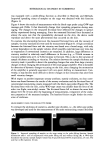
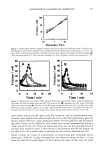
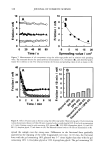
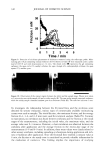
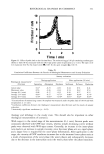
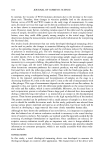
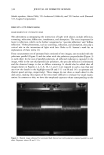
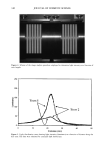
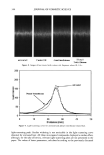
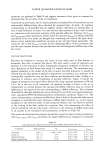
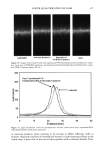
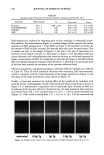
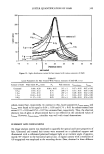
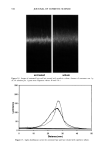
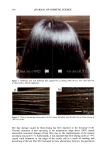
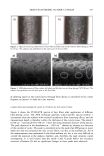
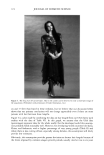
338 JOURNAL OF COSMETIC SCIENCE (shark squalene, Arista Oils) 5% cholesterol (Aldrich) and 5% linoleic acid (Emersol 315, Cognis Corporation). RESULTS AND DISCUSSION MEASUREMENTS OF UNTREATED HAIR The phenomena accompanying the interaction of light with objects include reflection, scattering, refraction, diffraction, interference, and absorption. The most important for luster is reflection, which can be further categorized as "specular reflection" and "diffuse reflection." Other phenomena, such as scattering, refraction, and absorption, also play a critical role in the interaction of light with hair. Refer to R. Stamm's work for an explanation of these terms (1). Every measurement set of untreated hair consisted of two images, one recorded with the polarizers parallel (Figure 2) and the other with the polarizers perpendicular (Figure 3) to each other. In the case of parallel polarizers, all reflected radiation is captured in the image, while in the case of perpendicular polarizers, the specular reflection is eliminated and the observed image is due to diffuse scattering. It should also be added that all images shown in Figures 2, 4, 6, 8, 10, 12, and 14 are exposed in such a way that one can view the details in the highlight area (f8 and 1/13 s or f8 and 1/6 s as aperture and shutter speed settings, respectively). These images do not show as much detail in the dark areas, making this region of the tress more difficult to evaluate by visual exami- nation. In contrast to this, we have also employed exposure values corresponding to the Figure 2. Digital image obtained for untreated dark brown hair with polarizers oriented parallel to each other. Exposure values: f8 and 1/13 s.
Purchased for the exclusive use of nofirst nolast (unknown)
From: SCC Media Library & Resource Center (library.scconline.org)