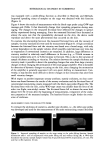
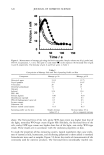
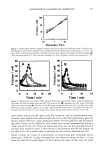
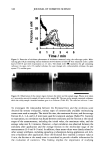
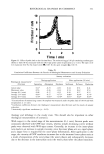
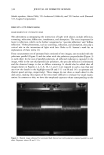
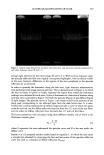
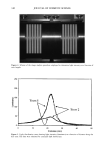
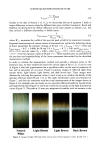
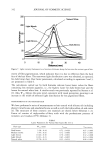
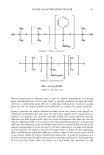
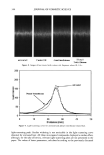
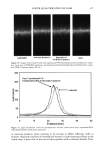
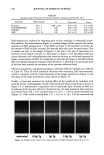
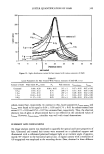
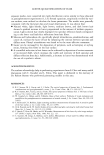
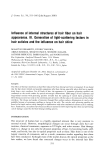
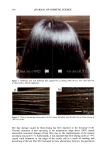
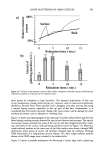
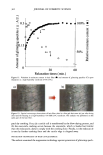
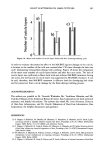
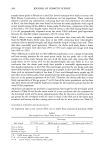
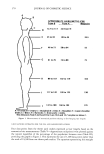
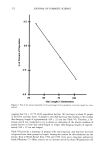
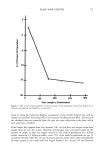
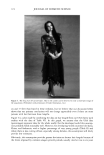
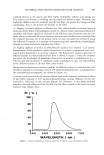
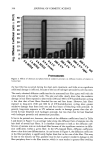
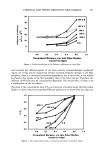
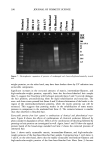
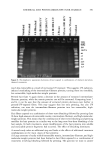
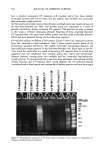
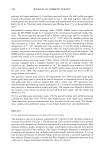
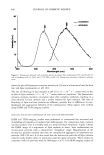
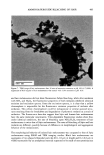
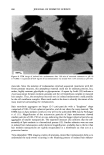
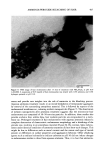
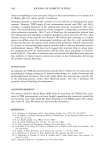
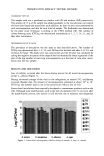
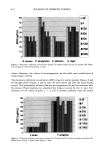
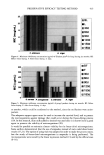
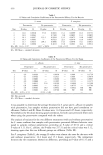
LUSTER QUANTIFICATION OF HAIR 341 S - Dstamm LSt ..... -- S (2) Similar to the data of Stamm et aL (1,2), we found that the use of equation 2 leads to larger differences in luster values for different hair types and hair treatments. Reich and Robbins (4) determined the diffuse reflection in the same manner as Stamm et aL, but they utilized a different relationship to define luster: S Lz•ei"h-zeøaains = Dst ..... * W•/2 (3) where Wz/2 represents the width of the specular peak at half of its maximum intensity. Repeated measurements of various tresses of untreated hair yielded the following values of luster parameters for exposure settings of f8 and 1/13 s: Lst ...... = 0.72 + 0.02 and Lnei,_h_noaai,z, = 0.67 ß 0.006 for f8 and 1/6 s: Lst ....... = 0.72 ß 0.03 and Ln•i,_•_noaai• s = 0.54 ß 0.07 and the values N c = 0.80 ß 0.02, Ls• ...... = 0.67 ß 0.02, and L•i,_3_noaai• , = 0.37 ß 0.02 for exposure values off8 and 1/3 s. These numbers give an •sessment of the precision and reproducibility of the luster parameters determined by the described measurement method. In order to validate the measurement method and provide a reference point to the literature data, we have studied the luster for various types of hair (1,2). It can be seen in Figure 6 that hair pigmentation has a significant effect on the optical properties of hair and in particular on its luster. Figure 6 presents images of reflected light from natural white, light blonde, light brown, and dark brown hair. These images were obtained by selecting the exposure values in such a way as to visualize the details of the specular reflection band (f8 and 1/13 s). The light distribution cu•es are presented in Figure 7, and they are consistent with the visual representation of the images shown in Figure 6. For example, one can clearly see two specular reflection bands for natural white and light blonde hair (Figure 6), which are evident by two peaks in the light distribution cu•es (Figure 7). The peak at 16 mm gets progressively smaller with an increase in the Natural Light Blonde Light Brown Dark Brown White Figure 6. Images of light reflections from various types of hair. Exposure values: f8 and 1/15 s.

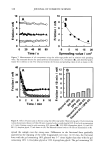
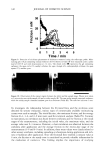
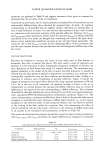
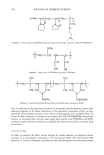
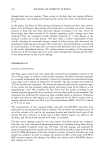
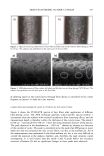
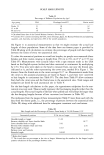
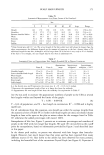
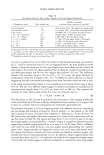
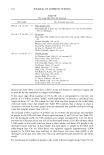
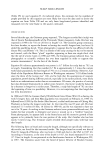
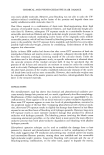
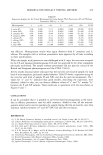
342 JOURNAL OF COSMETIC SCIENCE 250 2OO •0150 E Natural White Light Blonde Light Brown Dark Brown i i i i 0 10 20 30 40 Distance (rnrn) Figure 7. Light intensity (luminance) as a function of distance along the hair tress for various types of hair. extent of fiber pigmentation, which indicates that it is due to reflection from the back face of the hair fibers. The narrowest light distribution curve was obtained, as expected, for dark brown hair. Hair luster parameters, calculated according to equations 2 and 3, are presented in Table I. The calculations carried out by both formulas indicate lower luster values for fibers containing less melanin pigment, i.e., the highest luster for dark brown hair and the lowest for natural white hair. A similar result was previously reported by Stammet (2). Also, W•/2 follows the same trend, consistent with visual perception, pointing to an increase in the width of reflected light distribution for less pigmented fibers. MEASUREMENTS OF OIL-TREATED HAIR We have performed a series of measurements on hair treated with silicone oils including phenyl trimethicone and amodimethicone as well as with the hydrocarbon oil and castor oil. The structures of these cosmetic raw materials are shown below (Schemes 1-2). Castor oil consists of triglycerides of fatty acids with the predominant presence of ricinoleic acid residues (97%) (Scheme 3). Table I Luster Parameters for Various Hair Types (f8 1/13 s) Hair type W•/2 (mm) Ls ...... LR,,,3 teob•,,, Dark brown 5.28 _+ 0.44 0.72 + 0.020 0.67 + 0.006 Medium brown 5.44 + 0.16 0.72 + 0.006 0.67 + 0.005 Light brown 10.46 + 0.30 0.70 + 0.001 0.32 + 0.008 Light blonde 14.91 + 0.23 0.65 + 0.005 0.19 _+ 0.006 Natural white 22.78 + 0.24 0.32 _+ 0.013 0.06 + 0.002
Purchased for the exclusive use of nofirst nolast (unknown)
From: SCC Media Library & Resource Center (library.scconline.org)