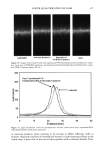
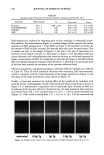
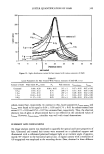
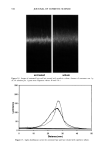
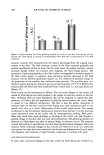
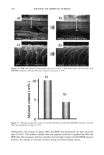
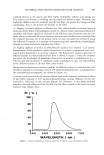
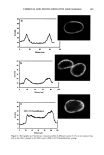
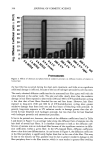
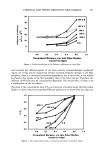
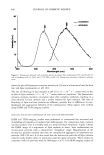
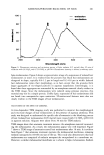
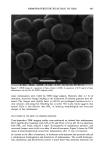
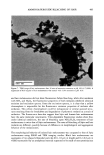
354 JOURNAL OF COSMETIC SCIENCE through daily hair care routines. These actions in the daily hair care routine influence hair appearance, such as light scattering from the cuticle cell, cortex, and medulla tissues (1-4). In this paper, the effects of blow-drying treatments on human hair have been investi- gated. As is well known, blow-drying with a hair-dryer is nowadays one of the common customs in daily life, and thus structural changes occurring in the hair cuticle by blow-drying have been reported (5-8). Studies regarding cuticle damage have been conducted from the viewpoint of both thermal transition (5-7) and changes in the moisture content (8) in hair keratin. We have made a further examination of hair cuticles, focusing on structural changes caused by blow-drying, and discovered the generation of splitting spaces between the cuticle layers. This phenomenon is considered to occur frequently in the daily hair care routine and influences both hair shine as well as the cuticle degradation process. The authors present an analysis of the generation mechanism of the interlayer spaces of cuticle layers through blow-drying and the effect of this phenomenon on hair cuticle damage. EXPERIMENTAL MATERIALS AND METHODS The fibers used in this study were chemically untreated hair of Japanese women in the 20-to-40 age range. In order to condition hair moisture, the fibers were kept overnight at a constant temperature and humidity. A blow-dry treatment was administered using a hair dryer with a heated air blower for 30 seconds. The hair samples were heated at 70øC by the blow-dry treatment. The amount of scattered light from the interlayer space of the cuticle cell was evaluated using optical microscope views of the fibers at a low magnification (x50). We classified the hair fibers into five grades according to the amount of glittering speckles they contained, and used these grades as the standards. The evaluation was performed by comparing these standard sheets as references. Evaluation of light scattering by blow-drying was also conducted for the fibers treated with an aqueous solution of malic acid (MA: 4 wt%)/benzyloxyethanol (BEE: 10%)/15 % ethanol at 25øC for an hour. The measurements of hair moisture before and after the MA/BeE treatment were performed by conventional Karl Fischer method. The hair fiber was introduced into 50 rnl of the solvent to be used as the azeotrope formula and distilled until most of the solvent had been collected. A small excess of Karl Fischer reagent was added to the distillate, and the back was titrated with water in methanol. The hair cuticle damage caused by hair care routine with blow-drying was evaluated. Each hair care cycle consisted of shampooing/rinsing and combing during blow-drying, and the number of applied cycles was 150 times. The hair damage was evaluated by means of counting the total number of cuticle layers before and after cycles with the help of the FE-SEM observation of the hair transverse sections. A total of ten fibers per each sample was analyzed. In order to evaluate the protection effect of the malic acid (MA)/ BeE treatment against hair damage, hair fibers were treated with a MA/BeE solution after rinsing each time.

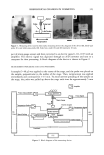
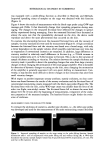
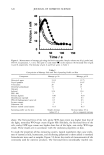
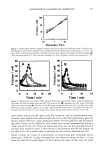
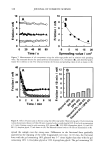
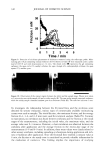
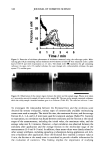
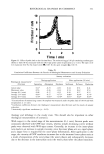
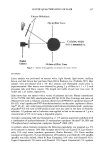
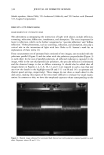
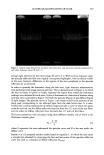
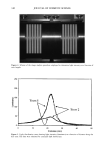
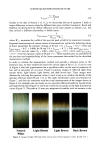
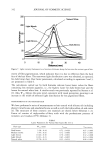
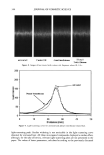
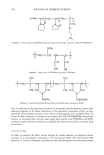
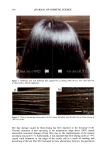
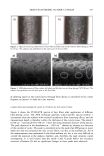
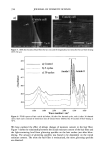
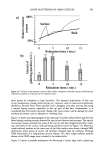
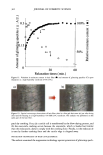
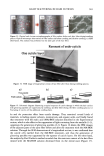
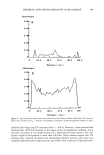
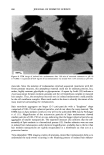
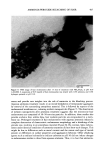
LIGHT SCATTERING IN HAIR CUTICLES 355 INSTRUMENTATION Scanning electron microscope (SEM) observations were performed on the hair surface and sections. SEM observations were carried out using a Hitachi S-4000 scanning electron microscope. For the observations of transverse and longitudinal sections, the hair fibers were embedded in an epoxy resin (Epon802) and cut using an ultramicrotome (Nova Ultratome) equipped with a glass knife. All samples were coated with a layer of Pd/Pt in a sputter-coating unit (Jeol JFC-1100). Transmission electron microscope (TEM) observations were performed in order to ob- serve the fine structure of the cuticle cells. The hair samples were embedded in an Epon802 resin after blow-drying in a combing process. Ultrathin sections (100 nm) were prepared using the ultramicrotome for longitudinal sections of the hair fiber. TEM observations were conducted using a Jeol JEM-2000FX transmission electron micro- scope. The secondary structure of the cuticle keratin was examined by Fourier transform infrared attenuated total reflectance (FT-IR/ATR) spectroscopy. The spectra were col- lected on a Bio-Rad FTS-60A spectrometer with the use of a zinc selenide crystal designed at a 45-degree angle of incidence. The fibers were immersed in de-ionized water followed by 30 seconds of blow-drying at 70øC, and the number of applied cycles was 5 or 30 times each. Measurements of the moisture content at the fiber surface were performed using near- infrared photoacoustic spectroscopy (NIR-PAS). The NIR-PAS instrument is an origi- nally constructed in vivo NIR-PAS spectrometer equipped with a hand-made measure- ment cell and a laser diode as a thermal source. A total of 30 fibers per sample were used for PAS analysis, and the variation in moisture in the cuticle cell was examined after blow-drying. In order to maintain uniformity in the humidifying conditions, all the PAS measurements were performed in an environmental control room (23øC/75% RH). RESULTS AND DISCUSSION STRUCTURAL CHANGES IN THE HAIR CUTICLE Many consumers perceive some changes in their hair such as disentangling, feel, bounce, shine, etc., after using a hair dryer. The half-head test was carried out in order to elucidate the effect of blow-drying applied to hair in a wet condition (Figure 1). The left half-head was dried by applied hot air drying, and the right half-head was air-dried. It was confirmed that the left half-head showed a whitish and powdery appearance, and consequently hair gloss was suppressed. Optical microscope observations of the hair fiber revealed that several glittering speckles appeared after heat drying (Figure 2). Several colored glittering speckles, sometimes red, blue, green, etc., were shown in the high- magnification optical microscopic image (Figure 3), suggesting light reflection due to interference of light at the cuticle layer. SEM analysis results of fiber surfaces before and after blow-drying are shown in Figure 4. The existence of concave-shaped scale edges owing to cuticle layer splitting are shown (circled in Figure 4) in blow-dried fibers. Through SEM observations of transverse and longitudinal sections, it was confirmed that structural changes caused by blow-drying also occurred between inner cuticle layers (Figure 5).
Purchased for the exclusive use of nofirst nolast (unknown)
From: SCC Media Library & Resource Center (library.scconline.org)