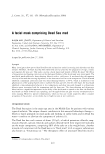
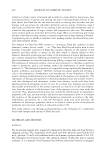
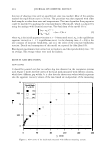
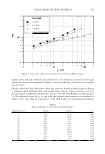
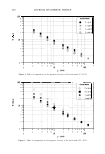
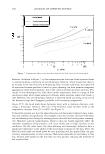
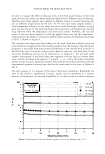
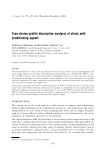
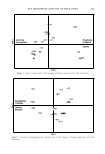
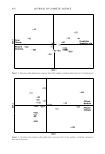
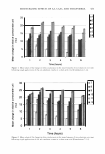
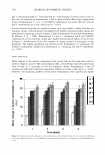
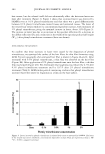
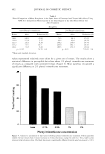
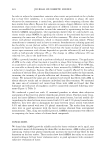
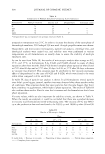
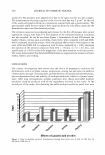
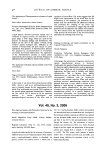
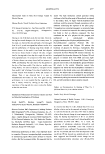
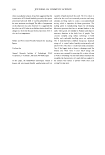
- ·2 ::::J I... Cl) Cl) E 0 Cl) E 0 u Cl) S' g m (!! C Cl) D C m .c u C m Cl) :? MOISTURIZING EFFECTS OF AA, CAAS, AND TOCOPHEROL 469 25 20 15 10 5 o 1 2 3 4 Time (hours) 5 6 □1 ■ 2 ■3 ■ 4 05 □6 Figure 1. Mean values of the changes in skin conductance on the inner forearms of ten volunteers over time following single applications of the o/w emulsion creams in a short-term trial (Formulations 1-6). 30 □ 7 - ·c 8 ::::J I... Cl) 25 ■ 9 ai E ■ 10 0 Cl) 20 E □ 11 0 u Cl) S' ■ 12 15 g m (!! C 10 Cl) D C m 5 .c u C 0 � 1 2 3 4 5 6 Time (hours) Figure 2. Mean values of the changes in skin conductance on the inner forearms of ten volunteers over time following single applications of the w/o emulsion creams in a short-term trial (Formulations 7-12).

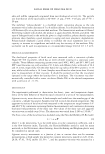
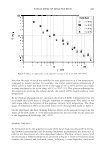
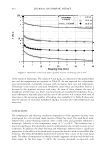
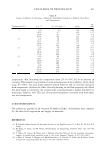
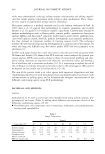
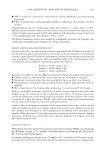
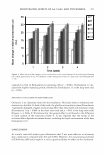
470 JOURNAL OF COSMETIC SCIENCE and 2 containing CAAS (p 0.05) and AA (p 0.01) during six hours, respectively. In the cases of combination formulations 5 and 6, both of their effects were higher than those of formulations 2, 3, or 4. A CAAS:T combination was more effective than an AA:T combination up to the sixth hour (p 0.05 ). Results obtained from the w/o emulsion creams were very similar to those from the o/w emulsion creams. T (Formulation 10) displayed the highest hydration profile among the formulations containing a single vitamin. CAAS (Formulation 9) and AA (Formulation 8) followed T (p 0.01). Formulations 11 and 12 containing AA:T and CAAS:T combinations in w/o emulsion creams gave higher moisrurization values, as can be seen in Figure 2. Combination of the two vitamins in creams resulted in synergism in skin hydration. The highest hydration was observed with Formulation 12 containing the CAAS:T combination, followed by Formulation 11 containing the AA:T combination (p 0.01). LONG-TERM TRIAL Mean changes in the relative corneometer unit versus time for the long-term trial are shown in Figures 3 and 4. The skin-hydrating effect of CAAS was more obviously found close to that of T, especially in the w/o emulsion creams. Formulations 9 and 10 containing CAAS and T showed a significant difference in skin conductance (p 0.05 ). However, the hydrating profiles of both these formulations were significantly higher ·c ::::J QJ 0 QJ 0 u QJ m � C QJ C m u C m QJ ::i! - :l � - 1 2 3 lime (week) 4 D1 ■ 2 ■ 3 ■ 4 □ 5 □ 6 Figure 3. Mean values of the changes in skin conductance on the inner forearms of ten volunteers following twice-daily applications of the o/w emulsion creams during four weeks in a long-term trial (Formulations 1-6).
Purchased for the exclusive use of nofirst nolast (unknown)
From: SCC Media Library & Resource Center (library.scconline.org)