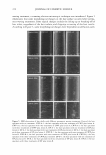
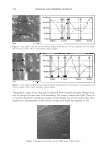
206 JOURNAL OF COSMETIC SCIENCE 2 ml of the protein flow-through was concentrated with a Centricon centrifugal filter device (Millipore, Bedford, MA) by centrifuging the filtrate at 3000 x g for approxi mately 2.5-3 hr at 4°C. Thirty micrograms of the concentrated proteins were boiled for 5 min and cooled in ice for 2 min, and then analyzed using the Bio-Rad Mini-Gel system (Bio-Rad) according to the manufacturer's manual. A gel with 5% stacking and 15% separating acrylamide was employed and visualized after staining with Coomassie Bril liant Blue G-250. The gel stained was transferred to a container containing a destaining solution (10% isopropanol and 10% acetic acid, v/v) and destained three times with slow shaking. PERMANENT WAVING PROCEDURE To evaluate the effect of the perming method on the hair shafts, two types of hairstyle, the croquignole winding perm (CWP) and the digital perm (DP) were performed using two kinds of commercial permanent waving lotion, lotion A (cysteamine-HCl, pH 9.31, liquid type) and lotion B (sodium thioglycolate, pH 9.97, cream type). For the former method, the hair wisps (Figure 1) were sprayed with water, then evenly painted with a comb containing the waving lotions (approximately 1 g) and wound. After the wound hair wisps were heated in a heating cap at 50°C for 15 min, they were left at room temperature for 10 min. Thereafter, the test curl and plain rinse were conducted. After removing the residual water, a neutral solution containing sodium bromate (pH 6.29) was applied two times for 10 min each. The detailed procedure was carried out according to the supplier's manual. For the latter method (DP), a digital setting device was used. The setting procedure was the same as that described above except that the hair wisps treated with the waving lotions were dried first and wound with a digital electric rod heated to 100°-120°C for 10 min. The permanent waving treatment was conducted one to three times to evaluate com parative changes in protein content and profile and to evaluate the change in the physicomorphological properties of the hairs between perming treatments. MEASUREMENT OF PHYSICAL PROPER TIES For examination of the effect of the permanent waving treatment on the change in physical properties, four parameters (hair diameter, degree of swelling, tensile strength, and hair elongation) were introduced. These parameters were measured in a controlled room at 20°C under 50% RH (relative humidity), and each measurement was presented with a mean value±standard deviation calculated in triplicate. For measurement of the hair diameter, a micrometer caliper method was introduced. The hair diameter was measured at the medial point of the hair shaft. For measurement of the hair elongation, a thickness gauge (Saginamiya, BGM-3, Japan) was used, and the values were calculated according to the manufacturer's manual. The tensile strength was de termined with a tensile tester (Shimadzu, AGS-500, Japan) by using the initial length of 20 mm. Twenty samples per replication were used, and each measurement was calculated according to the manufacturer's manual.

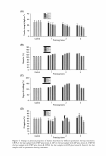
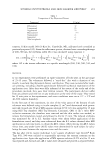
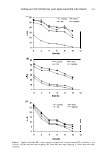
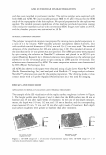
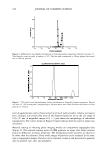
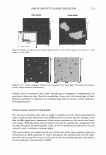
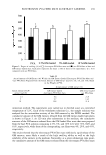
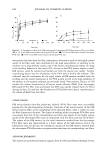
CHANGES IN HAIR DURING PERMANENT WAVING 207 To calculate the degree of swelling of the hair shafts in percentage, the hair materials were immersed in distilled water (50 ml) for 30 min, filtered through a filter paper, and then blot-dried on the filter paper. The percentage degree of swelling was calculated as follows: Degree of swelling (%) = [(diameter of the hair absorbed - diameter of the dried hair)/diameter of the dried hair] x 100 The data obtained were provided with the values±SD (standard deviation) calculated with three bundles (60 samples) of the hair shafts (Figure 1) for each measurement. SCANNING ELECTRON MICROSCOPY For scanning electron microscopy, the hair specimen was coated with gold (20 nm thick) using a vacuum ion spotter (Hitachi, E-1010, Japan). Each gold-coated hair specimen was then observed with a scanning electron microscope (Hitachi, S-2400, Japan) at a probe energy level of 15 KV, and its image was photographed at magnifications of 0.8 Kx or 2.0 Kx. RESULTS AND DISCUSSION EFFECTS OF PERMANENT WAVING TREATMENT ON CHANGES IN PROTEIN CONTENT AND PROFILE The protein content of the total hair mass consisted of approximately 80% of keratinized protein matrix (14), which is a key component in the determination of hair shape (15). It is well known that physicochemical properties of these keratinized proteins are closely implicated in hair styling because the keratin polypeptide chains are embedded with each other or bundled into twisted formations to form cables that support the hair shape (1,2). The reduction and oxidation treatments conducted necessarily during the process of permanent waving would result in a decrease in hair components such as hair proteins, which leads to hair damage (6-8). Figure 2 shows that there was a decreasing trend in the protein content of the human head hairs, on the whole, after the permanent waving treatment, although its decreasing degree was different with different treatments. From Figure 2, the following three important results were obtained: First, a higher decrease in the protein content of the hairs was found in DP (18-58% decrease the average decrease is 36.7%) than in CWP hair styling (13-32% decrease the average decrease is 24.2%). This result may be attributable to a difference in the setting temperature between the two perming methods (50°C for CWP and 100°-120°C for DP) because a high temperature is more capable of changing most proteins, including the keratinized proteins, which are the major component polypeptides of human hair shafts (3, 6-8). Secondly, application of waving lotions A and B induced a decrease in the protein content, and a lower protein content was detected with the latter lotion (36.7% decrease on the average) when compared with the former (24.5% decrease on the average). These results suggest that the permanent waving lotion has a negative influence on changing the protein content of human head hairs. In addition, a greater protein decrease was found with waving lotion B than with lotion A, indicating that lotion B was more contributive to protein loss. Thirdly, as the perming times increased, the protein content of the human head hairs diminished (Figure 2). Moreover, the remarkable decrease in
Purchased for the exclusive use of nofirst nolast (unknown)
From: SCC Media Library & Resource Center (library.scconline.org)