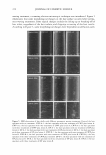
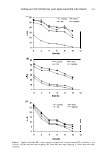
J. Cosmet. Sci., 59, 233-242 (May/June 2008) Electrospun poly(vinyl alcohol) fiber mats as carriers for extracts from the fruit hull of mangosteen PRANEET OPANASOPIT, URACHA RUKTANONCHAI, ORA WAN SUWANTONG, SUWANNEE PANOMSUK, TANASAIT NGA WHIRUNPAT, CHA V ALIT SITTISOMBUT, TITTAYA SUKSAMRAN, and PITT SUPAPHOL, Faculty of Pharmacy, Silpakorn University, Nakhonpathom (P.O., S.P., T.N., C.S., T.S.), National Nanotechnology Center, National Science and Technology Development Agency, Thailand Science Park, Pathunthani (U.R.), and Technological Center for Electrospun Fibers and The Petroleum and Petrochemical College, Chulalongkorn University, Bangkok (P.S.), Thailand. Accepted for publication February 11, 2008. Synopsis Electrospinning is a process used to produce ultrafine fibers with diameters in the nanometer range. Electrospun fiber mats have high potentials for biomedical uses, due to their high surface area and ease of drug incorporation into the fibers. They can be used as carriers for drug delivery and can enhance drug release and skin permeability. The aim of this study was to prepare electrospun fiber mats and to incorporate extracts from the fruit hull of mangosteen. Antioxidant activity and extract release were determined and compared between the extract incorporated in the electrospun fiber mats and in the cast films. Poly(vinyl alcohol) (PVA) was selected as the polymer matrix. Extracts in the amount of 2.5%, 5%, and 10% w/w, based on the weight of PVA, were incorporated with 10% w/w PVA to finally obtain electrospun fiber mats and cast films. The extract content was evaluated by antioxidative activity using the 2,2-diphenyl-l picryhydrazyl (DPPH) method. The morphology of the electrospun fiber mats was analyzed using a scanning electron microscope (SEM). The results showed that the diameters of the fibers were in nanoscales and that no crystal of the extract was found at any concentration of the extract. The extract contents in the electrospun fiber mats prepared at 2.5%, 5%, and 10% w/w of the extract were 9.6%, 9.7%, and 10.8% of the initial loading concentration, respectively, whereas, those in the cast films were 23.9%, 14.5%, and 21.0%, respectively. The release of the extract from the electrospun fiber mats prepared at 2.5%, 5%, and 10% w/w of the extract at 120 min were 73.2%, 83.6%, and 81.3% w/w, respectively. However, much slower release from the cast films was observed (i.e., 4.3%, 29.1 %, and 40.8% w/w, respectively). INTRODUCTION Mangosteen (Garcinia mangostana Linn) (GM) has been named as "the queen of fruits" Address all correspondence to Uracha Ruktanonchai. 233

234 JOURNAL OF COSMETIC SCIENCE due to its best taste as compared to that of other fruits. Generally, GM is a tropical fruit, predominantly found in Southeast Asia. It has been used in traditional medicine for the treatment of diarrhea, skin infections, wounds, and chronic ulcers, as well as an astrin gent. Several studies have revealed that GM extracts exhibit antimicrobial (1), antipro liferative (2,3), antioxidant (4-6), and anti-inflammatory (7-10) properties. The pericarp of GM was reported to be a good source of mangostin, xanthone, chrysanthemin, garcinone, tannin, gartanin, vitamins Bl, B2, and C, and other bioactive substances (11). Because of the antioxidant activity of GM extracts, they can be used as ingredients in many cosmetic applications, such as medicated soaps and anti-aging products. Their antibacterial properties also make them suitable for anti-acne products. They also tighten the skin, which, when combined with the anti-oxidant properties, makes them ideal for the development of anti-aging skin-care products. Some GM extracts are also suitable as food supplements and beverages. In recent years, the electrospinning process has attracted a great deal of attention due to its ability to produce ultrafine fibers with diameters in the range of nanometers to sub-micrometers that exhibit high surface-area-to-volume or mass ratios (12,13). The principle of this process is the use of electrostatic force as the main driving force for fiber formation (14-16). The morphology of the electrospun fibers depends on a number of parameters, such as solution concentration, solution conductivity, applied electric field, collection distance, and collection time (15, 1 7). Electrospun polymeric fibers have a wide range of medicinal applications, such as immobilization of enzymes (18), tissue engineering scaffolds (19,20), and drug delivery systems (21-24). One of the obvious advantages of the electrospinning process over the conventional film-casting technique is the highly porous nature of the electrospun fiber mats that exhibit much greater surface area, assumingly allowing drug molecules to diffuse out from the matrix much more conveniently. In this study, poly(vinyl alcohol) (PVA), one of the most popular hydrogel polymers, was chosen as the matrix material. This is due to its hydrophilicity, good chemical stability, and good thermal stability (25). PVA is also widely used as a controlled-releasing carrier of drugs and proteins because of its good tissue compatibility, ease of manipulation under swelling conditions, solute permeability, and, particularly, excellent electrospin nability (26). Various parameters affecting the morphology of electrospun PVA fibers, e.g., solution concentration, solution flow rate, degree of hydrolysis, applied electrical potential, collection distance, ionic salt addition, PV A molecular weight (26), and pH (27) have been investigated. In the present study, mats of PVA nanofibers were prepared by electrospinning, and these electrospun fiber mats were used as carriers of GM for dermal delivery. Water soluble GM extracts with strong antioxidation activity were incorporated into the elec trospun PV A fiber mats. The morphology of both the neat and the GM extract-loaded electrospun fiber mats, the GM extract entrapment efficiency within the electrospun fiber mats, the swelling and weight loss behavior of both the neat and the GM extract loaded electrospun fiber mats in an aqueous medium, and the release characteristics of the extract from the GM extract-loaded electrospun fiber mats were investigated via antioxidant activity.
Purchased for the exclusive use of nofirst nolast (unknown)
From: SCC Media Library & Resource Center (library.scconline.org)