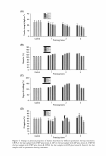
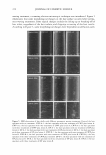
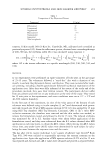
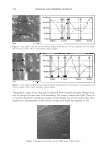
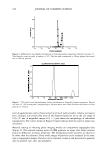
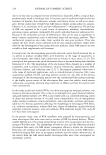
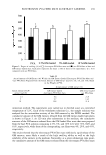
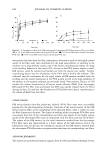
198 JOURNAL OF COSMETIC SCIENCE controls (100 ± 2.7%) however, concentrations of 0.32 and 0.64% (116.3 ± 6.4% and 116. 7 ± 3.3%, respectively) showed a significant effect on fibroblast proliferation com pared to the controls (p 0.05) (Figure 1). Ascorbic acid concentrations of 0.01 and 0.1 mM (110.2 ± 9.4% and 110.6 ± 27.5%, respectively) did not show a significant effect on fibroblast proliferation compared to the controls (100 ± 3.1 %) however, concentrations of 1.0 and 10 mM (120.9 ± 24.1 % and 135.3 ± 33.6%, respectively) showed a signif icant effect on fibroblast proliferation compared to the controls (p 0.05) (Figure 2). EFFECTS OF PLACENTAL EXTRACT AND ASCORBIC ACID ON TGF-131 EXPRESSION The expression of TGF-�1 was determined by ELISA. No significant differences in TGF-�1 expression were observed after treatment with placental extract at concentra tions of 0.08, 0.16, 0.32, and 0.64% (99.9 ± 3.7%, 99.4 ± 7.2%, 100.2 ± 6.4%, and 106.9 ± 0.9%, respectively) compared to the controls (100 ± 4.2%) (p 0.05). More over, TGF-�1 expression did not increase significantly when fibroblasts were treated with a concentration of placental extract greater than 0.64%. Conversely, a significant increase in TGF-� 1 expression occurred after treatment with ascorbic acid at concen trations of 1.0 and 10 mM (107.3 ± 9.7% and 120.33 ± 17.8%, respectively) compared to the controls (100 ± 5.4%) (p 0.05). The results are shown graphically in Figures 3A and 3B. DISCUSSION The activity of human placental extract has become a matter of increasing interest, and 140 Fibroblast Proliferation * * 120 100 - 80 'o 60 40 20 0 control 0.08 0.16 0.32 0.64 Placental extract (1At) Figure 1. The effects of placental extract on fibroblast proliferation. Fibroblasts were treated with placental extract at concentrations of 0.08, 0. 16, 0.32, and 0.64%. Concentrations of 0.32 and 0.64% resulted in significant differences in fibroblast proliferation compared to controls. *Significantly different from controls (p .05).

EFFECTS OF PLACENTAL EXTRACT ON FIBROBLAST PROLIFERATION 199 180 Fibroblast Proliferation 160 140 120 100 80 0 0 60 40 20 0 control 0.01 0.1 1 10 L-ascorbic acid (mM) Figure 2. The effects of ascorbic acid on fibroblast proliferation. Fibroblasts were treated with placental extract at concentrations of 0.01, 0.1, 1.0, and 10 mM. Concentrations of 1.0 mM and 10 mM resulted in significant differences in fibroblast proliferation compared to controls. *Significantly different from controls (p .OS). it has been shown to increase peripheral circulation, stimulate cell respiration and tissue metabolism, reduce inflammation, prevent allergies and pigmentation, promote granu lation and removal of old keratin, moisturize, and eliminate activated oxygen. Thus, many dermatologists are interested in its therapeutic properties. Human placenta is an extremely rich reservoir of bioactive molecules. The presence of bioactive peptides in human placenta, such as endothelin (ET)-1 (9,10), adrenocorricotropic hormone (ACTH) (11,12), and sphingolipids (13,14) is well documented (15). ET-1 is a versatile peptide that demonstrates significant mitogenic (16), dendricity-inducing (17,18) and melano genic (19) activity in melanocytes. ACTH has been reported to play an important role in melanogenesis (20). Sphingolipids and their metabolites act as crucial second mes senger molecules that control the rheostatic switch that balances cell growth promotion and inhibition signals (21-23). Human placenta has been used in cosmetics and skin-care soaps due to its anti inflammatory, anti-anaphylactic, antioxidative, anti-melanogenic, melanizing, moistur izing, and collagen-synthesizing properties. In a previous study, we investigated the effects of placental extract on the proliferation and melanogenesis of pigment cells and showed that placental extract may be an effective agent in the treatment of pigment disorders aggravated by ultraviolet light (24). In a separate in vitro study, Sarkar et al. showed that placental protein/peptide fraction-mediated increases in tyrosinase expres sion occurred via transcriptional upregulation, which stimulated melanogenesis in
Purchased for the exclusive use of nofirst nolast (unknown)
From: SCC Media Library & Resource Center (library.scconline.org)