202 JOU.RNAL OF COSMETIC SCIENCE human fibroblasts to proliferate and produce tissue-like fibroplasia: A fibronectin matrix-dependent event,]. Cell. Physiol., 170, 69-80 (1997). (8) A. B. Campaner, L. M. Ferreira, A. Gragnani, et al., Upregulation of TGF-beta 1 expression may be necessary but is not sufficient for excessive scarring,]. Invest. Dermatol., 126, 1168-1176 (2006). (9) B. M. Wilkes, M. Susin, P. F. Mento, Localization of endothelin-1-like immunoreactivity in human placenta,]. Histochem. Cytochem., 41, 535-541 (1993). (10) A. Benigni, F. Gaspari, S. Orisio, et al., Human placenta expresses endothelin gene and corresponding protein is excreted in urine in increasing amounts during normal pregnancy, Am. J. Obstet. Gynecol., 164, 844-848 (1991). (11) A. Liotta, R. Osathanondh, K. J. Ryan, and D. T. Krieger, Presence of corticotrophin in human placenta: Demonstration of in vitro synthesis, Endocrinology, 101, 1552-1558 (1977). (12) T. Shibasaki, E. Odagiri, K. Shizume, and N. Ling, Corticotrophin releasing factor-like activity in human placental extracts. J. Clin. Endrocrinol. Metab., 55, 384-386 (1982). (13) P. Strasberg, A. Grey, I. Warren, and M. Skomorowski, Simultaneous fractionation of four placental neutral glycosphingolipids with a continuous gradient,]. Lipid Res., 30, 121-127 (1989). (14) S. B. Levery, E. D. Nudelman, M. E. K. Salyan, and S. Hakomori, Novel tri- and tetrasialosylpoly N-acetyllactosaminyl gangliosides of human placenta: Structure determination of pentadeca- and eicosaglycosylceramides by methylation analysis, fast atom bombardment mass spectrometry and lH-NMR spectroscopy, Biochemistry, 28, 7772-7781 (1989). (15) P. Strasberg, A. Grey, I. Warren, and M. Skomorowski, Simultaneous fractionation of four placental neutral glycosphingolipids with a continuous gradient,]. Lipid Res., 30, 121-127 (1989). (16) G. Imokawa, Y. Yada, and M. Miyagishi, Endothelins secreted from human keratinocytes are intrinsic mitogens for human melanocytes, J. Biol. Chem., 267, 24675-24680 (1992). (17) T. Horikawa, D. A. Norris, J. J. Yohn, et al., Melanocyte mitogens induce both melanocyte chemo kinesis and chemotaxis,. J. Invest. Dermatol., 104, 256-259 (1995). (18) M. Hara, M. Yaar, and B. A. Gilchrest, Endothelin-1 of keratinocyte origin is a mediator of melanocyte dendricity,J. Invest. Dermatol., 105, 744-748 (1995). (19) G. Imokawa, M. Miyagishi, and Y. Yada, Endothelin-1 as a new melanogen: Coordinated expression of its gene and tyrosinase gene in DVB-exposed human epidermis,]. Invest. Dermatol., 105, 32-37 (1995). (20) G. Hunt, C. Todd, S. Kyne, and A. J. Thody, ACTH stimulates melanogenesis in cultured human melanocytes,J. Endocrinol., 140, Rl (1994). (21) Y. A. Hannun, The sphingomyelin cycle and the second messenger function of ceramide,j. Biol. Chem., 269, 3125-3128 (1994). (22) S. Spiegel and S. Milstein, Sphingolipid metabolites: Members of a new class of lipid second messen gers,]. Membr. Biol., 146, 225-237 (1995). (23) S. M. Mandala, R. Thornton, Z. Tu, et al. Sphingolipid base-1-phosphate phosphatase: A key regulator of sphingolipid metabolism and stress response, Proc. Natl. Acad. Sci. USA, 95, 150-155 (1998). (24) H.J. Kim, J. W. Lee, Y. I. Kim, and M. H. Lee, The effect of placental extract on the expression of tyrosinase, TRP-1 and TRP-2 in SK30 melanoma cells, Korean J. Dermatol., 41(12), 1612-1618 (2003). (25) M. Presta, P. Mignatti, D. E. Mullins, and D. A. Moscatelli, Human placental tissue stimulates bovine capillary endothelial cell growth migration and protease production, Biosci. Rep., 5, 783-790 (1985). (26) C. L. Phillips, S. Tajima, and S. R. Pinnell, Ascorbic acid and transforming growth factor-[31 (TGF [31) increase collagen biosynthesis via different mechanisms: Coordinate regulation of pro alpha 1(1) and pro alpha l(III) collagens, Arch. Biochem. Biophys., 295, 397-403 (1992). (27) R. P. Penttinen S. Kobayashi and P. Bornstein, Transforming growth factor [3 increases mRNA for matrix proteins both in the presence and in the absence of changes in mRNA stability, Proc. Natl. Acad. Sci USA, 85, 1105-1108 (1988). (28) H. E. Sauberlich, Pharmacology of vitamin C, Annu. Rev. Nutr., 14, 371-391 (1994). (29) C. Sarkar, S. K. Singh, S. K. Mandal, et al. Human placental protein/peptides stimulate melanin synthesis by enhancing tyrosinase gene expression, Mol. Cell. Biochem., 285, 133-142 (2006).

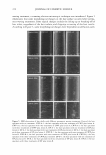
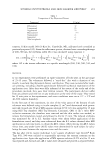
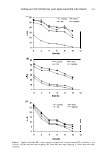
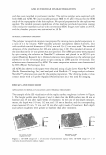
]. Cosmet. Sci., 59, 203-215 (May/June 2008) Effects of permanent waving on changes of protein and physicomorphological properties in human head hair MI-OK HAN, JAE-AN CHUN, JIN-WOO LEE, and CHUNG-HAN CHUNG, Department of Biotechnology, Dong-A University, Ha-Dan-Dong, Sa-Ha-Gu, Busan 604-714, South Korea. Accepted for publication February 11, 2008. Synopsis Two types of permanent waving [digital perm (DP) and croquignole winding perm (CWP)} and two waving lotions [cysteamine-HCl, pH 9.31, liquid type (lotion A) and sodium thioglycolate, pH 9.97, cream type (lotion B)} were used for this study. The protein content was decreased by permanent waving treatments on the whole, and the degree of reduction was dependent on the hair styling and waving lotion used. The greatest decrease (by 58%) was found in hairs processed with the three-treatment performance of DP using lotion B. SDS-PAGE identified the presence of the two most abundant polypeptides, with approximately 48 kDa and 60 kDa, and two large polypeptides, with approximately 200 kDa and 210 kDa, which would belong to the keratin family. Some physical properties of the hairs (tensile strength, diameter, swelling, and elongation) were examined with the permanent waving treatments. In general, the repeated waving treatment and the use of lotion B showed more negative effects on hair care than other treatments. Some morphological changes were observed with a scanning electron microscope (SEM). The most promi nent change in the hair surface was observed in the hair specimen with the three-treatment performance of DP using lotion B. More severe signs of damage appeared on the hair with lotion B than with lotion A. As the numbers of permanent waves increased, the degree of damage to the hair surface increased on the whole. However, there was no indication of changes to the hair surface with one permanent waving treatment, as determined by SEM analysis. INTRODUCTION Since modern permanent waving was introduced in the early 1940s, the permanent waving technique has been developed with the improvement of hair styling processes (1,2). Currently, a variety of methods of hair permanent waving are available, and the choice of the wave style depends on the taste of customers. Many factors related to hair styling, such as changes in chemical reducing solutions (waving lotions), temperature, and pH, are necessarily involved during the process of permanent waving. It is generally Address reprint requests and all correspondence to Chung-Han Chung. 203
Purchased for the exclusive use of nofirst nolast (unknown)
From: SCC Media Library & Resource Center (library.scconline.org)