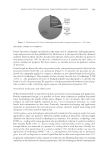
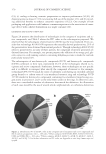
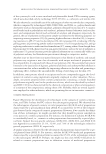
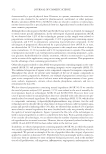
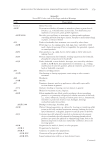
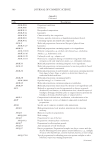
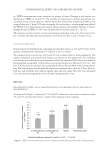
JOURNAL OF COSMETIC SCIENCE 372 characterized by a special physical form. However, in a patent, sometimes the core inno- vation is also claimed to be useful for pharmaceutical, nutritional, or other purposes. Besides, subclasses A61K 8/02 to A61K 8/14 that are related to cosmetic or toilet prepa- rations characterized by a special physical form (see Appendix) may be rather limited for some cosmetic preparations. Although these subcategories (A61K 8 and A61K 9) may not be so detailed, we managed to extract more specifi c information. In the subcategory of general preparations (A61K 8), we observed that 4.2% of the technologies present in this sample were related to preparations containing inorganic compounds, 13.4% to preparations containing organic compounds, and 9.3% to preparations containing macromolecular compounds. In the subcategory of preparations characterized by a special physical form (A61K 9), in turn, we observed that 16.7% of the technologies present in this sample were related to disper- sions or emulsions, 33.3% to powders and 9.3% to preparations in capsules. One example of preparation in powder is an extemporaneous preparation containing propionyl L -carni- tine glycinate hydrochloride for cellulite treatment, which is reconstituted to a gel form on the occasion of the application, using or not using special containers. This preparation has the advantage of not containing preservatives (37). Other subcategories related to class A61K were preparations containing organic active com- pounds (A61K 31) and preparations containing inorganic active compounds (A61K 33). We confi rmed a larger use of organic active compounds compared to inorganic compounds. Throughout this article, we present some examples of the use of organic compounds in patented cosmetic preparations. However, one example of preparations containing an inor- ganic active compound is the use of volcanic water with adequate amounts of iron, potas- sium, sodium, magnesium, calcium, silicon dioxide, phosphorus, selenium, and zinc to remineralize the skin (38). We also observed preparations containing natural ingredients (A61K 36). If we consider the total of patents analyzed (333 patents), 13.5% were related to the use of naturally de- rived products based on technologies A61K 36 and A01N 65/00. However, there were cases of patents related to natural products that were classifi ed with codes that are not pri- marily related to natural ingredients. For example, technology A61K 31/56, which refers to compounds containing cyclopenta[a]hydrophenanthrene ring systems, was the only technology used to describe the use of an extract of Ajuga turkestanica able to regulate aqua- porins and provide a hydrating effect (39). Also, we observed that another 8.1% of patents were related to natural ingredients but were classifi ed with codes not primarily related to the quality of natural ingredients. Figure 3 presents the life cycle of the technologies re- lated to natural ingredients in order to complement these data. From a general perspective, if we consider all technologies, we can observe that the number of patents related to natu- ral ingredients has increased over time. However, the use of primarily related technologies (A61K 36 and A01N 65/00) has been rather stable in the last four years. In addition, we observed preparations containing peptides (A61K 38), in which the peptide was usually responsible for the biological activity or for the intracellular delivery of active compounds. We present an example of the use of peptides when the category of processes applied to cosmetics is discussed (15). Peptides have been increasingly used in cosmeceu- ticals once they are inherent to some cutaneous biological processes, such as the modula- tion of cell proliferation, cell migration, infl ammation, angiogenesis, melanogenesis, and

HOW COULD TECHNOLOGICAL FORECASTING HELP COSMETIC CHEMISTS 373 protein synthesis or regulation (40). Therefore, peptides represent another underexplored opportunity for innovation in product development. The last subcategories of cosmetic preparations are those related to class A61Q. Besides preparations for skin care (A61Q 19), we also observed makeup preparations (A61Q 1), hair care preparations (A61Q 5 and 7), and barrier preparations (A61Q 17), such as sun care products or insect repellents, among others. The fact that we found other technolo- gies other than skin care suggests that some innovations are multifunctional. For exam- ple, one patented preparation refers to the combined use of an organosiloxane and a derivative of cyclohexanetricarboxamide to improve transfer resistance in a makeup prep- aration containing skin care active compounds, among others (41). In fact, this result suggests that there is a trend toward multifunctional cosmetics, for example, color cos- metics designed not only to enhance or alter appearance, but also to protect and hydrate. Before discussing the technological cross impact, we will present some considerations re- garding delivery systems. Even though there are specifi c IPC classes to describe some de- livery system, such as technology A61K 9/127 (liposomes), we observed patents related to these systems without an obvious classifi cation code. For example, technology A61F 13/00 (bandages, dressings, and absorbent pads) was used to describe the use of patch or plaster supports in preparations containing aquatic animals named stinging cells (cnidocytes) or capsules (cnidocysts), which promote transdermal delivery of active compounds (42). Other delivery systems observed were nanocapsules, microcapsules, cyclodextrins, lipo- somes, and hydrogels. However, only 5.1% of the patents were related to delivery systems. Therefore, such technologies represent an underexplored opportunity for innovation with many possibilities of application. Another possible application of these technologies is not their use as delivery systems but as a means of preserving the active compound, for in- stance, the use of cyclodextrins to stabilize vitamin F against oxidative decomposition (43). TECHNOLOGICAL CROSS IMPACT According to the literature, identifying the relationship and impact between technologies can provide insight for technological strategies (9). For example, a company may substantially decide on which technology to invest, research, or use based on a cross-impact analysis. Further, estimating the impact of one technology over another also provides information Figure 3. Life cycle of technologies related to natural ingredients. n = 45 patents for primarily related tech- nologies and n = 72 patents for all technologies. *Series A61K 36 and technology A01N 65/00 only. For further information on IPC codes, see Appendix or visit http://www. wipo.int/ipcpub.
Purchased for the exclusive use of nofirst nolast (unknown)
From: SCC Media Library & Resource Center (library.scconline.org)