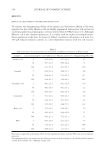
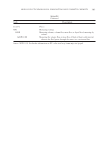
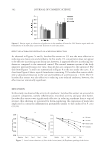
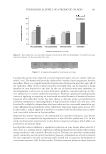
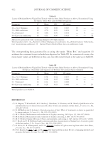
JOURNAL OF COSMETIC SCIENCE 354 RESULTS EFFECTS ON CELL VIABILITY AND MELANIN PRODUCTION To evaluate the depigmenting ability of the geranic acid derivatives, Melan-a cells were employed in this study. Melan-a cells are highly pigmented melanocytes and provide an excellent parallel non-tumorigenic cell line derived from C57BL/6 mice (24). Although Melan-a cell is not a human melanocyte, it is widely used for studies of melanin biosyn- thesis regulation in the skin. As shown in Table I, treatment with geranic acid from 5 to 500 μM reduced melanin contents in a dose-dependent manner, with low cell toxicity. Table I Effects of Geranic Acid Derivatives on Cell Growth and Melanin Production in Melan-a Cells Samples Concentrations (μM) Cell viability (%) Melanin content (%) Depigmenting effect (%)a Geranic acid 5 96.2 ± 0.9 92.7 ± 5.9 3.5 50 96.7 ± 1.6 89.6 ± 4.4 7.1 500 91.7 ± 3.4 66.1 ± 6.7 25.6 Geraniol 5 99.6 ± 2.6 98.8 ± 5.1 0.8 50 90.8 ± 2.6 91.5 ± 3.9 −0.7 500 61.4 ± 5.5 34.9 ± 4.3 26.5 Citronellic acid 5 98.2 ± 1.2 99.2 ± 2.8 −1.0 50 98.2 ± 4.3 96.1 ± 3.1 2.1 500 90.6 ± 4.7 84.2 ± 9.3 6.4 Citronellol 5 97.2 ± 4.1 96.6 ± 3.2 0.6 50 91.4 ± 2.6 87.1 ± 3.0 4.3 500 47.0 ± 8.7 34.8 ± 7.5 12.2 Kojic acid 5 97.5 ± 2.3 95.6 ± 4.7 1.9 50 94.1 ± 3.6 90.6 ± 5.8 3.5 500 84.3 ± 3.1 79.2 ± 5.1 5.1 PTU 5 96.4 ± 5.0 91.1 ± 2.9 5.3 50 79.0 ± 5.5 40.2 ± 6.5 38.8 500 68.8 ± 4.9 21.7 ± 5.3 47.1 Each value is expressed as the means ± S.E. of three experiments. Kojic acid and PTU were used as reference materials. a Depigmenting effect was expressed as the difference between the percentage of cell viability and the melanin content [Cell viability (%) − Melanin content (%)].

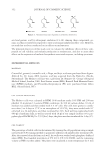
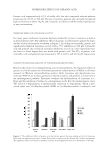
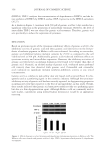
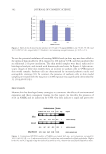
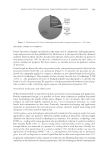
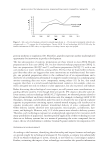
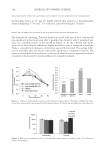
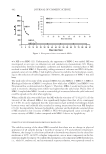
INHIBITORY EFFECTS OF GERANIC ACID 355 Geranic acid suppressed only 8.3% of viable cells, but this compound reduced melanin production by 43.9% at 500 μM. By way of contrast, geraniol and citronellol evidenced high cell toxicity at above 50 μM, and citronellic acid did not inhibit melanin production at any concentration. INHIBITORY EFFECTS ON TYROSINASE ACTIVITY For many years, mushroom tyrosinase has been studied for its use in cosmetics as well as in food industries (25). The inhibitory effects of geranic acid derivatives against the dopa- oxidase activity of tyrosinase are shown in Figure 2. According to our results, geranic acid signifi cantly inhibited tyrosinase activity with a 77% inhibition at 500 μM. Citronellic acid and geraniol also evidenced tyrosinase-inhibitory activity in a dose-dependent man- ner, but to a lesser degree than was noted with geranic acid. The IC50 of geranic acid, citronellic acid, and geraniol were measured as 195.4, 645.9, and 950.4 μM, respectively. CHANGES OF INTRACELLULAR LEVEL OF TYROSINASE-RELATED PROTEINS Based on the results of our depigmenting activity measurements, the regulatory effects of geranic acid on the expression of melanin generation-related protein in Melan-a cells were assessed via Western immunoblotting analysis. Both tyrosinase and dopachrome tau- tomerase (TRP-2) are melanin generation-related enzymes, and perform a central role in the melanogenesis pathway. Tyrosinase catalyzes the hydroxylation of L -tyrosine to L - Dopa and the oxidation of L -Dopa to o-dopaquinone in the fi rst two melanogenetic steps. The yield of o-dopaquinone is spontaneously converted to dopachrome, which is pro- cessed either into 5,6-dihydroxyindole (DHI) or 5,6-dihydroxyindole-2-carboxylic acid Figure 2. The inhibitory effects of geranic acid derivatives against the dopa-oxidase activity of tyrosinase. Kojic acid was utilized as a positive control. Each value is expressed as the mean ± S.E. of three experiments. The inhibitory effects of 500 μM citronellol could not be determined because of its absorbance at 490 nm.
Purchased for the exclusive use of nofirst nolast (unknown)
From: SCC Media Library & Resource Center (library.scconline.org)