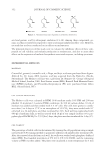
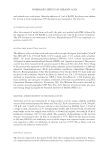
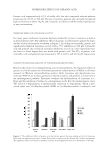
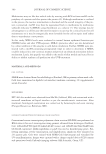
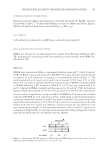
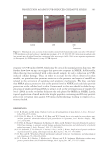
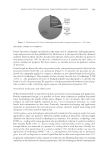
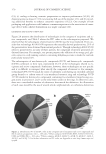
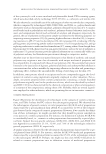
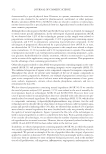
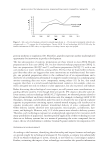
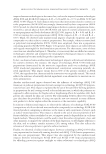
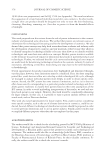
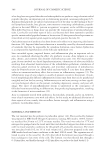
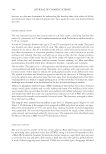
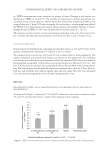
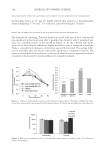
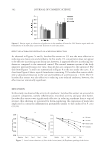
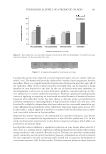
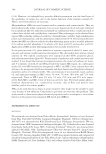
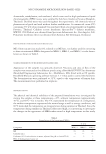
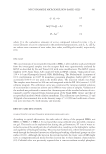
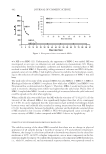
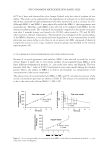
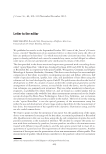
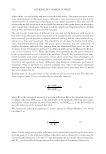
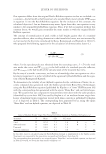
JOURNAL OF COSMETIC SCIENCE 390 SKIN SENSITIVITY: EFFECT OF LACTOBACILLUS EXTRACT ON THE REDUCTION OF SKIN REDNESS Lactobacillus extract at 1% and 5% mildly reduced skin redness in a dose-dependent manner displaying 3.75% and 7.5% reduction, respectively (Figures 2a and b). EFFECT OF LACTOBACILLUS EXTRACT ON THE REDUCTION OF SKIN MICROFLORA The formulation containing Triclosan showed an initial reduction of 66% (statistically non-signifi cant) in bacterial count after 1 month of use however, after 2 months of use, there was a marked increase in the microfl ora (Figure 3). At the 2-month time point, seven out of nine subjects exhibited a higher microbial count as compared to baseline. There is a possibility of emergence of resistance against this material. The average differ- ence in microfl ora after use was not statistically signifi cant as compared to baseline. The subjects treated with the formulation containing lactobacillus extract appeared to show a consistent reduction in the total microfl ora over 2-month treatment. Figure 2. (a) Effect of lactobacillus extract on the reduction of skin redness. This fi gure exhibits the reduc- tion of skin redness with time (normalized for baseline redness). (b) Shows the area under the curves from (a). Figure 3. Effect of o/w emulsions with 1% lactobacillus extract and o/w emulsion with 1% Triclosan on aerobic and anaerobic.

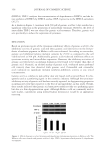
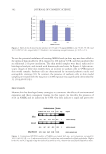
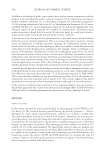
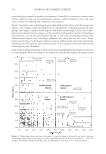
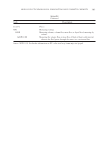
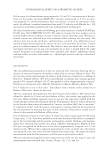
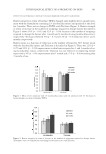
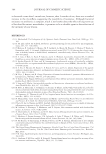
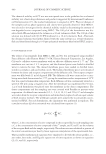
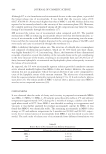
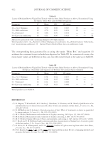
PHYSIOLOGICAL EFFECT OF A PROBIOTIC ON SKIN 391 EFFECT OF LACTOBACILLUS EXTRACT ON SKIN BARRIER INTEGRITY AND REPAIR Barrier integrity in terms of baseline TEWL changed only slightly after 1-month treat- ment with the formulation containing 1% lactobacillus extract and persisted at this level for 2 months. There was no change in TEWL with Triclosan (Figure 4). Barrier strength in terms of increase in the number of strippings required to disrupt barrier described in Figure 5 shows 16% (p = 0.41) and 52% (p = 0.18) increase in the number of strippings required to disrupt the barrier after 1 month and 2 months of using lactobacillus extract, respectively. Triclosan exhibited 3% (p = 0.7) and 12% (p = 0.4) reduction after 1 and 2 months, respectively. Barrier repair as a function of reduction in the number of hours for 50% barrier repair with the lactobacillus extract and Triclosan is described in Figure 6. There was 22% (p = 0.25) and 30% (p = 0.19) improvement in skin barrier repair after 1 and 2 months of us- ing lactobacillus extract, respectively. Triclosan was not effective in improving barrier repair with a 4% (p = 0.6) improvement after 1 month and a 7% (p = 0.8) worsening after 2 months of use. Figure 4. Effect of o/w emulsions with 1% lactobacillus extract and o/w emulsion with 1% Triclosan on barrier integrity in terms of baseline TEWL. Figure 5. Barrier integrity in terms of increase in the number of strippings required to disrupt barrier. Treatments were o/w formulations containing lactobacillus extract and Triclosan.
Purchased for the exclusive use of nofirst nolast (unknown)
From: SCC Media Library & Resource Center (library.scconline.org)