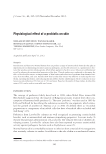
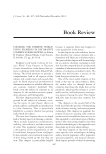
J. Cosmet. Sci., 63, 397–406 (November/December 2012) 397 Characterization and release kinetics of nicotinamide microemulsion-based gels PRAPAPORN BOONME, NATTIYA SUKSAWAD, and SARUNYOO SONGKRO, Department of Pharmaceutical Technology, Faculty of Pharmaceutical Sciences, Prince of Songkla University, Songkhla 90112, Thailand. Accepted for publication April 13, 2012. Synopsis The aim of this study was to investigate physicochemical characteristics and to determine in vitro release ki- netics of prepared nicotinamide microemulsion-based gels (MBGs). Nicotinamide microemulsions (ME) were composed of 3% w/w nicotinamide, 7% w/w water, 25% w/w soybean oil, and 65% w/w of 9:1 oleth- 10:isopropyl alcohol mixture. A water-in-oil (w/o) type ME was converted to three MBGs. ME was combined with 5% w/w of colloidal silica to obtain MBG-1, with 5% w/w of 0.5% w/w carbomer solution to obtain MBG-2, or with a mixture of 3% w/w of 0.5% w/w carbomer solution and 2% w/w of PEG-40 hydrogenated castor oil to obtain MBG-3. The results indicated that MBG-1 was a clear gel with plastic fl ow while MBG-2 and MBG-3 were turbid gels with Newtonian fl ow. MBG-1 was physically and chemically stable at 4ºC as well as at ambient temperature (approximately 30ºC) during the 2-month study period. The color darkened when stored at 60ºC. The release kinetics of MBG-1 was best fi tted to zero order model. The in vitro release of nicotinamide from MBG-1 through cellulose membrane was compared with that from the ME and an oil- in-water (o/w) commercial cream (CC). The rank order of release rate of nicotinamide from different formula- tions was MBG-1 ME CC. INTRODUCTION Nowadays, white skin is preferable for Asian people since they think that whiteness means beauty and attractiveness. This belief is infl uenced by skin color of famous Asian singers and actors. For this reason, skin whitening products gain widespread acceptance and provide high income in cosmetic markets of Asia. Among many skin whitening agents, nicotinamide, commonly known as vitamin B3, is a widely used and well-known compound that can inhibit melanosome transfer from melanocytes to keratinocytes (1). It provides a safe mechanism since the inhibition process occurs after melanogenesis within the melanosome and does not affect intrinsic biosynthesis of melanin production, consid- ered to be safe and effective for use in skincare products for anti-aging, anti-infl ammatory, and depigmentation effects. Benefi ts of topical nicotinamide on the skin have been reported Address all correspondence to Prapaporn Boonme at prapaporn.b@psu.ac.th.
Purchased for the exclusive use of nofirst nolast (unknown)
From: SCC Media Library & Resource Center (library.scconline.org)