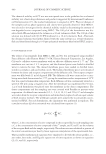
JOURNAL OF COSMETIC SCIENCE 398 (2–4). However, its hydrophilicity provides diffi cult penetration into the basal layer of the epidermis, its target site, due to the barrier function of the stratum corneum (5). Hence, novel formulations are necessary. Microemulsions (MEs) are novel carriers used in cosmetics and cosmeceuticals. They are thermodynamically stable, transparent, low-viscosity dispersions of oil and water stabilized by an interfacial fi lm of a surfactant and usually in combination with a cosurfactant such as a short-chain alcohol and a polyhydroxy compound. Many advantages can be obtained from topical MEs including enhanced aesthetics, thermodynamic stability, high solubilization power, ease of preparation, and skin penetration enhancement (6–9). Several researches have shown that MEs are effective vehicles for skin whitening agents such as ascorbyl palmitate (10), sodium ascorbyl phosphate (11), arbutin (12), kojic acid (12), and ascorbic acid (13). Application of MEs in skin whitening products was recently reviewed (14). In our previous study (15), phase behavior of systems composed of oleth-10, water, vari- ous oils, and various cosurfactants was investigated. The oils studied were silicone oil and soybean oil. The studied cosurfactants were isopropyl alcohol (IPA), propylene glycol, and sorbitan monooleate (Span 80). Various ratios of surfactant and cosurfactant were also studied. It was found that among investigated systems, the system of soybean oil, water, and 9:1 mixture of oleth-10 and IPA provided the largest ME region. In a subsequent study (16), two ME formulations designated as ME-1 and ME-2 were selected from this system to be incorporated with nicotinamide and then characterized for physicochemical properties and in vitro release profi les. The concentrations of nicotinamide, water, soybean oil, and surfactant mixture in ME-1 were 3% w/w, 7% w/w, 18% w/w, and 72% w/w, respectively. Those in ME-2 were 3% w/w, 7% w/w, 25% w/w, and 65% w/w, respec- tively. Both ME-1 and ME-2 were of water-in-oil (w/o) type. They had similar physico- chemical characteristics (i.e., conductivity, viscosity, class of fl ow, and particle size), stability, and in vitro release profi les. MEs can be used directly as drops or sprays however, they might not be suitable in some cases because of low adhesion. Conversion to gel form can overcome this problem. This study aimed to characterize physicochemical properties and to investigate in vitro release kinetics of the prepared nicotinamide ME-based gels (MBGs). EXPERIMENTAL METHODS MATERIALS Nicotinamide was obtained from Fluka (Buchs, Switzerland). Soybean oil was obtained from Thai Vegetable Oil Public Company (Bangkok, Thailand). Oleth-10 (Sympatents- AO/100®) was obtained from Kolb Distribution Ltd. (Hedingen, Switzerland). IPA was obtained from VRW International (Arlington Heights, IL). Colloidal silica was obtained from Sigma-Aldrich (St. Louis, MO ). Carbomer (Carbopol® Ultrez 21) was obtained from Lubrizol (Wickliffe, OH). Triethanolamine (TEA) was obtained from P.C. Drug Center (Bangkok, Thailand). PEG-40 hydrogenated castor oil was obtained from BASF (Morris County, NJ). Isotonic phosphate buffer pH 7.4 (IPB) was prepared in-house and composed of disodium hydrogen phosphate (Carlo-Erba, Milan, Italy), sodium dihydrogen orthophosphate (BDH Chemicals Ltd., East Yorkshire, UK), and sodium chloride (Carlo-Erba, Milan, Italy).

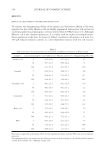
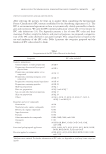
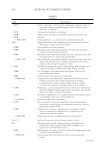
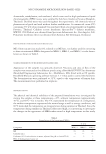
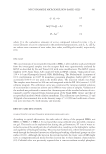
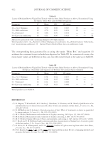
NICOTINAMIDE MICROEMULSION-BASED GELS 399 Acetonitrile, triethylamine, and methanol, which were used in high performance liquid chromatography (HPLC) assay, were supplied by Lab-Scan Analytical Science (Bangkok, Thailand). Distilled water was used throughout the experiments. All chemicals were of pharmaceutical grade and used without further modifi cation. A commercial cream (CC) containing 3% w/w of nicotinamide was purchased from a local supermarket in Songkhla Province, Thailand. Cellulose acetate membrane (Spectra/Por®3 dialysis membrane, MWCO 3500 Dalton) was obtained from Spectrum Laboratories Inc. (Los Angeles, CA). Polyamide membrane fi lter was obtained from Sartorius AG (Göttingen, Germany). PREPARATION OF MICROEMULSION-BASED GELS ME-2 from our previous study (16), referred to as ME here, was further used for converting to three nicotinamide MBGs designated as MBG-1, MBG-2, and MBG-3 via the formu- lations as shown in Table I. CHARACTERIZATION OF MICROEMULSION-BASED GELS Appearance of the samples was optically observed. Viscosity and class of fl ow of the samples were measured at fi ve different speeds using a Brookfi eld DV-III Ultra rheometer (Brookfi eld Engineering Laboratories Inc., Middleboro, MA) fi tted with an LV spindle. Brookfi eld Rheocalc operating software (version 3.1-1) was used to control the rheometer. The determinations were performed at 32°C, equal to the temperature of human skin. The measurements were performed in triplicate. STABILITY STUDY The physical and chemical stabilities of the prepared formulations were investigated by storing the samples at three temperatures—4°C, ambient temperature (approximately 30°C), and 60°C—for 2 months. The 4°C represented the temperature of a refrigerator, the ambient temperature represented the normal usage as well as storage conditions, and 60°C mimicked the temperature on transportation during summer in Thailand. Since the temperature during summer in Thailand is fl uctuated high, it is interesting to investigate the changes in the appearance of MBGs when stored at high temperature in this study. Table I Formulations of the Investigated MBGs Component % w/w MBG-1 MBG-2 MBG-3 ME 95 95 95 Colloidal silica 5 — — Carbomer (0.5% w/w solution in water, adjusted the pH to 6 with TEA) — 5 3 PEG-40 hydrogenated castor oil — — 2
Purchased for the exclusive use of nofirst nolast (unknown)
From: SCC Media Library & Resource Center (library.scconline.org)