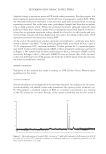
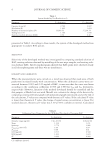
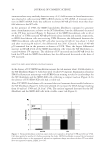
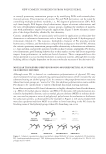
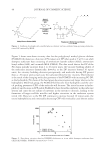
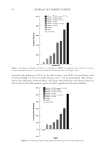
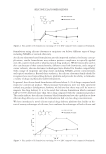
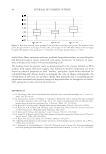
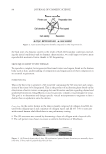
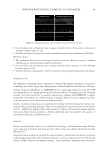
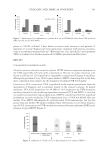
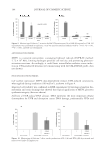
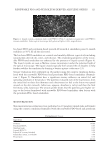
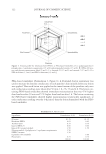
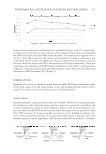
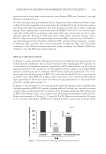
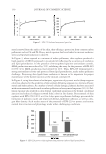
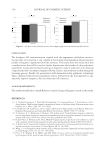
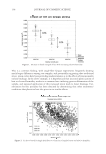
J. Cosmet. Sci., 68, 137–140 ( January/February 2017) 137 A unifying theory for visualizing the causes of hair breakage and subsequent strategies for mitigation TREFOR EVANS, TRI-Princeton, Princeton, NJ. INTRODUCTION The performing of constant rate extension experiments to generate stress–strain curves represents one of the most fundamental tests within the hair care industry, and is most commonly used in assessing structural damage imparted by various hair insults. Yet this must be considered a characterization technique, as this one-time catastrophic deformation of samples is not especially representative of real-life habits and practices. The repetitive nature of grooming practices begs an analogy to materials failing under fatiguing condi- tions and this presentation compares and contrasts hair breakage results from these two types of mechanical test. It becomes apparent that extensively different conclusions can arise from performing these two testing approaches on common sets of samples. This forces us to rethink the reasons and causes for hair breakage, and, in doing so, a new approach for conceptualizing this occurrence is proposed. METHODS Both single-fi ber stress–strain and fatiguing experiments on hair were performed using commercially available automated mechanical testing equipment (Dia-Stron Ltd, Andover, UK). These methodologies have been described previously (1–4). All testing was per- formed with equipment housed in benchtop environmental chambers to ensure con- trolled climatic conditions. In certain instances, single-fi ber fatigue experiments were supplemented by automated repeated grooming experiments that were performed on a custom-built device (2,5). RESULTS Figures 1 and 2 show results obtained from testing virgin Caucasian hair under differing climatic conditions. Figure 1 shows the break strength of hair decreasing signifi cantly with increasing relative humidity yet, the S-N curves in Figure 2 show a dramatically larger effect. Address all correspondence to Trefor Evans at trefor.evans@taevans.net.

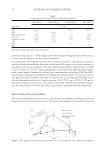
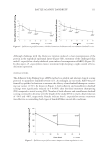
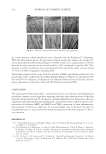
JOURNAL OF COSMETIC SCIENCE 138 This is a common fi nding, with single-fi ber fatigue experiments frequently showing much larger differences among test samples, and potentially suggesting that traditional stress–strain curves have been providing underestimates as to the effects of various insults on hair breakage. In the above example, it is hypothesized that increased plasticization of hair at elevated humidity results in a common force inducing greater deformation of the sample, and repeated application of this increased strain leads to faster breakage. Cor- roboration for this postulate has been obtained by determining that other treatments/ conditions that plasticize hair also give rise to similar effects. Figure 1. Decrease in break strength of hair with increasing relative humidity. Figure 2. Cycles-to-break for single hair fi bers as a function of applied stress and relative humidity.
Purchased for the exclusive use of nofirst nolast (unknown)
From: SCC Media Library & Resource Center (library.scconline.org)