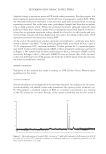
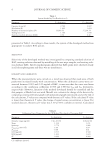
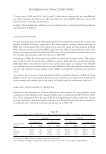
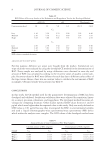
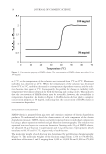
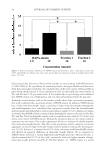
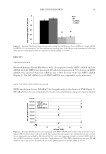
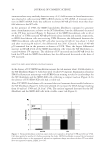
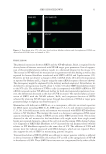
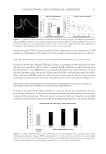
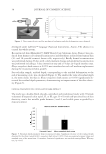
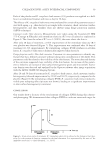
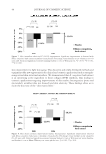
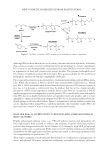
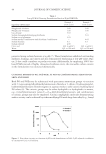
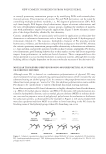
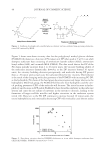
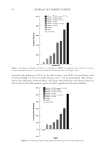
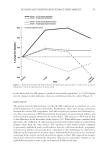
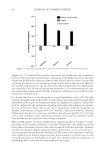
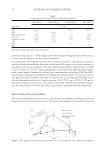
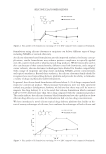
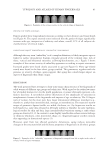
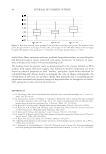
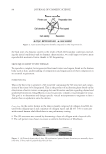
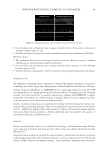
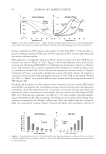
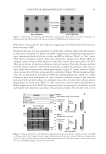
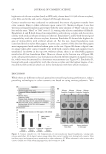
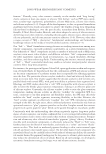
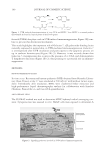
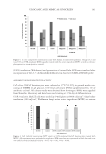
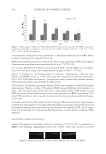
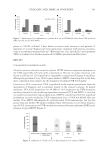
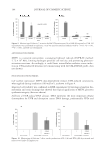
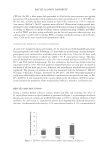
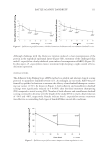
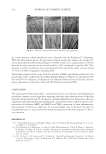
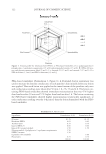
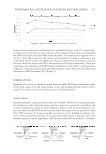
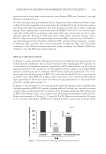
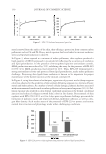
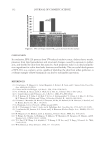
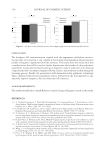
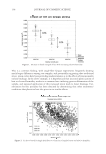
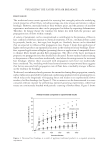
VISUALIZING THE CAUSES OF HAIR BREAKAGE 139 DISCUSSION The traditional stress–strain approach for assessing hair strength probes the underlying tensile properties of hair fi bers, including average one-time stresses and strains to induce breakage. However, materials break at their weakest point, and the presence of any fl aw represents a nucleation site that can be propagated to failure by repeating deformations. Therefore, by fatigue theory the tendency for failure lies with both the presence and propagation rate of fl aws within a sample. A variety of parameters can be conceptualized as contributors to the presence of fl aws in hair: condition of the hair exposure to chemical treatments, UV, etc. mechanical fl aws caused by ponytails, braids, etc. hair type hair length etc. Similarly, factors can be identifi ed that are expected to infl uence fl aw propagation rates. Figure 2 shows how application of higher stresses produces an exponential increase in the tendency for hair breakage. There- fore, repeated applications of higher (grooming) forces or application of comparable forces to thinner fi bers should quicken fl aw propagation. The effect of the hair’s mechanical properties on propagation rates has already been discussed. Factors outlined earlier relating to the presence of fl aws are those traditionally cited when discussing reasons for increased hair breakage, whereas those associated with propagation rates have not traditionally been considered. Yet, modeling work based around extensive experimental data suggests that factors associated with propagation rate of fl aws have a markedly stronger infl uence on the tendency for breakage. To this end, our industry already possesses the means for slowing fl aw propagation, namely, surface lubrication provided by traditional conditioning products lowers grooming forces, which reduces the magnitude of fatiguing forces and results in an exponentially slower tendency for fi ber breakage (see Figure 2). This occurrence can be demonstrated in a more consumer-relevant manner by performing repeated grooming experiments, where hair tresses are continuously brushed with periodic counting of broken fi bers. Figure 3 shows Figure 3. Decreased hair breakage as a result of applying traditional products in a repeated grooming experiment.

JOURNAL OF COSMETIC SCIENCE 140 the sizable benefi ts of a typical commercial shampoo and conditioner regimen on the tendency for hair breakage in such an experiment. CONCLUSIONS Conceptualization of hair breakage in terms of fatigue testing principles (i.e., the pres- ence and propagation rate of fl aws) leads to a simple and succinct underlying theory that explains the tendency for this occurrence under a range of conditions. In accordance with scientifi c principles, this theory explains the effect of customary insults, while also mak- ing predictions by which the model can be tested and refi ned. To date, experimental fi ndings are in good agreement with such predictions, and, in some cases, demonstrate considerable impact from previously unrecognized factors. REFERENCES (1) T. A. Evans, Fatigue testing of hair: A statistical approach to hair breakage, J Cosmetic Sci., 60, 599–616 (2009). (2) T. A. Evans, “Hair Breakage,” in Practical Modern Hair Science, T. Evans and R. R. Wickett. Eds. (Allured Books, 2012). (3) T. A. Evans, Measuring hair strength, part 1: Stress-strain curves, Cosmet. Toiletries, 128(8), 590–594 (2013). (4) T. A. Evans, Measuring hair strength, part 2: Fiber breakage, Cosmet. Toiletries, 128(12), 854–859 (2013). (5) T. A. Evans and K. Park, A statistical approach to hair breakage. II. Repeated grooming experiments, J Cosmet. Sci., 61, 439–455 (2010).
Purchased for the exclusive use of nofirst nolast (unknown)
From: SCC Media Library & Resource Center (library.scconline.org)