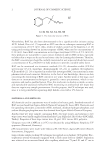
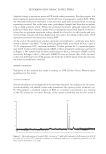
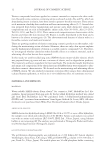
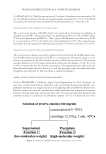
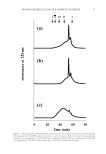
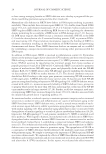
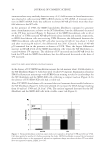
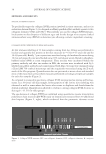
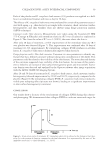
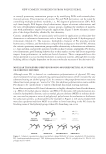
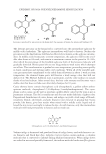
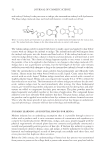
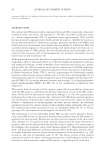
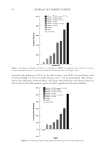
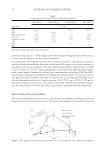
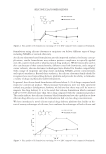
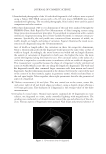
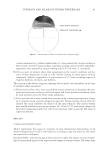
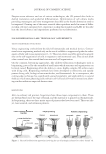
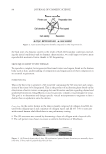
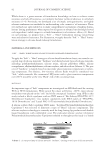
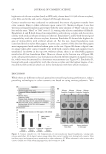
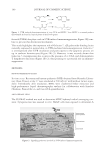
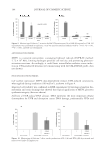
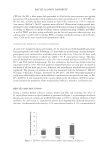
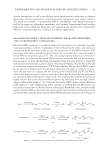
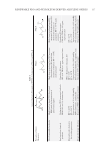
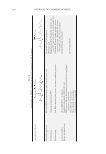
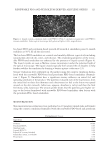
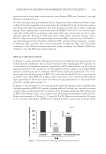
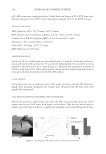
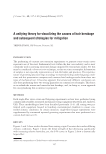
JOURNAL OF COSMETIC SCIENCE 2 Nevertheless, BAC has also been demonstrated to be a signifi cant skin irritant causing ACD. Indeed, Oiso et al. (7) reported an ACD case due to a shampoo containing BAC at a concentration of 0.1% (w/v). Also, results of studies carried out by Kanerva et al. (8) using patch testing showed an irritant response of BAC when used at concentrations of 0.1% (w/v). Since BAC concentrations in wet wipes vary from 0.05% to 0.5 % (w/v) (9), these products are susceptible to cause contact dermatitis and/or ACD on skin, especially on babies skin as wipes can be used several times a day for cleansing their bottoms. Therefore, the BAC concentration should be carefully monitored in wet wipes and should not exceed a concentration of IC50 (ACD)/10 in baby products to provide a suitable safety factor. BAC can be monitored via titrimetric methods (10–12), ultraviolet–visible (UV-Vis) spectroscopy (13,14), liquid/gas chromatography (15–21), or capillary electrophoresis (CE) methods (22–26) as reported in studies that investigate BAC concentrations in some pharmaceuticals and cosmetics. However, to the best of our knowledge, there is no data concerning the monitoring of BAC content in wet wipes. Another point at this stage, used detector in instrumental techniques is generally a mass spectrometer, which is very expensive and needs a qualifi ed person. Thus, this study aims to develop a simple, accurate, and reproducible analytical method for BAC monitoring in antibacterial wet wipes that does not require any sample pretreatment. For this purpose, the CE technique was used, since it is very powerful for separating alkyl halides, even with a UV detector. MATERIALS AND METHODS All chemicals used in experiments were of analytical or better grade. Standard material of BAC was purchased from Sigma-Aldrich Chemical Company (St. Louis, MO). Chemicals used for supporting electrolyte acetonitrile (ACN), methanol, disodium hydrogen phosphate, and sodium dihydrogen phosphate were also obtained from Sigma-Aldrich Chemical Company. Antibacterial wet wipe samples containing BAC, dry wipe tissues, and solution to wet wipe tissues were kindly supplied from Kardeşler Uçan Yag ˘lar Ltd. Ști (Gebze- KOCAELI,˙ Turkey). Properties of these wipe tissues were 40 g/m2 20% viscose 80% polyester. Ultrapure water (18.2 MW.cm at 25°C) was obtained by using Millipore Simplicity UV apparatus (Darmstad, Germany). pH measurements were made with Oakton pH 2100 Series digital pH-meter (Eutech Instruments, Singapore). Large-volume sample stacking CE technique was applied on an Agilent 3D Capillary Elec- trophoresis system (Germany) equipped with a diode array detector (DAD). Separation was achieved on an uncoated fused silica capillary, which was 75 μm I.D. and 47 cm in Figure 1. The molecular structure of BAC.

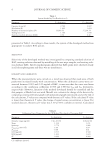
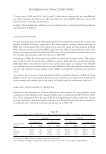
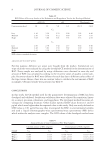
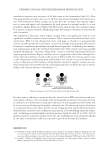
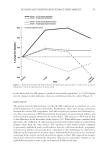
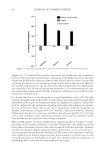
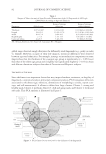
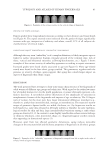
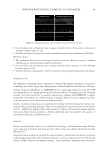
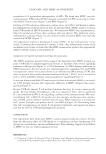
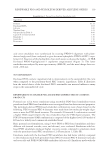
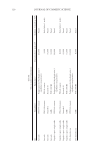
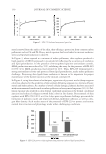
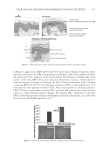
DETERMINATION OF BAC IN WET WIPES 3 length purchased from Agilent and the effective length of the column was 38.5 cm. The wavelength selected was 214 nm, due to the maximum absorption in spectrums obtained by the DAD detector of the CE system. The capillary was thermostatically controlled at 18°C during all experiments. The background electrolyte (BGE) was 75 mM (pH 6) phos- phate buffer mixed with ACN at a ratio of 70:30. A washing program was applied for new capillaries through the following steps: fl ushing with 1.0 M NaOH (20 min), fl ushing with 0.1 M NaOH (20 min), and fl ushing with water (20 min). After activation of the column, a short washing procedure was applied for each working day by fl ushing 1.0 M NaOH (20 min). Besides these washing steps, the capillary was conditioned by fl ushing with 1.0 M NaOH (1.5 min), 0.1 M NaOH (1.5 min), water (3 min), and BGE (5 min) between each measurement. After the conditioning step, samples were injected hydrodynamically by using 50-mbar pressure for 3 s at the ca- thodic end of the capillary and separation was carried on by applying +10 kV separation voltage. At the end of the measurement, the capillary was rinsed with methanol for 3 min to fl ush all residues from the capillary. Stock solution of BAC was prepared by dissolving weighed amount of the standard sub- stance in methanol at a concentration value of 5 mg/ml BAC. Standard solutions were obtained by diluting stock solution with methanol. According to the certifi cate of analysis, BAC standard consists of C10 derivative (65.4%) and C12 derivative (32.8%). Calculations to determine concentration of each species in standard solutions were made based on this information. Quality control solutions of BAC were prepared as standard solutions at dif- ferent concentration values from calibration curve points. Low, medium, and high con- centration values were selected as 0.0075, 0.06, and 0.2 mg/ml BAC. All solutions were stored in a refrigerator at 4°C. Wet wipe solutions were used without any sample treatment for analysis. For this pur- pose, fi ve wet wipe tissues were taken from the packet and were wrung out to obtain a solution containing BAC. This solution (100 μl) was diluted by the addition of 1400 μl of methanol. After the diluting step, this solution was injected to the capillary column for analysis. ADSORBED AMOUNT OF BAC ON WIPE TISSUES Although these studies were performed, it was understood that wipe tissues adsorbed a part of BAC included in wetting solution. A set of experiment was designed to reveal the adsorbed amount of BAC onto the tissues as three repetitive, three different sets. For this purpose, dry tissue samples were wetted by using a solution containing 0.1% BAC in ratio of 2.80 (w/w). This application is used to moisture the dry wet wipes in commercial products in industrial area. After wetting of dry tissues, they were kept at room temperature for a week. Then fi ve wet wipes were wringed and 100 μl of obtained solution is diluted by adding 1400 μl methanol. Fifteen different solutions were obtained by this way due to repetitions and all solutions were used directly for measurement. Adsorbed amount of BAC was calculated by comparing measured amount with total BAC amount. It was seen that dry wipes adsorbed a big amount of BAC species that measured C10 value was 85.64% ± 9.68% of added amount and measured C12 value was 67.06% ± 9.68% of added amount. The percentage of the adsorbed amount of BAC was used to analyze BAC in the solution of wet wipes.
Purchased for the exclusive use of nofirst nolast (unknown)
From: SCC Media Library & Resource Center (library.scconline.org)