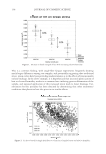
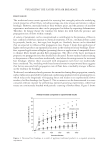
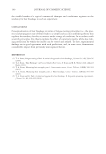
J. Cosmet. Sci., 68, 59–67 ( January/February 2017) 59 A botanically derived skin surface lipid mimetic based on the composition of healthy 22-year-old females JEFF ADDY, TIFFANY OLIPHANT, and ROBERT HARPER, Floratech, Chandler, AZ 85225 ( J.A., T.O.), and Harper & Associates, La Jolla, CA 92037 (R.H.). Synopsis Introduction: Skin surface lipids (SSLs) greatly affect the skin physiology and are thought to be involved in skin processes such as thermoregulation, bacterial colonization, and barrier function and maintenance. SSLs are primarily composed of fatty acids, triglycerides, cholesterol, steryl esters, wax esters, and squalene. The objective of this research was to evaluate and better understand the SSL composition and variation in an age- and sex-controlled population, and create an appropriate botanically derived mimetic. Methods: SSL samples taken from the foreheads of 59 healthy, 22-year-old females were analyzed by gas chromatography mass spectrometry (GC-MS). Using botanically derived raw materials from Macadamia integrifolia, Simmondsia chinensis, and Olea europaea, a mimetic was engineered via a series of esterifi cation reactions and lipid components quantitated with GC-MS. The glyceride and wax ester components were produced by the interesterifi cation of M. integrifolia and S. chinensis under specifi ed conditions. The steryl ester component was produced by the esterifi cation of the fatty acids of M. integrifolia and phytosterols under similar conditions. Results: The following major classes of lipids were found and quantifi ed by percent composition: glycerides, free fatty acids, squalene, wax esters, steryl esters, and cholesterol. The variability between subjects for each component was minimal however, the greatest variation was seen for free fatty acids and cholesterol. Correlations among the components were calculated and found to be statistically or directionally signifi cant with few exceptions. The esterifi cation reactions of jojoba, macadamia, and tall oils, along with a precise addition of squalene derived from O. europaea, produced a suitable SSL mimetic. When applied to delipidized skin, the mimetic helped restore barrier function, increased skin hydration, and increased skin elasticity and fi rmness in aged skin. Discussion: The present research indicates that, overall, the SSL composition is quite consistent in a controlled population of 22-year-old females. Furthermore, there were strong correlations between the SSL components among subjects, with the exception of squalene and steryl esters. This was expected due to the fact that of the six major SSL components, steryl esters and squalene also showed higher variation over time for each individual. The variation in free fatty acids may be attributable to the potential differences in the microflora of the subjects. The variation in this study’s results, as compared to previously published work, could indicate that the collection methods, geographic location, gender, and age specifi city contribute to the distribution or collection of different lipid components on the skin surface. Since the excretion of sebum is known to decrease in females after 40 years of age, the proposed mimetic could be a benefi cial supplement to human SSLs in aged skin, as well as in skin where the stratum Address all correspondence to Tiffany Oliphant at tiffany.oliphant@fl oratech.com. Presentation: This article was presented as a research podium at the 29th IFSCC Congress in Orlando, FL, October 30–November 2, 2016.

JOURNAL OF COSMETIC SCIENCE 60 corneum is defective, by aiding in the restoration of barrier function, while increasing skin hydration, elasticity, and fi rmness. INTRODUCTION Skin surface lipids (SSLs) are primarily composed of fatty acids (FAs), triglycerides, cholesterol, cholesteryl esters, wax esters, and squalene (1). The SSLs are either of sebaceous origin (i.e., sebum) (approximately 90%) or epidermal origin (approximately 10%), and the fraction of any one component varies based on body location (i.e., whether the location is rich in sebaceous glands) (2). Wax esters, squalene, glycerides, free fatty acids (FFAs), and cholesteryl esters are primarily derived from sebaceous glands (3). Cholesterol, FFA, and ceramides mainly originate in the epidermis along with small amounts of cholesteryl es- ters, and glycerides (3). SSLs greatly affect the skin physiology and are thought to be in- volved in skin processes such as thermoregulation (4), bacterial colonization (5), and barrier function and maintenance (6). Although much research has been done to quantify the total content and various SSL components, there is still much debate as to the best method of noninvasive collection and analytical technique, as well as whether or not outside factors such as race, gender, and age affect the collective quantity or the percent composition of each SSL component. Previously explored methods of collection include (i) solvent extraction (2), (ii) Sebutape® (CuDerm Corporation, Dallas, TX) (7), and (iii) cigarette paper (8). Additionally, samples have been analyzed using various methods such as (i) thin layer chromatography (8), (ii) infrared spectroscopy (9), (iii) high-temperature gas chromatography and mass spectrom- etry (GC-MS) (10), (iv) nuclear magnetic resonance spectroscopy (11), (v) high-performance liquid chromatography (HPLC) and MS (12), or (vi) combinations of analytical tech- niques (13). This current body of research used the cigarette paper collection method in conjunction with GC-MS analysis to determine the percent composition of each of the SSL compo- nents. On the basis of the research conducted by Shetage et al. (14), the cigarette paper method produces the most consistent data. Analysis by GC-MS allows optimal separation and identifi cation of desired lipid components and constituents that cannot be achieved without a combination of chromatographic and mass spectral analysis. An all-female population was used to evaluate variance between highly similar individuals. The age 22 was chosen because sebum excretion rates are at a maximum within the 16- to 40-year age range (15), and remain steady through the 20s and 30s (16). The composition of 22-year-old healthy female SSLs was then used to generate a botani- cally sourced SSL mimetic to determine the physiological effects when an SSL mimetic is applied to the skin topically. Moisturizers are often used for treatment of dry skin condi- tions, whether it is in conjunction with a drug for disease states like atopic dermatitis or psoriasis, daily use for self-perceived dry skin due to age or climate, or as a protectant in the workplace due to frequent contact with chemical agents (17). Moisturizers have both short- and long-term hydration and barrier function effects on the skin, and these effects are highly dependent upon the physicochemical properties of the moisturizer, e.g., pH, occlusivity, and type of ingredients used (17,18). The effi cacy portion of this research primarily focused on the short- and long-term functions of skin hydration and skin bar- rier function and maintenance when an SSL mimetic is applied topically to the skin.
Purchased for the exclusive use of nofirst nolast (unknown)
From: SCC Media Library & Resource Center (library.scconline.org)