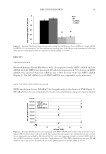
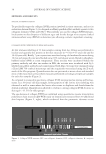
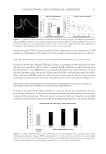
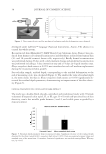
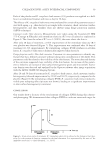
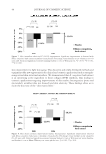
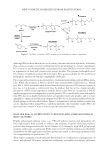
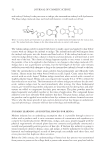
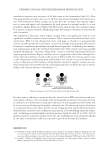
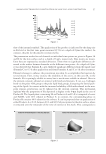
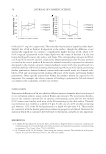
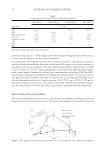
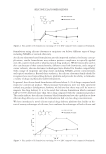
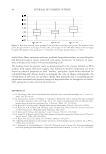
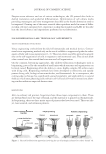
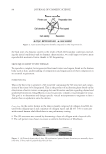
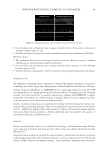
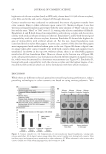
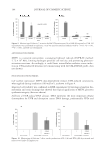
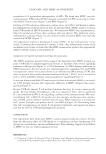
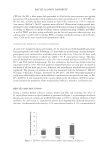
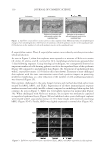
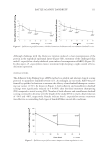
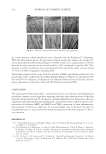
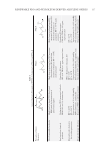
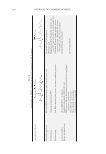
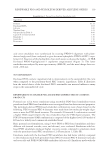
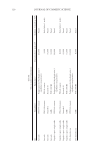
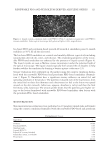
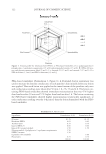
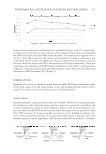
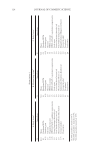
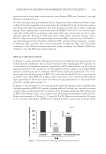
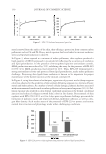
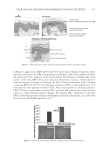
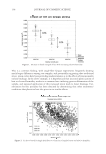
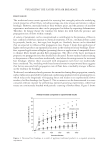
LONG-WEAR SEBUM-RESISTANT COSMETICS 97 formers.” Virtually, every color cosmetic currently on the market with “long lasting” claims contains at least one organic or silicone “fi lm former,” such as PVP-type copoly- mers, acrylate-type copolymers, polyethylene, silicone MQ resins, silicone resin waxes, and silicone acrylates (1–2). Despite all the developments, to date, no general formulation guidelines have been clearly articulated to achieve the benefi ts of long wear. Regarding silicone-based technologies, over the past decades, researchers from Revlon, Procter & Gamble, L’Oreal, Estee Lauder, Shiseido, and others adopted a variety of silicone materi- als for long-wear color cosmetics, including silicone gums, silicone waxes, silicone resins, silicone polyamide, and silicone pressure-sensitive adhesives (5–9). However, other than a vague concept of “MQ + plasticizer,” fundamental understandings and formulation knowledge remain in the minds of very few skilled cosmetic chemists (1–3). Our “Soft” + “Hard” formulation strategy focuses on studying interactions among non- volatile components, especially polymeric nonvolatiles, in a given formulation chassis. Our defi nition of “Hard” components includes a number of materials such as MQ resins, acrylates, resin waxes, silica silylates, and different tackifi ers. “Soft” components include the other ingredients typically found in formulations, e.g., liquid emulsifi ers, rheology modifi ers, and shine-enhancing fl uids. Understanding the intrinsic material properties of “Soft” + “Hard” nonvolatile blends may enable us to better interpret/predict relevant cosmetic fi lms’ long-wear properties. For instance, for prototypes in Figures 5A and 6A, upon application on skin and evapora- tion of volatile fl uids, we hypothesized that the combination of SPE and silicone acrylate are the main components of a polymer matrix that is responsible for adhering pigments onto the skin. The particular silicone acrylate studied is a hard and relatively brittle ma- terial in its neat form. Our results suggest that the silicone acrylate is able to form com- patible blends with several SPEs, with good miscibility at polymer chain segment level. Rheology and DSC studies show that a “soft” SPE (compatible with silicone acrylate) is able to lower the blends’ glass transition temperature, making it an effective plasticizer of silicone acrylate. Conversely, the silicone acrylate is able to raise the glass transition temperature, making silicone acrylate an effective “tackifi er” for compatible SPE. In a sense, consistent to our fi lm properties and fl exibility studies, the SPE may effectively mobilize the “hard” acrylate segments, increasing fl exibility to the fi lm. Likewise, the “hard” acrylate segment can effectively “toughen” the “soft” SPE, introducing cohesion strength to the fi lm. At right ratios, these combined polymeric nonvolatiles may form an optimized matrix to “glue” pigment particles on the skin. Insights around the intrinsic properties of a given pigment “glue” blend can be gained through its viscoelastic profi le. Consistently with the understanding that sebum negatively impacts long-wear perfor- mance of color cosmetics, our studies confi rmed that in vitro testings with artifi cial sebum oil pretreatment lead to more color transfer than without sebum pretreatment. Perspira- tion and sebum may alter a blend of nonvolatiles’ pigment “gluing” effi cacy. If sebum is miscible with nonvolatile components, it effectively reduces the “Hard” to “Soft” ratio, further plasticizes the blend of nonvolatiles, and results in a “softer” and more “fl uidic” matrix on skin. This leads to weakened pigment binding to skin, easier removal upon rub-off, and more color transfer upon contact. On the other hand, if each component of a nonvolatile blend can be carefully selected with reduced sebum miscibility, the nonvola- tile matrix formed for pigment binding may be less prone to sebum’s plasticization, thus may reduce the detrimental effects of sebum. Based on all our learnings, we developed a systematic formulation strategy for longer wear and sebum resistance benefi ts.

JOURNAL OF COSMETIC SCIENCE 98 REFERENCES (1) S. X. Lu, The science behind transfer-resistant color cosmetics, a podium presentation at Society of Cosmetic Chemists’ 69th Annual Scientifi c Meeting (2014). (2) R. Lockhead and M. Lockhead, Two decades of transfer-resistant lipstick, Cosm. & Toil., 130, 18–29 (2015). (3) P. Tsolis and J. Castro, Stability, Uniformity in Foundations, Cosm. & Toil., XX, XX–XX (2012). (4) Z. Li, et al, A set of non-human test methods for comprehensive understanding of color cosmetics’ se- bum resistance, a podium presentation at Society of Cosmetic Chemists’ 70th Annual Scientifi c Meeting (2015). (5) H. Brieva, J. G. Russ, and I. M. Sandewicz, Cosmetic compositions, US Patent 5800816 (1998). (6) A. Patil, J. Calello, R. Sandewicz, Cosmetic compositions with silicone resin polymers, US Patent 20080050328 (2008). (7) L. E. Drechsler, T. E. Rabe, and E. D. Smith, III, Transfer resistant cosmetic compositions, US Patent 6406683 (2002). (8) S. X. Lu, W. Yu, and X. Blin, Cosmetic compositions comprising at least one polysiloxane based poly- amide. US Patent 6958155 (2005). (9) D. Luo, H. Brieva, M. Susak, T. Wang, W. Mu, S. Nazar, and W. A. Lee, Transfer resistant cosmetic, US Patent 7261877 (2002).
Purchased for the exclusive use of nofirst nolast (unknown)
From: SCC Media Library & Resource Center (library.scconline.org)