JOURNAL OF COSMETIC SCIENCE 250 (16) P. Chuarienthong, N. Lourith, and P. Leelapornpisid, Clinical effi cacy comparison of anti-wrinkle cos- metics containing herbal fl avonoids, Int. J. Cosmet. Sci., 32, 99–106 (2010). (17) ANVISA, Guia de Estabilidade de Produtos Cosméticos (Agência Nacional de Vigilância Sanitária, Brazil, 2004), vol. 52. (18) BRASIL, RDC No 481 de 23 de Setembro de 1999 (Agência Nacional de Vigilância Sanitária, Brazil, 1999). (1 9 ) T. Costa and N. Jorge, Characterization and fatty acids profi le of the oils from Amazon nuts a nd walnuts: characterization and fatty acids profi le of the oilsee d s, Nutr. Food Sci., 42, 279–287 (2012). (20) V. F. De Araújo, A. C. Petry, R. M. Echeverria, E. C. Fernandes, and F. Pastore, Jr., Plantas da Amazônia para Produção Cosmética: uma Abordagem Química - 60 Es p écies do Extrativismo Florestal Não-Madeireiro (2007). (21) BRASIL, RDC No 270 de 22 de Setembro de 2005 (Agência Nacional de Vigilância Sanitária, Brazil, 2005). (22) NEPA, Tabela Brasileira de Composição de Alimentos - TACO, 4 Ed. (Núcleo de Estudos e Pesquisas em Alimentação, Campinas, Brazil, 2011). (23) F. Tokay and S. Bağdat, Determination of iron and copper in edible oils by fl ame atomic absorption spectrometry after liquid–liquid extraction, J. Am. Oil Chem. Soc., 92, 317–322 (2015). (24) OECD, “Acute oral toxicity – acu t e toxic class method - 423,” in OECD Guidelines for the Testing of Chemicals, Section 4, (OECD Publishing, Paris, 2001), pp. 1–14. (25) C dos S. C. Coutinho and E. P. dos Santos, Cremes e loções: visão ge r al, Cosmet. Toilet., 26, 36–38 (2014). (26) F. Christoph, P.-M. Kaulfers, and E. Stahl-Biskup, In vitro evaluation of the antibacterial activity of β-triketones admixed to mela leuca oils, Planta Med., 67, 768–771 (2001). (27) A. R. Pianovski, A. F. G. Vilela, A. A. S. Da Silva, C. G. Lima, C . G. Silva, V. F. M. Carvalho, C. R. De Musis, S. R. P. Machado, and M. Ferrari, Uso do óleo de pequi (Caryocar brasiliense) em emulsões cos- méticas: desenvolvimento e avaliação da esta b ilidade física, Braz. J. Pharm. Sci., 44, 249–259 (2008). (28) V. L. B. Isaac, L. C. Cefali, B. G. Chiari, C. C. L. G. Oliveira, H. R. N. Salgado, and M. A. Corrêa, Pro- tocolo para ensaios físico-químicos de estabilidade de fi tocosméticos, Rev. Cienc. Farm. Basica Apl., 29, 81–96 (2008). (29) G. R. Leonardi, L. R. Gas p ar, and P. M. B. G. M. Campos, Estudo da variação do pH da pele humana exposta à formulação cosmética acrescida ou não das vitaminas A, E ou de ceramida, por metodologia não invasiva, An. Bras. Dermatol., 77, 563–569 (2002). (30) V. B . Souza and J. R. N. Ferreira, Desenvolvimento e estudos de estabilidade de cremes e géis contendo sementes e extratos do bagaço da uva Isabel (Vitis labrusca L), Rev. Ciênc. Farm. Básica Apl., 31, 217–222 (2010). (31) M. J. Pratas, S. Freitas, M. B. Oliveira, S. C. Monteiro, A. S. Lima, and J. A. P. Coutinho, Densities and viscosities of fatty acid methyl and ethyl esters, J. Chem. Eng. Data, 55, 3983–3990 (2010). (32) M. S. Ahshawat, S. Saraf, and S. Saraf, Preparation and characteri z ation of herbal creams for improve- ment of skin viscoelastic properties, Int. J. Cosmet. Sci., 30, 183–193 (2008). (33) J. Paligova, L. Joríková, and J. Cvengros, Study of FAME stability, Energy Fuels, 22(3), 1991–1996 (2008).

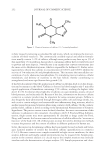
251 J. Cosmet. Sci., 71, 251–262 (September/October 2020) Caffeine in Hair Care and Anticellulite Cosmetics: Sample Preparation, Solid-Phase Extraction and HPLC Determination KRISTINA MLADENOV and SLAVICA SUNARIĆ, Department of Pharmacy, Faculty of Medicine, University of Niš, Niš, Serbia (K.M.), Department of Chemistry, Faculty of Medicine, University of Niš, Niš, Serbia (S.S.) Accepted for publication April 24, 2020. Synopsis Caffeine is extensively used in cellulite and hair growth cosmetic products. Regulations in the field of cosmetics require manufacturers to list caffeine in the ingredient list on product labels, but its exact content in these products is not declared. On the other hand, daily exposure to caffeine from all sources may approach health reference values. For that reason, it is important to know the exact caffeine content in products for skin and hair care. Cosmetics are often viscous or semisolid products of very complex chemical composition. To analyze caffeine in these complex sample matrices by liquid chromatographic methods, an extraction step is often necessary. This article presents the applicability of the solid-phase extraction (SPE) procedure for the caffeine extraction and high-performance liquid chromatography (HPLC) determination in anticellulite gels, shampoos, and hair balsam. The samples of gels were centrifuged after ammonia addition to precipitate carbomer. In cellulite reduction, gel caffeine content was found to be in the range of 0.7–1.7%, whereas in the hair-care products, it was about 1.0%. I NTRODUCTION Caffeine, an organic nitrogenous base, is a naturally occurring purine alkaloid of the methylxanthine class (Figure 1). Caffeine is being increasingly used in cosmetics because of its high biological activity and ability to penetrate the skin barrier (1). Based on the research studies that have been conducted in the last three decades, caffeine is used as an ingredient in hair growth products and cellulite reduction products. Cellulite deposition is one of the most common aesthetic problems associated with the female population throughout the world, especially at the age greater than 35 years. Caf- feine is seen as a potential way to prevent excessive accumulation of fat and promotes the lipolysis process. According to Hexsel et al. (2), it inhibits phosphodiesterases (PDEs), which lead to lipogenesis reduction. Caffeine also stimulates the draining lymph systems Address all correspondence to Kristina Mladenov at kristina_mladenov@yahoo.com.
Purchased for the exclusive use of nofirst nolast (unknown)
From: SCC Media Library & Resource Center (library.scconline.org)