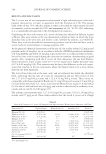
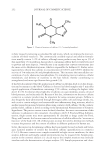
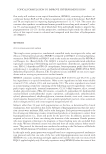
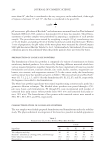
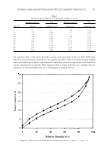
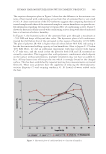
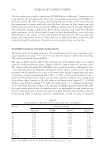
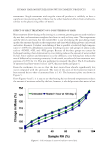
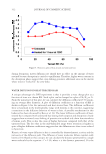
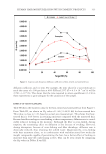
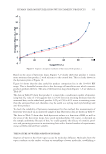
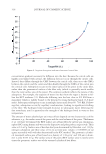
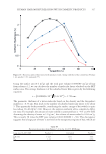
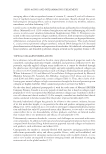
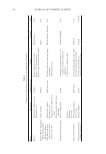
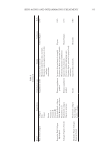
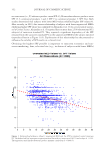
JOURNAL OF COSMETIC SCIENCE 252 in fatty tissues by removing accumulated fat and toxins, which can improve the microcir- culation of blood vessels (1). The commercially available topical anticellulite formula- tions usually contain 1–2% of caffeine, although some products may have up to 3% of this ingredient (3). In addition, hair products containing caffeine have recently been used to prevent and treat alopecia. 5-α-reductase is an enzyme that converts testosterone into the more active dihydrotestosterone, which is responsible for baldness (1). Earlier inves- tigations have shown that caffeine in concentrations of 0.001% and 0.005% inhibits the activity of 5-α-reductase (4) and phosphodiesterase. This increases the intracellular con- centration of cyclic adenosine monophosphate (5), stimulating microcirculation, cellular metabolism, and delivery of nutrients to the hair follicle, thereby contributing to strengthened and more rapid human hair growth (1,6). It has been documented that the application of caffeine on the skin leads to its fast absorp- tion and occurrence in the blood. Caffeine is detected in blood samples only 5 min after topical application of formulation containing 2.5% caffeine, reaching the highest value after 1 h (7,8). It is known that a high dose of caffeine can cause insomnia, anxiety, elevated blood pressure, and tachycardia (9). Because of this fact, information on the exact caffeine content in a cosmetic product may be important for some consumer groups. Caffeine is also frequently daily administered through beverages (coffee, soft and energy drinks, tea, and cocoa) or certain analgesic and nonsteroidal anti-infl ammatory drug mixtures, which is another reason for increased attention when using cosmetics with caffeine. On the cosmetic product label, caffeine is listed according to the International Nomenclature of Cosmetic Ingredients. The precise content is not declared therefore, the exact concentration of this substance is unknown to the consumers. According to the U.S. Food and Drug Adminis- tration, thigh creams may more appropriately be classifi ed as drugs under the Food, Drug, and Cosmetic Act because removal or reduction of cellulite affects the “structure or function” of the body (10). All of these points increase the need to develop test methods to assess the presence and the content of caffeine in different products for human use. So far, the interest in determining caffeine has been mainly focused on foods and bever- ages. Limited number of articles has described caffeine quantifi cation in cosmetics (11–13). Because cosmetics are complex semisolid or high viscous emulsions, for their analysis, different and lengthy sample pretreatments may be required (14). Sample prep- aration in the cosmetic analysis is a crucial step as the complex matrices may seriously interfere with the determination of target analytes (15). Sample preparation and clean- Figure 1. Chemical structure of caffeine (1,3,7-trimethylxanthine).

CAFFEINE IN HAIR-CARE AND ANTICELLULITE COSMETICS 253 up are important for the high-performance liquid chromatography (HPLC) analysis, where the sample solutions are directly injected into an HPLC column. The complexity of some cosmetics may obstruct their direct analysis. Thus, in many cases, cosmetic samples cannot be analyzed only by “dilute and shoot” approach because direct injec- tion of untreated samples may cause a large increase in column pressure. Also, injecting excipient molecules of higher molecular weights can lead to a decrease in column qual- ity, shortening its lifetime. In addition, retention of excipients may require a long column rinse after measurements. Therefore, a sample pretreatment step may be re- quired to eliminate proteins, emulsifying agents, and many other viscous constituents. Also, anticellulite gels and creams contain a wide variety of synthetic and natural (plant-derived) substances which may interfere in the caffeine determination. Solid- phase extraction (SPE) is useful for sample preparation and clean-up in the analysis of pharmaceutical creams. It can be more rapid and effi cient than liquid–liquid extraction and yields quantitative extractions without using large volumes of harmful organic solvents. In this work, a solid-phase extraction method followed by HPLC with ultra- violet detection was developed and applied to caffeine determination in anticellulite gels and hair-care products. EXP ERIMENTAL CHE MICALS AND REAGENTS Caf feine (1,3,7-trimethylxanthine) standard solution of LC-MS grade was obtained from Thermo Scientifi c (Waltham, MA), (Lot ER01081601). Caffeine powder of analytical grade (serial number 0030810) was supplied from NRK Inženjering (Beograd, Serbia). Methanol was of HPLC grade (Sigma-Aldrich, Eschenstrasse, Germany, Lot STBG4373V). For the sample preparation, 96% ethanol Ph. Eur. grade (Zorka-Pharma, Šabac, Serbia, serial number 57/226) was used. STOC K SOLUTIONS AND CALIBRATION CURVE The stock solution of caffeine with a concentration of 1.0 mg/mL was prepared in deion- ized water. This solution was stored for up to 1 week at 4°C. Working standard solutions were prepared by diluting the stock with deionized water. COSME TIC PRODUCTS Two c affeine-enriched shampoos, one caffeine-enriched hair balsam, one caffeine-free sham- poo, and two caffeine-enriched cellulite reduction products (in the form of gels) were obtained from the local cosmetic shops. According to the manufacturers’ declaration, both cellulite reduction products and hair-care products contained caffeine, plant extracts, and a large number of other substances. In all the examined cosmetics, caffeine was one of the major components as it was one of the fi rst seven ingredients in the ingredient list. The exact concentration of caffeine in any of the examined products was not declared.
Purchased for the exclusive use of nofirst nolast (unknown)
From: SCC Media Library & Resource Center (library.scconline.org)