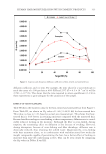
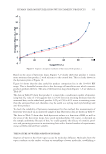
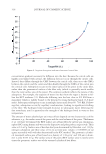
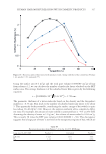
JOURNAL OF COSMETIC SCIENCE 254 SAMPLE PR EPARATION After opt imization of the sample preparation procedure (see discussion), the following proto- col was adopted: 0.5 g of the anticellulite gel was accurately weighed and dissolved in 10 mL of 96% ethanol. After that, NH4OH was added to obtain pH 7–8. Insoluble excipients were separated by centrifugation for 10 min at 4,000 rpm at 20°C. Then, 1 mL of the supernatant was loaded on the cartridge, and the SPE procedure was performed. 0.5 g of the hair-care product was dissolved in 10 mL of distilled water and heated at 50°C in a water bath for 45 min. The obtained pH of the samples was 5–6. After cooling and centrifugation for 10 min at 4,000 rpm at 20°C, 1 mL of the supernatant was loaded on the SPE cartridge. SOLID-PHASE EXTRACTION VisiprepTM S PE vacuum manifold Supelco 57030-U (Sigma-Aldrich Chemie GmbH, Darmstadt, Germany) was used for the SPE. Five different SPE sorbents (C18, C18ec, C18 Hydra, C8, and HR-X) of the same volume and capacity (1 mL/100 mg) from the same producer (Macherey-Nagel, GmbH, Düren, Germany, REF 730 207, LOT 60.007) were tested. The cartridge C18ec was octadecyl modifi ed endcapped silica, C18 Hydra was a special octadecyl phase for polar analytes, and HR-X was a hydrophobic polystyrene- divinylbenzene copolymer. SPE cartridge s were conditioned with 3 mL of methanol and 3 mL of deionized water. One milliliter of the prepared sample was loaded on the cartridge at a fl ow rate of 1 mL/ min. The elution of caffeine was achieved with 4 × 1 mL of methanol. HPLC CONDITIO NS HPLC analyses w ere performed on Agilent Technologies 1200 Series apparatus (Santa Clara, CA) with an diode array detector (DAD) and a fl uorescence detector. The separa- tion was carried out on the Restek Ultra IBD C18 column (150 × 3 mm, 3 μm, Lot 13122OP, Ser 14020153J) (Bellefonte, PA) at 30°C. The mobile phase consisting of a methanol–water mixture (40:60, v/v) was pumped in an isocratic mode at a fl ow rate of 0.4 mL/min. Two microlitre of the fi nal eluate was injected into the HPLC column. UV detection set at 274 nm was used as the optimal wavelength for caffeine determination. RESULTS AND DISCUSSI ON OPTIMIZATION OF THE CHROMATOGRAPHIC CONDITIONS Chromatographic cond itions for the determination of caffeine in food matrices are well established and have been published in many articles (16–20). Because the C18 analytical column has been used for caffeine separation in most of the articles, this column was also selected in our work. To optimize HPLC conditions for the caffeine analysis of cosmetic products, the methanol-to-water volume ratio was varied from 20:80 (v/v) to 50:50 (v/v). The most suitable mobile phase composed of 40% methanol and 60% water, giving well-

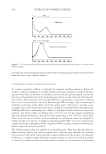
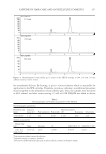
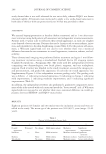
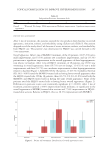
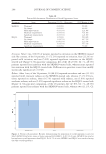
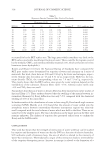
CAFFEINE IN HAIR-CARE AND ANTICELLULITE COSMETICS 255 separated and good shaped peaks, with a run time less than 5 min. Thus, the retention time of caffeine was about 3.3 min. The low retention time enabled a fast chromato- graphic analysis but also very good selectivity of the method. As can be seen in Figure 2, caffeine-enriched shampoos had a compound that appeared at 4.1 min with a low resolved peak, which gave an absorbance in a similar UV region as caffeine (260–280 nm) (Figure 3). The resolution between peaks of caffeine and this ingredient was 0.98 recorded at 260 nm, whereas at 274 nm, this potentially interfering peak gave a very low signal. Ade- quate selection of working detector wavelength eliminated the signal of an unknown substance. Thus, the unknown substance at 4.1 min does not interfere in the caffeine analysis when a detector was set at 274 nm because at this wavelength, this substance has very low absorption. On the other hand, the chromatograms of gel after SPE (Figure 4) were very clean when the detector was set at 260 nm, 270 nm and 274 nm. For these reasons, isocratic elution was adopted, and by selecting the detection at 274 nm, good peak area, peak width, and selectivity for caffeine were achieved (Table I). The examination of t he system suitability was conducted in terms of retention time re- peatability, peak symmetry, peak width, number of theoretical plates, capacity factor (k′), resolution, and selectivity (Table I). The capacity factor (k′) is optimal as reference values are between 1 and 5. The values of k′ larger than 5 lead to longer retention and analysis time, whereas values less than 1 are unreliable and cause low resolution. The number of theoretical plates higher than 5,000 indicates a good separation of caffeine. Also, the se- Figure 2. Chromatogram of shampoo 1 extract on the HR-X cartridge at 260, 270, and 274 nm c affeine retention time 3.332 min.
Purchased for the exclusive use of nofirst nolast (unknown)
From: SCC Media Library & Resource Center (library.scconline.org)