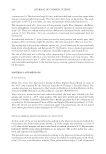
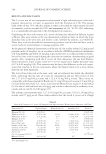
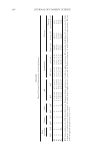
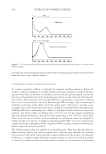
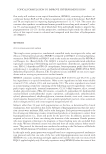
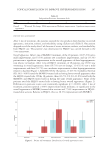
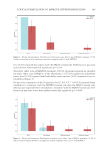
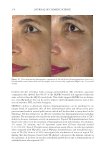
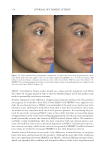
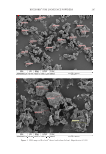
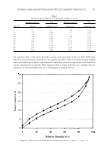
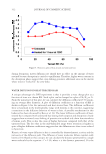
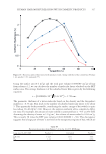
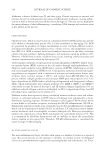
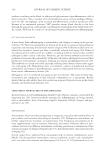
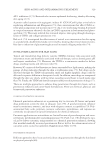
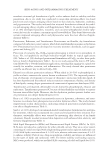
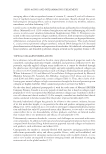
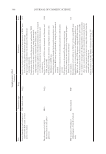
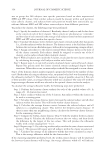
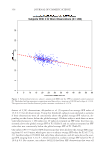
JOURNAL OF COSMETIC SCIENCE 256 lectivity factor and resolution had excellent values demonstrating satisfactory overall col- umn effi ciency in the caffeine analysis. OPTIMIZATION OF SAMPLE PREPARATION PROCEDURE In cosmetic products, c affeine is dispersed in complex emulsion matrices. Before the analysis, cosmetic emulsions are usually dissolved in water, methanol, or buffers by heat- ing in a water bath. As the hair-care products and anticellulite gels are highly viscous, the fi rst step in the optimization of the preparation procedure was the selection of the dissolu- tion solvent. The optimal solvent should fulfi ll two requirements: to provide a solution that is not viscous and that can easily fl ow through SPE cartridges, and to ensure good solubility and release of the caffeine from the sample matrix. The latter is actually a clas- sic single-stage solid–liquid extraction that is desirable to perform before the application of SPE purifi cation. Considering that caffeine is sparingly soluble in water at room tem- perature, but freely soluble in boiling water (21), we selected the sample preparation which included dissolution in deionized water and heating at 40°–50°C in a water bath. This avoids the use of solvents such as methanol or acetonitrile which are harmful to health and the environment. In addition, phosphate buffer (pH 7) was also tried, but the samples dissolved in phosphate buffer clogged the SPE cartridges as some insoluble phos- phate compounds were precipitated. The additional procedure was applied to anticellulite gels. They were fi rst dissolved in warm deionized water, but viscous samples that could not pass through the cartridge were obtained. One of the main problems in these samples was the presence of carbomer. Carbomer is a synthetic high–molecular weight polymer of acrylic acid which is soluble in water. It is widely used in anticellulite gels as a vehicle for incorporation of liposomes Figure 3. UV spectrum of the caffeine peak and peak of unknown compound from shampoo 1 extra c t on the HR-X cartridge.

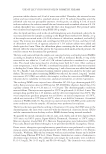
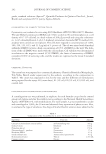
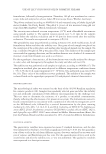
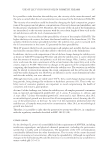
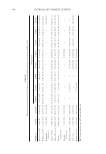
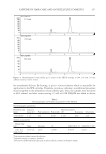
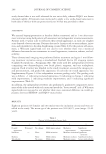
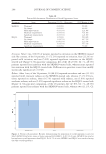
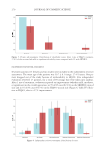
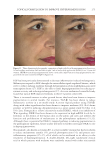
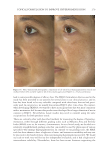
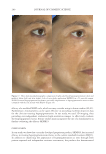
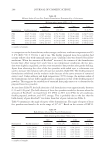
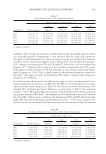
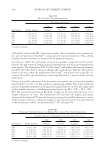
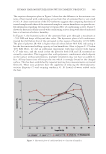
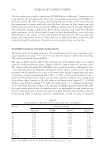
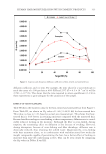
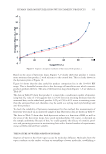
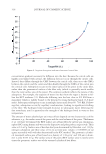
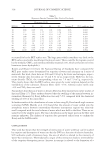
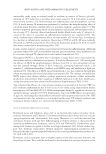
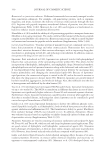
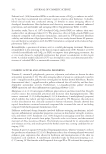
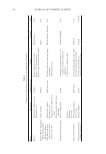
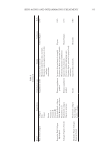
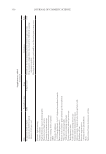
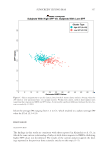
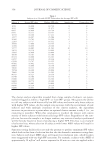
CAFFEINE IN HAIR-CARE AND ANTICELLULITE COSMETICS 257 for transdermal delivery. By heating, it gives a viscous solution which is unsuitable for application to the SPE cartridge. Therefore, to remove carbomer, an additional procedure must be applied to the preparation of anticellulite gels. Thus, the samples were dissolved in 96% ethanol, and after vortex-mixing, 0.5 mL of 0.1M NH4OH was added to obtain Figure 4. Chromatogram of anticellulite gel 1 extract on the HR-X cartridge at 260, 270, and 2 74 nm caffeine retention time 3.35 min. Table I Chromatographic and Analytical parameters of the Method Chromatographic parameters Retention time (min) Capacity factor (k’) Peak symmetry Peak width Theoretical plates (N) Resolution Selectivity 3.34 ± 0.007 1.11 0.81 0.108 5,781 5.62 2.25 Analytical parameters Range (mg/ mL) Slope Intercept R2 LOD S/N (1:3)c LOQ S/N (1:10)c 0.01–0.2a 13,971.6 20.04 0.9997 0.007% 0.02% 0.08–1.6%b – – – – – a Concentration in fi nal extracted solutions . b Assumed content in cosmetic products . c S/N ratio for LOD and LOQ expressed as spiked caffeine content in shampoo sample .
Purchased for the exclusive use of nofirst nolast (unknown)
From: SCC Media Library & Resource Center (library.scconline.org)