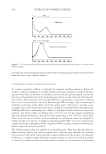
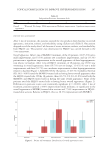
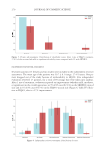
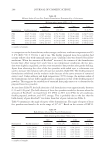
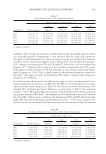
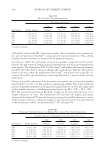
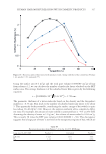
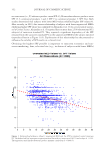
JOURNAL OF COSMETIC SCIENCE 260 Because of the lack of refer ence methods for caffeine determination in cosmetics, we could only compare our results with the expected recommended maximum values and with the results reported in other studies. Thus, the found contents in cellulite reduc- tion cosmetics were in agreement within the recommended values of 1–3% of caffeine (3). In addition, the obtained results are comparable with those given by Injac et al. (1.2–1.6% of caffeine) (11) and Marchei et al. (0.03–5.6% of caffeine) (12). Also, the examined hair-care products contained caffeine in accordance with the usual amounts of 1.0–2.5% (7,8). Because caffeine is considered as a stimulating bioactive compound that can be readily absorbed through the skin (7,8), its exact content in cosmetics is important, especially for caffeine-sensitive consumers. According to the European Food Safety Authority, daily intake of up to 400 mg of caffeine from all sources does not raise safety concerns for adults. On the other hand, the estimated proportion of the adult population exceeding daily intakes of 400 mg ranges from about 6% to almost 33% (23). All the examined cosmetics contained a signifi cant amount of caffeine however, none of them listed its precise content. Moreover, the anticellulite gel packaging does not indicate the presence of caffeine on the product`s principal display panel, whereas hair-care products have this information on the front panel. CONCLUSIONS Methods to monitor and control the caffeine content in cosmetics are of great importance to the cosmetic industry. Caffeine is dispersed in the complex cosmetic matrices there- fore, its extraction is diffi cult and depends on physicochemical properties of the sample and other excipients. Solid-phase extraction was an effective and useful method for pre- treatment and clean-up of cosmetic formulations before HPLC analysis. By appropriate selection of cartridge sorbent, very good extraction of caffeine can be achieved. After SPE Figure 5. UV spectrum of the caffeine peak from anticellulite gel 1 extract on the HR-X cartri d ge.

CAFFEINE IN HAIR-CARE AND ANTICELLULITE COSMETICS 261 preparation of anticellulite gels, shampoos, and hair balsam, clear and nonviscous solu- tions were obtained. Potentially interfering compounds were removed, and the caffeine content was determined with satisfactory accuracy and precision. The selection of the cartridge sorbent is of great importance to obtain high extraction yields. Surprisingly, more polar octyl modifi ed silica phase gave higher recoveries only for hair balsam, whereas for gels and shampoos, the most suitable sorbent was a polystyrene– divinylbenzene copolymer. These indicate that the choice of the cartridge sorbent de- pends not only on physical and chemical characteristics of the analyte but also depends on the sample matrix. Thus, different cartridges must be used for caffeine extraction from different cosmetic products. This article contributes to the development and application of SPE in the analysis of cos- metic products. The SPE procedure optimization showed the importance of screening the performance of a range of cartridge types when applying SPE techniques to samples of the complexity often encountered in personal care products. ACKNOWLEDGMENTS This research was fi nancially supported by the Faculty of Medicine, University of Niš, internal scientifi c project (Grant No 2, 11-14629-4/2) and by the Ministry of Education, Science, and Technological Development of the Republic of Serbia (Grant TR 31060). REFERENCES (1) A. Herman and A. P. Herman, Caffeine’s mechanisms of action and its cosmetic use, Skin Pharmacol. Physiol., 26, 8–14 (2013). (2) D. Hexsel, C. Orlandi, and D. Zechmeister do Prado, Botanical extracts used in the treatment of cel- lulite, Dermatol. Surg., 31, 866–872 (2005). (3) D. Hexsel and M. Soirefmann, Cosmeceuticals for cellulite, Semin. Cutan. Med. Surg., 30, 167–170 (2011). (4) M. E. Sawaya and V. H. Price, Different levels of 5α-reductase type I and II, aromatase, and androgen receptor in hair follicles of women and men with androgenetic alopecia, J. Invest. Dermatol., 109, 296– 300 (1997). ( 5) M. Jafari and A. Rabbani, Studies on the mechanism of caffeine action in alveolar macrophages: caffeine elevates cyclic adenosine monophosphate level and prostaglandin synthesis, Metabolism, 53, 687–692 (2004). ( 6) T. W. Fischer, U. C. Hipler, and P. Elsner, Effect of caffeine and testosterone on the proliferation of hu- man hair follicles in vitro, Int. J. Dermatol., 46, 27–35 (2007). ( 7) X. Liu, J. E. Grice, J. Lademann, N. Otberg, S. Trauer, A. Patzelt, and M. S. Roberts, Hair follicles contribute signifi cantly to penetration through human skin only at times soon after application as a solvent deposited solid in man, Br. J. Clin. Pharmacol., 72, 768–774 (2011). ( 8) N. Otberg, A. Patzelt, U. Rasulev, T. Hagemeister, M. Linscheid, R. Sinkgraven, W. Sterry, and J. Lademann, The role of hair follicles in the percutaneous absorption of caffeine, Br. J. Clin. Pharmacol., 65, 488–492 (2008). ( 9) J. L. Temple, Ch. Bernard, S. E. Lipshultz, J. D. Czachor, J. A. Westphal, and M. A. Mestre, The safety of ingested caffeine: a comprehensive review, Front. Psychiatry, 8, 80 (2017). ( 10) FDA (2000), Thigh Creams (Cellulite Creams), accessed February 14, 2020, https://www.fda.gov/cosmet- ics/cosmetic-products/thigh-creams-cellulite-creams. ( 11) R. Injac, B. Srdjenovic, M. Prijatelj, M. Boskovic, K. Karljikovic-Rajic, and B. Strukelj, Determination of caffeine and associated compounds in food, beverages, natural products, pharmaceuticals, and cosmet- ics by micellar electrokinetic capillary chromatography, J. Chromatogr. Sci., 46, 137–143 (2008).
Purchased for the exclusive use of nofirst nolast (unknown)
From: SCC Media Library & Resource Center (library.scconline.org)