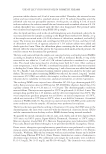
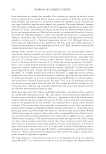
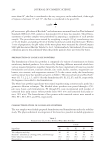
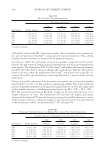
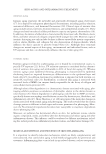
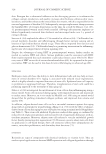
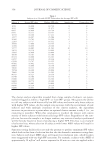
JOURNAL OF COSMETIC SCIENCE 294 more than 66°, the fl ow is considered to be very very poor on the other hand, if the angle of reposes is between 31° and 35°, the fl ow is considered to be good (10). tan( ) h r (2) pH measurement. pH values of Ric eSo rb® and talcum were measured based on Thai Industrial Standards (TIS) 443-2525-cosmetics: skin powder (11) of loose face powders. The pH mea- surements of powder samples were performed by preparing a suspension of each powder sample. The procedures were started by weighing a sample (10 g), transferring into a 150-ml beaker, and adding 90 ml of freshly boiled and cooled distilled water. Within 5 min of preparation, the pH values of the water phase were measured by a SevenCompact S220 pH/Ion meter (Mettler Toledo Co. Ltd., Schwerzenbach, Switzerland). If necessary, a fi ltration process was performed when the powder particles were not wetted by water. PREPARATION OF LOOSE FACE POWDERS The f ormulation of loose face powders i s composed of a variety of constituents to obtain satisfactory fi nished products. It is achieved by blending different materials which have various required properties together. Generally, the basic ingredients of loose face powder formulations are talcum, titanium dioxide, zinc oxide, kaolin, starches, magnesium car- bonate, zinc stearate, and magnesium stearate (2). In the current study, the formulations used to prepare loose face powders are given in Table I. The ratios of talcum and RiceSorb® were 4:0, 3:1, 2:2, 1:3, and 0:4 for the formulations F0, F1, F2, F3, and F4, respectively. No fragrance was added to the formulations. The white base powder ingredients were m ixed together using a mortar and a pestle by a geometric dilution technique. The blended white powders were passed through a 250- μm sieve. Later, each formulations, F0 through F4, were incorporated with powder of tamarind fruit pulp extract (white powder bases 90% w/w and tamarind fruit pulp ex- tract 10% w/w). The formulations of face powers with tamarind extract were named as FT0, FT1, FT2, FT3, and FT4, respectively. CHARACTERIZATION OF LOOSE FACE POWDERS Th e test samples were freshly prepared fo rmulations and formulations under the stability study. The physicochemical investigation of the loose face powders included appearances Table I Formulations of Loose Face Powder (White Base Powder ) Ingredient % w/w F0 F1 F2 F3 F4 Talc (adhesion and slip) 80 60 40 20 — RiceSorb® (absorbency, covering power, and blooming) — 20 40 60 80 Other white base materials 19.8 19.8 19.8 19.8 19.8 Preservatives 0.2 0.2 0.2 0.2 0.2

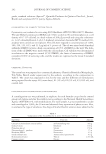
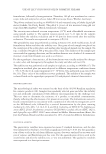
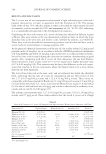
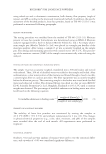
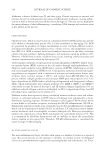
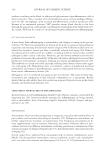
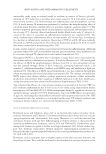
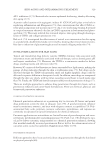
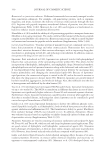
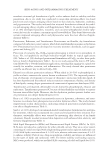
RICESORB® FOR LOOSE FACE POWDERS 295 using naked eye and a colorimetric examination, bulk density, fl ow property (angle of repose), and pH according to the previously mentioned methods. In addition, the specifi c assessment of the fi nished products, loose face powders, based on TIS 443-2525 (11) was performed as mentioned following paragraphs. TESTING OF MOISTURE The te sting procedure was modifi ed from t he method of TIS 443-2525 (11). Moisture present in loose face powder formulations was determined using an HB43-S Moisture analyzer equipped with a built-in balance (Mettler Toledo Co. Ltd.). An empty alumi- num sample pan (Mettler Toledo Co. Ltd.) was placed in a sample pan handler of the moisture analyzer. After taring, a sample (3 g) was accurately weighed on the sample pan. The drying and measuring processes were carried out at 105 ± 2°C. The percent- age of the moisture content (%MC) of the sample was automatically achieved using the analyzer. TESTING OF INSOLUBLE SUBSTANCES IN BOILING WATER The sample (1 g) was accurately weighed, tr ansferred into a 500-ml beaker, and wetted with ethanol. Then, 200 ml of distilled water was added to the sample and boiled. After sedimentation, a clear water portion of the mixture was fi ltered through a Gooch crucible, a sintered glass fi lter or a porous porcelain. The fi lter equipment was accurately weighed before the fi ltration process. The remaining sample in the beaker was rinsed with distilled water and subjected to fi lter. The obtained fi ltrate was dried in a hot air oven (ED400/ E2-N, Scientifi c Promotion Co. Ltd., Bangkok, Thailand) at 105 ± 2°C until a constant weight was obtained. The percentage of insoluble substances in boiling water was calcu- lated based on the following equation: weight of filtrate g % insoluble substances in boiling water weight of test sample g ¬ q100. (3) STABILITY OF LOOSE FACE POWDERS The stab ili ty of loose face powders was monito red by storing the samples at 45 ± 2°C (RH = 75% ± 5%) and ambient temperature for 2 mo (12). The changes in physicochemical properties (e.g., color, odor, moisture, and pH) of the samples were recorded after the end of each month. All experiments were performed in triplicate. STATISTICAL ANALYSIS Student’s t-test and one-way analysis of variance were used to test the statistical differ- ence, and a p-value of 0.05 was considered signifi cant difference.
Purchased for the exclusive use of nofirst nolast (unknown)
From: SCC Media Library & Resource Center (library.scconline.org)