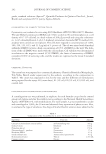
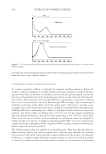
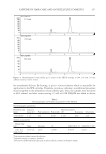
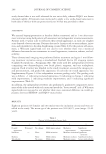
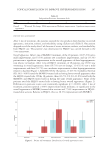
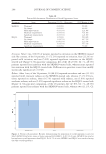
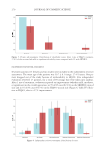
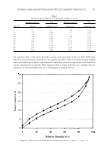
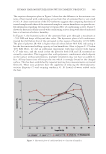
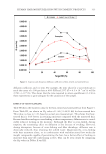
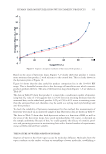
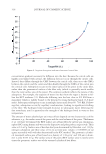
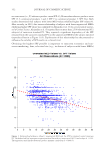
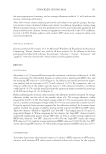
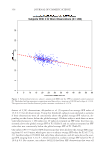
JOURNAL OF COSMETIC SCIENCE 308 EFFECT OF COND ITIONER ACTIVES ON HYSTERESIS Conditioner ac tives generally are cationic substances which interact strongly with nega- tively charged surface of hair. In this preliminary study, we have used three pure condi- tioning actives, i.e., Polymer JR-400 (Ucare Polymer JR-400, Dow Chemical, Piscataway, NJ), Jaguar C-17 (Rhodia, Bristol, PA), and Rhodaquat [cetyltrimethylammonium bro- mide (CETAB)]. Depending on their molecular weight, they can adsorb on the surface or penetrate into the hair (6). High molecular weight cationic actives such as polymer JR 400 and Jaguar C-17 essentially deposit on the negatively charged surface of hair and render it hydrophilic. The binding is strong enough to resist removal by simple rinsing (solubilization). On the other hand, low molecular weight cationic actives such as CETAB penetrate the hair in signifi cant amounts and also deposit on the surface of hair by form- ing salt links with the negative charges of cysteic acid groups, forming a monolayer of C-18 lipid chains and rendering the surface hydrophobic. Rinse-off formulations based on these actives had negligible effect that can be quantifi ed. This was viewed to be due to lack of deposition or penetration of actives. To ensure adeq uate deposition of the actives, a rather unconventional method of treat- ment (compared with normal rinse-off washing) was adopted. The actives were used on hair tresses in their pure form as 0.5% aqueous solutions at 50°C for 10 min followed by fi ve 1-min rinses with distilled water. This treatment was repeated 10 times, after which the tresses were air-dried at 65% RH and 21°C. About 20 mg of hair from each of the tresses was used in the sorption–desorption experiments as described earlier. The sorption– desorption isotherms of hair treated with these conditioners are shown in Figure 2. Figure 2. So r p tion–desorption isotherms of hair treated with different conditioners.

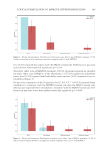
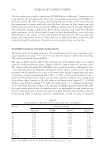
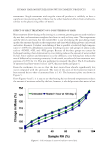
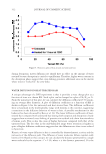
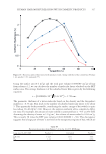
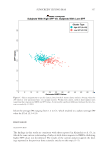
HUMAN HAIR MOISTURIZATION WITH COSMETIC PRODUCTS 309 The sorption–des orption plots in Figure 2 show that the difference in the moisture con- tents of hair treated with conditioning actives from that of untreated hair is very small ( 1%). A closer examination of the S-D isotherms suggests that comparing hysteresis of treated samples with those of the untreated sample at various humidities can provide use- ful information regarding the moisture retention effect of conditioning actives. Figure 3 shows the hysteresis of hair treated with conditioning actives along with that of untreated hair as a function of relative humidity. In Figure 3, the hysteresis plot of the untreated hair goes through a maximum at ~70% RH and drops off beyond that value. The hysteresis plots of all conditioner- treated hair fall below that of the untreated in this region of humidity ( 70% RH). The plot of polymer JR-400 is higher than all others below 40% RH, indicating it has the best moisture holding capacity at low humidities. Next is Jaguar C-17 below 40% RH. Here, we did an additional experiment with hair treated with Jaguar C-17 only once, and the result is that the plots for both 10X and 1X treatment are virtually coincident. This suggests that with polymeric conditioners which deposit on the surface without penetration, multiple treatments may not have an added ef- fect. All top layers rinse off except the one which is strongly bound to the charged surface. This has been established by repeated wetting force measurements on treated fi bers (6). These ionic polymers have the capability of reducing the thermodynamic activity [fugacity (7) and escaping tendency, G. N. Lewis] of water sorbed on/in the hair. Figure 3. Hyste r esis plots of conditioned hair as a function of humidity.
Purchased for the exclusive use of nofirst nolast (unknown)
From: SCC Media Library & Resource Center (library.scconline.org)