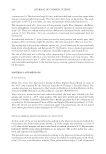
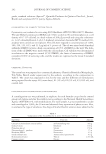
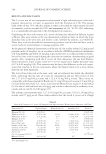
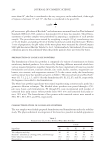
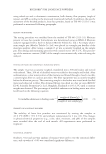
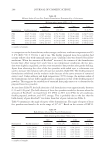
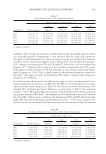
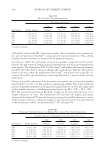
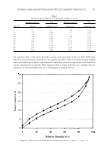
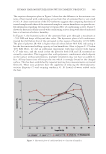
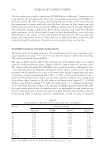
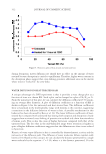
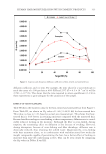
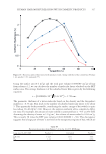
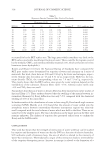
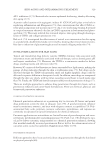
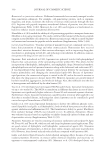
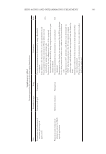
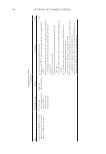
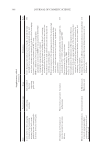
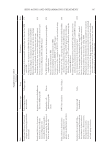
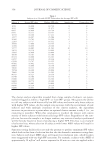
JOURNAL OF COSMETIC SCIENCE 310 The low molecul a r weight conditioner CETAB behaves differently. Treatment over long periods of time repeatedly allows for considerable penetration of CETAB into the bulk of hair (8). This increases the hydrophobicity of the cortex, thus limiting the penetration of water molecules into the hair. Because of low interaction with water molecules, they do not retard the diffusion of water out of the hair. Therefore, low molecular weight conditioners have limited moisturizing capability. Hydro- philic polymers, on the other hand, because of their hydrophilicity, even with thin fi lms bound to the surface of hair, and limited penetration into the cuticular zone reduce the evaporation of water. There may be an additional effect of the very low molecular weight component of polymeric actives penetrating into the hair. HYSTERESIS RATIO S AND MOISTURIZATION Hysteresis ratio s for the plots in Figure 3 for conditioning actives were evaluated accord- ing to equation (5) using i = 1–5 or 1–9 to see how the value of i affects the overall HR. The values are summarized in Table II. The data in Tabl e II show that if the isotherms are well defi ned, then even a small value of i yields satisfactory ratios. Values of HR for 5 and 9 values of i are very close. The values of HR also show that CETAB is not a good moisturizer, although it gives a very smooth surface by forming a monolayer on the surface of the cuticle cells. The polymers which deposit on the surface (low molecular weight components may pen- etrate) have a weak moisturizing effect (HR 1). This is because the moisture associ- ated with the polymer has a lower activity and, therefore, diffuses very slowly from the polymer–fi ber composite. JR-400 seems to do better than Jaguar-C-17. CETAB shows a split behavior. Below 30% RH, the value of HR = 1.1, whereas in the range of 30–60% RH, the value of HR = 0.92. Because CETAB penetrates into the fi ber (8), the lipid chains packed into the matrix reduce its hydrophilicity and facilitate the release of moisture better than in the untreated fi ber. Overall, the data show that the moisturizing effect of ordinary rinse-off conditioners is weak, in spite of multiple Table II Hysteresis Ratios of Hair Treated with Conditioning Actives from Figure 3 RH (%) Hysteresis (%) (Hi) Untreated CETAB JR-400 Jaguar C-17 20 1.98 2.32 3.03 2.47 25 2.08 2.29 2.84 2.42 30 2.19 2.26 2.68 2.37 35 2.34 2.29 2.68 2.47 40 2.45 2.32 2.68 2.47 45 2.63 2.37 2.73 2.58 50 2.74 2.42 2.79 2.68 55 2.84 2.45 2.82 2.76 60 2.92 2.50 2.87 2.84 HR (1–5) 1.00 0.96 1.14 1.04 HR (1–9) 1.00 0.96 1.13 1.04 HR (1–5) is for RH 20, 30, 40, 50, and 60. HR (1–9) is for 20, 25, 30, …, 60 .

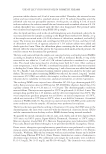
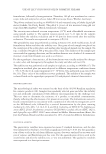
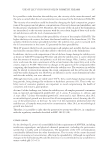
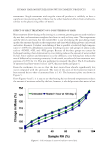
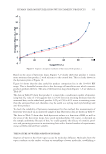
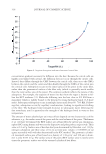
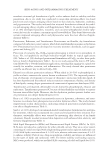
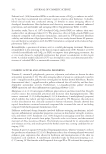
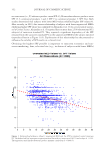
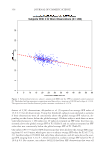
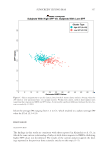
HUMAN HAIR MOISTURIZATION WITH COSMETIC PRODUCTS 311 treatments. Single treatment with regular rinse-off products is unlikely to have a signifi cant moisturizing effect (there may be other benefi cial effects from emollients, similar to the plasticizing effect of water). EFFECT OF HEAT T REATMENT ON S-D HYSTERESIS OF HAIR Heat treatment ( blow-drying or fl at ironing) is a common grooming process used mainly to dry wet hair, and sometimes straighten hair from its curly or frizzy state. The temperatures and the devices used vary, but the overall effect is one of reducing the post-drying water uptake (the amount depends on the temperature and time) which helps prevent curl reversal and reduce frizziness. Covalent cross-linking of hair is possible at relatively high tempera- tures ( ~100°C) by dehydration reactions involving reactive side groups of amino acids, such as –COOH, –OH, and –NH2 groups. Because all the three groups are centers for hydrogen bonding, their elimination by cross-linking reduces the amount of water sorbed by hair. Since sorption and desorption occur by diffusion, cross-linking hair reduces the rate of diffusion by increasing tortuosity. In this work, we selected a heat treatment tem- perature of 120°C for 1 h. This was performed to intensify the effect. The S-D isotherms of untreated and heat-treated (1 h at 120°C) hair are shown in Figure 4. From the isotherms, we can see that the heat-treated hair absorbs signifi cantly less water compared with the untreated. The ratio of the areas of the hysteresis loops of heat-treated hair to that of untreated hair is 1.45. The hysteresis plots are shown in Figure 5. From Figures 4 and 5, it is easy to see that heating hair at elevated temperatures reduces the amount of moisture sorbed by the hair however, it also helps retain that water in hair Figure 4. S–D is o therms of untreated and heat-treated hair.
Purchased for the exclusive use of nofirst nolast (unknown)
From: SCC Media Library & Resource Center (library.scconline.org)