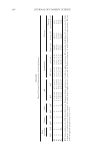
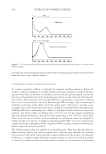
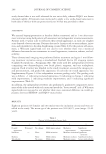
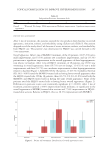
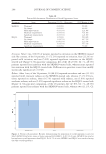
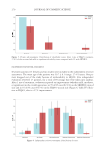
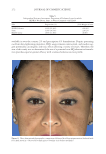
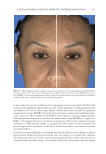
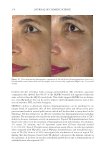
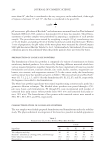
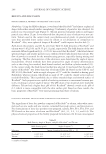
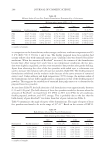
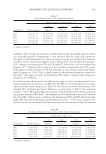
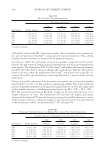
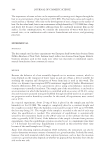
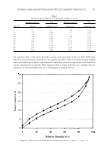
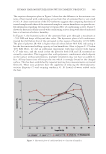
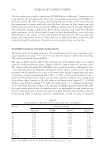
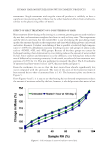
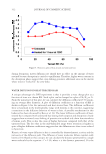
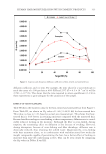
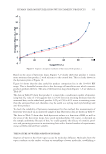
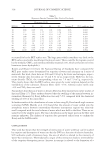
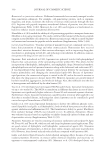
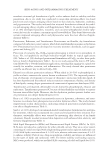
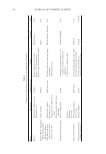
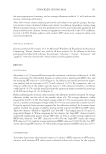
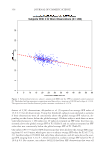
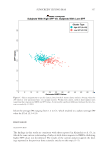
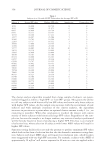
JOURNAL OF COSMETIC SCIENCE 314 PRODUCT EVALUATION Determining HR values for hair treated with a product with respect to the correspond- ing untreated hair can be useful in evaluating the moisturizing potential of the product. Although the earlier results with rinse-off conditioners were not favorable, it is possi- ble to formulate products which show signifi cant moisturizing capability. To demon- strate the possibility of using this approach, two different hair samples treated with two different products (compositions confi dential) along with the corresponding con- trol sample of hair were subjected to the DVS experiment as aforementioned at 25°C. Sorption–desorption isotherms of these samples are shown in Figures 7–9. Comparing the areas of the hysteresis loops, we can almost “see” the effects. Figure 7. Sorption–d e sorption isotherms of hair with product 1. Table III Hysteresis Data of Heat-Treated (120°C for 1 h) and Untreated Hair RH (%) Untreated Hi Heat-treated Hi 10 2.50 3.00 20 2.43 4.00 30 2.50 4.25 40 2.75 4.00 50 2.94 3.69 60 2.94 3.56 70 2.56 3.50 80 2.13 3.38 90 1.13 2.06 ¦Hi 21.88 31.44

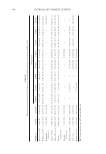
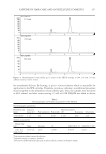
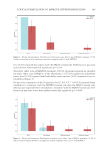
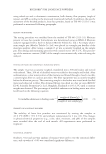
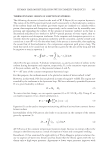
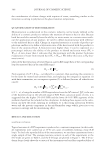
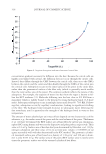
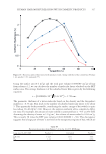
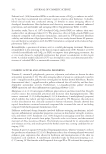
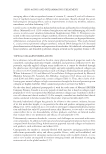
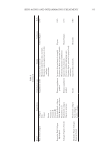
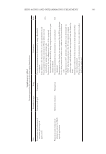
HUMAN HAIR MOISTURIZATION WITH COSMETIC PRODUCTS 315 Based on the areas of hysteresis loops, Figures 7–9 clearly show that product 1 retains more moisture than product 2 with reference to the control hair. This is clearly shown in the hysteresis plots of Figure 10. Figure 10 shows that the data useful for product comparison lies in the 10–60% RH range. This is desirable because this is also the range of humidities over which cosmetic products perform the best. The area of the hysteresis loops from Figures 7–9 are shown in Table IV. The data in Table IV show that product 1 is more like a conditioner capable of moistur- izing hair. HR value of 1.42 suggests that it is 42% better in retaining moisture than the untreated hair on the other hand, product 2 (HR = 0.58) is 42% worse in retaining water than the untreated hair and, therefore, may be useful as a styling (and style holding) and anti-frizz product. To check the reliability of hysteresis measurement by this method, fi ve measurements of hysteresis were made on an untreated sample of hair. Hysteresis data are shown in Table V. The data in Table V show that both hysteresis values as a function of RH, as well as the areas of the hysteresis loops, have good reproducibility. Of course, it depends on the sample uniformity. Because of this, we could quantify the effi cacy of cosmetic prod- ucts and grooming processes in moisturizing hair with a limited number of experiments, using carefully prepared hair samples. THE NATURE OF WATER SORPTION IN HAIR Sorption of water in hair from vapor occurs by molecular diffusion. Molecules from the vapor condense on the surface to form an assemblage of water molecules, establishing a Figure 8. Sorption–de so rption isotherms of hair treated with product 2.
Purchased for the exclusive use of nofirst nolast (unknown)
From: SCC Media Library & Resource Center (library.scconline.org)