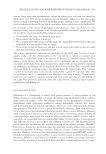
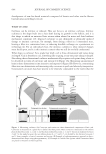
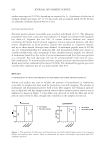
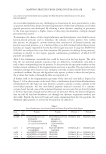
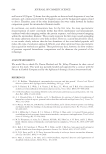
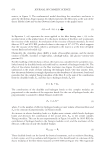
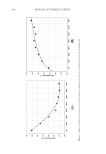
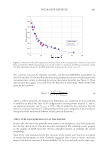
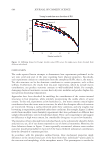
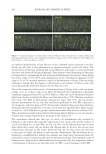
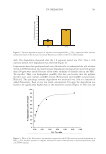
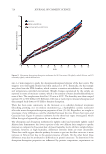
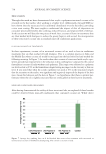
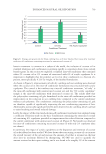
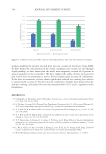
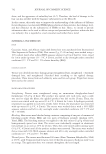
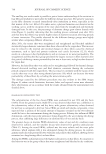
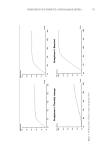
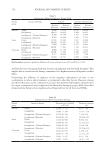
740 JOURNAL OF COSMETIC SCIENCE applied, doubling the amount retained from the neat coconut oil treatment. Using SIMS, we have shown the colocalization of the acrylic copolymer and coconut oil, and through depth profiling, we have shown that the small, more migratory coconut oil is present in greater quantities at the air interface. We have explored the utility of those structured oil gels as neat leave-in treatments as well as the key benefit agent in rinse-off conditioners. In the leave-in treatments, we have shown significantly reduced dry combing force relative to unstructured coconut oil. For the rinse-off conditioners, benefits were observed for dry and wet combing, and reduced friction was measured with 0.12% acrylic copolymer in the formulation. REFERENCES (1) S. Kappally, A. Shirwaikar, and A. Shirwaikar, Coconut oil—a review of potential applications, Hygeia J. D. Med., 7(2), 34–41 (2015). (2) G. Deckner, Coconut Oil: A Personal-Care Powerhouse, Prospector, July 22, 2016, accessed February 16, 2022, https://knowledge.ulprospector.com/4713/pcc-coconut-oil-a-personal-care-powerhouse/. (3) A. S. Rele and R. B. Mohile, Effect of coconut oil on prevention of hair damage part I, J. Cosmet. Sci., 50, 327–339 (1999). (4) A. S. Rele and R. B. Mohile, Effect of mineral oil, sunflower oil, and coconut oil on prevention of hair damage, J. Cosmet. Sci., 54, 175–192 (2003). (5) T. V. Drovetskaya, L. Kreeger, J. L. Amos, C. B. Davis, and S. Zhou, Effects of low-level hydrophobic substitution on conditioning properties of cationic cellulosic polymers in shampoo systems, J. Cosmet. Sci., 55, 195–205 (2004). (6) L. Bai, L. Chen, Y. Chen, S. Golden, J. Koenig, L. Leal, X.-Q. Liu, O. Young, and F. Zeng. (2020) Oil Cleanser Composition (U.S. Patent No. 10,864,155 B2). U.S. Patent and Trademark Office. (7) M. D. Berthiaume, Silicones in hair care, Society of Cosmetic Chemists, Monograph Series, 4–5 (1997). 0 0.2 0.4 0.6 0.8 1 1.2 1.4 1.6 Control Unstructured Oil Structured Oil COF with cug415cle COF against cug415cle Figure 9. Coefficient of friction (COF) study on 8 hour bleached hair after rinse-off conditioner treatment. Coefficient of Fricg415on

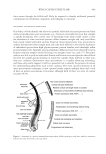
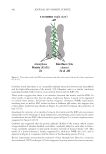
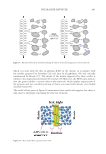
741 Address all correspondence to Rebeca Gasparin, rebeca.gasparin@symrise.com Influence of Ethnicity and Damage Levels on Fragrance Substantivity on Hair REBECA M. GASPARIN, FERNANDA M. THOMAZ, CAROLINA B. LOURENÇO, ADELINO K. NAKANO AND ANITA J. MARSAIOLI Global Hair Care Center, Symrise AG, São Paulo, Brazil (R.M.G., F.M.T., C.B.L., A.K.N.) State University of Campinas (Unicamp), São Paulo, Brazil (R.M.G., A.J.M.) Synopsis Product fragrance and performance are crucial for individuals choosing hair care products. Thus, fragrance raw materials should possess physicochemical characteristics that ensure good blooming upon product unpacking and during use and additionally exhibit good substantivity on hair fibers. To investigate the influence of fragrance raw material characteristics, hair damage level, and ethnicity on fragrance substantivity on hair fiber, hairs of different ethnicities were chemically and thermally damaged. Along with this, the level of damage was characterized by attenuated total reflectance Fourier-transform infrared spectroscopy, protein loss evaluation, scanning electron microscopy analysis, tensile test, and swelling test. The substantivity of each fragrance ingredient was evaluated for wet and dry hairs using gas chromatography coupled with mass spectroscopy. Our results indicated that the physicochemical properties of fragrance raw materials (mainly polarity) altered their availability within the shampoo formulation, as well as their substantivity on hair fibers. Furthermore, the substantivity of fragrance compounds was influenced by alterations in hair permeability and hydrophobicity caused by various damaging processes. INTRODUCTION The fragrance of hair care products is an important factor for consumers worldwide. Consumers expect their hair care products to impart a sensation of cleanliness and perfume their hair with a long-lasting scent (1–3). Thus, fragrances used in hair cosmetics should be derived from raw materials that exhibit physicochemical characteristics that ensure good blooming upon product unpacking and during use and also exhibit good substantivity on hair fibers. The physicochemical characteristics of hair fibers can differ between hairs from different ethnicities and can also be altered by chemical, physical, or environmental agents and processes, which transform its naturally hydrophobic and slightly charged surface into a hydrophilic, polar, and negatively charged surface. These modifications change the reactivity of the hair toward external agents and lead to a decrease in the number of cuticular layers, formation of split ends and cracks, breakage and weakening, decreased J. Cosmet. Sci., 72, 741–752 (November/December 2021)
Purchased for the exclusive use of nofirst nolast (unknown)
From: SCC Media Library & Resource Center (library.scconline.org)