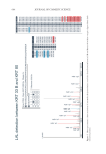
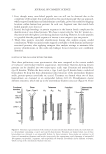
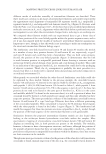
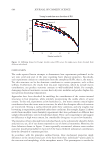
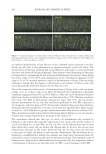
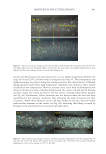
742 JOURNAL OF COSMETIC SCIENCE shine, and the appearance of unhealthy hair (4–7). Therefore, the level of damage in the hair can also interfere with the fragrance substantivity on the fibers (8). In this context, this study aims to improve the understanding of the influence of different factors (fragrance raw materials’ [FRMs] physicochemical characteristics, hair damage level, and hair ethnicity) on the substantivity of FRMs on hair. Hence, we intend to provide information that can be used to deliver unique and personalized products within the hair care industry this is regarded as a real consumer need rather than a trend. MATERIALS AND METHODS HAIR Caucasian, Asian, and African virgin dark brown hair were purchased from International Hair Importers & Products (USA). Hair tresses (5 g, 17–20 cm long) were washed using a 10% sodium lauryl ether sulfate (SLES) aqueous solution (1 g/10 g of hair) for 1 min, rinsed for 1 min under tap water (33 ± 3°C, 4 L/min), and left to dry overnight under controlled conditions (22 ± 2°C and 50 ± 5% relative humidity [RH]). DAMAGE GROUPS Tresses were divided into three damage groups (straightened hair, straightened + thermally damaged hair, and straightened + bleached hair) according to the applied damage procedure. Three tresses from each ethnicity were used for each group. Virgin hair tresses were used as the control. HAIR DAMAGE PROCEDURES Straightening. Tresses were straightened using an ammonium thioglycolate-based formulation (3.5 g/5 g of hair). The product was spread over each tress, and a comb was used to align the fibers the applied product was left on for 25 min. Then, the tresses were rinsed with tap water (33 ± 3°C, 4 L/min) for 3 min. A hydrogen peroxide neutralizer was applied to each tress (2 mL). After 10 min, the neutralizer was rinsed off with tap water (33 ± 3°C, 4 L/min). The tresses were washed thrice with a 10% SLES aqueous solution and left to dry overnight under controlled conditions (22 ± 2°C and 50 ± 5% RH). Bleaching. Hair tresses were bleached using a mixture comprising of one part of commercial bleaching powder (Yamá, BRL) and two parts of hydrogen peroxide emulsion (12%, Yamá, BRL). The bleaching mixture was applied to the hair tresses (13 g/5 g of hair) and homogeneously spread over them. The tresses were individually wrapped in aluminum foil and kept in an oven at 25°C for 45 min. Then, they were rinsed under running water (33 ± 3°C, 4 L/min) until all the product residues were removed. The tresses were washed thrice times with 10% SLES aqueous solution and left to dry overnight under controlled conditions (22 ± 2°C and 50 ± 5% RH). Thermal process. The tresses were flat-ironed 60 times (Nano Titanium, Babyliss Pro, USA) at 230°C, with 30 min intervals between every 10 hot flat-iron passes. Each pass took 5 s on an average. The application force was constant throughout the tress length.

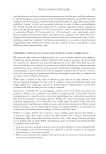
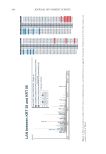
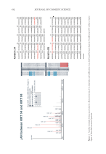
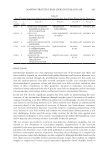
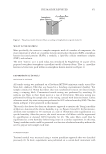
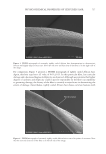
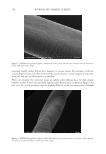
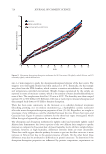
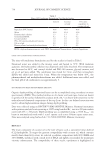
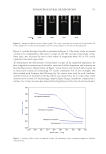
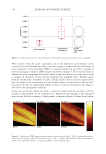
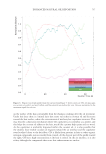
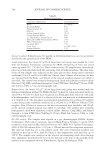
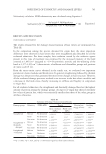
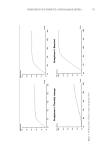
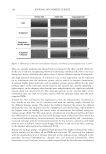
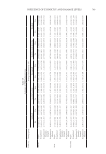
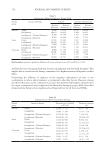
743 INFLUENCE OF ETHNICITY AND DAMAGE LEVELS HAIR DAMAGE ASSESSMENT Fourier-transform infrared spectroscopy (ATR–FTIR). One hair tress from each damage group was analyzed using an infrared spectrometer with Fourier-transform, using the accessory for attenuated total reflectance (ATR, Cary 630, Agilent Technologies, USA). For each analysis, 64 scans were performed with a resolution of 4 cm−1, ranging from 4,000 to 400 cm−1. Protein loss quantification. Hair fibers from each damage group were cut (0.5 to 1.0 cm long), 250 mg of this cut hair was placed in plastic tubes with a conical bottom, and 4 mL of deionized water was added to it. The samples were incubated at 45°C for 72 h and centrifuged twice a day at 1,500 rpm for 1 min. The quantification of the total amount proteins in the supernatant was performed using the BCA1 Kit (Bicinchoninic Acid Protein Assay Kit, Sigma-Aldrich, USA) following the manufacturer’s instructions. The samples were analyzed using a UV–Vis spectrometer (Lambda 25, Perkin Elmer, USA) at 562 nm. Tensile Test. Forty-five fibers from each group were separated, prepared for analysis, and subjected to diameter measurement on the automated platform FDAS770 (Fiber Dimensional Analysis System, Dia-Stron, UK), which is coupled with a laser scan micrometer (LSM-6200, Mitutoyo, JPN). The tensile test was performed on a MTT680 (Miniature Tensile Tester, Dia-Stron, UK) using a constant stretch rate of 15 mm/min under controlled environmental conditions (22 ± 2°C and 50 ± 5% RH). Swelling test. Thirty fibers from each group were separated, prepared for analysis, and subjected to a swelling test on the FDAS770 automated platform (Fiber Dimensional Analysis System, Dia-Stron, UK) with a DSM770 (Dynamic Swelling Module, Dia-Stron, UK) accessory. The diameters of the fibers were measured in the rotational mode for 200 s using a laser micrometer (LSM-6200, Mitutoyo, JPN) coupled to the FDAS770 platform, while the fibers were submerged in water. Scanning electron microscopy (SEM). Three fibers from each group were separated and prepared for analysis by fixing 1 cm fragments with carbon tape. The samples were Au/ Pd (80:20) coated by sputtering in a Bal-Tec MD020 instrument (Balzers, Liechtenstadt). The images were acquired using a Quanta FEG 250 (FEI, Thermo Fischer Scientific, USA) operating at 5 kV. FRAGRANCE SUBSTANTIVITY TEST Fragrance raw materials. Five FRMs with different physicochemical characteristics were selected (Table I). Shampoo formulation. A mixture of the five FRMs at the same concentration (20% w/w) was prepared and applied at 0.5% (w/w) to a shampoo formulation (Table II). Table I Tested Fragrance Raw Materials Fragrance raw material Molecular weight (g/mol) Polarity (log P) Sulfurol 143.2 1.11 Geranyl acetate 196.3 4.48 Isoeugenol 164.2 2.65 Gamma Undecalactone 184.3 3.06 Tonalide 258.4 5.80
Purchased for the exclusive use of nofirst nolast (unknown)
From: SCC Media Library & Resource Center (library.scconline.org)