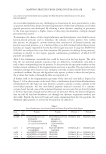
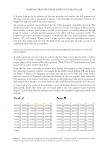
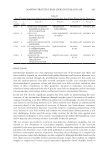
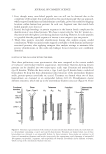
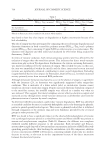
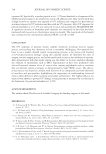
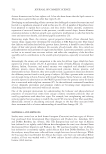
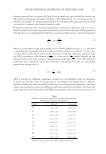
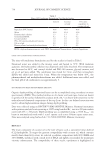
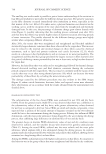
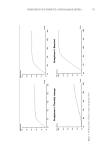
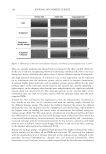
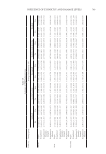
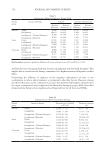
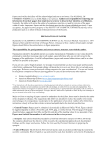
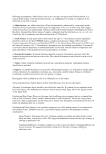
704 JOURNAL OF COSMETIC SCIENCE was found to have less of an impact on degradation at higher concentration because of its lack of solubility. The role of oxygen was then investigated by comparing the rates of tyrosine degradation and dityrosine formation in both a metal-free polymer system (PEG 5000 –Tyr 10 ) and a polymer system (PEG 2000 –Tyr 5 ) containing 0.5 ppm Fe(III) as either stearate or acetylacetonate. The solutions were degassed and then sealed and irradiated for 24 h before being analyzed by fluorometry (Table I). In terms of tyrosine oxidation, both metal-containing systems were less affected by the exclusion of oxygen than the metal-free system. This indicates that direct metal–tyrosine interactions play a role in Tyr degradation. Furthermore, the system containing Fe(stearate) 3 was much less influenced by the exclusion of oxygen. This is likely because, in this case, the iron was immobilized within the micelle and the direct interaction between iron and tyrosine was significantly enhanced, contributing to more overall degradation. Excluding oxygen therefore has less of an impact for Fe(stearate) 3 than for Fe(acac) 3 , for which increased activity primarily arises from increased ROS production. Although dityrosine formation was found to occur in the absence of oxygen, in agreement with the literature (25), its formation was significantly suppressed under oxygen-free conditions. This is indicative of a lower radical yield, as excited-state tyrosine cannot transfer an electron to molecular oxygen. Despite increased dityrosine formation compared to the metal-free system, the iron(III) samples were affected in a similar way when air was removed. This suggests that metal complexes are not effective electron acceptors and increased activity through direct metal–tyrosine interaction could therefore arise from the photosensitization of tyrosine by metal complexes. To determine whether antioxidants could reduce tyrosine degradation, BHT was identified as a suitable candidate because it is relatively hydrophobic and acts by donating the phenolic proton to quench peroxyl radical species. This creates a phenoxyl radical that is stabilized through conjugation to the aromatic ring and steric hindrance provided by the tert-butyl groups in ortho positions (26). BHT was found to have a significant impact on the observed photodegradation of tyrosine over a prolonged exposure period in a metal-free system and when iron(III) was present as stearate and acetylacetonate complexes (Table II). However, the different iron complexes exhibited notably different responses to the antioxidant. Both metal-free and Fe(acac) 3 systems show a rapid drop-off at low antioxidant concentration indicative of BHT effectively quenching peroxyl radicals, thus breaking the autoxidation cycle. By comparison, addition of a low concentration of BHT to Fe(stearate) 3 -containing samples results only in a modest decrease in activity, as also seen in air-free experiments because of the direct interaction between the metal and tyrosine. Table I Percentage Loss of Photochemical Activity in Air-Free Samples, Compared to Identical Samples in Air* PEG5000–Tyr10, no metal PEG2000–Tyr5, 0.5 ppm Fe(stearate)3 PEG2000–Tyr5, 0.5 ppm Fe(acac)3 Tyr degradation 94 18 89 Dityrosine formation 87 93 95 *Based on fluorescence data, rounded to the nearest whole number.

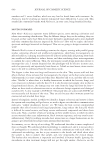
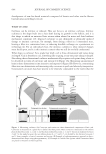
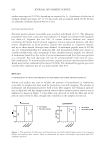
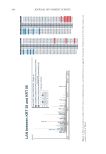
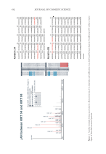
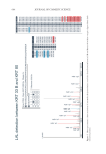
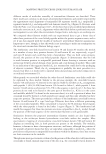
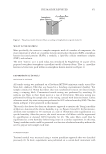
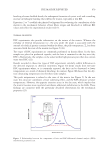
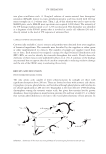
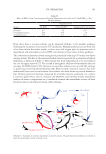
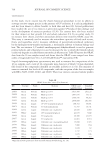
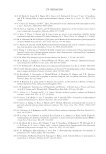
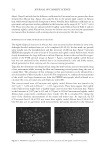
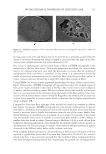
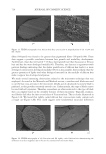
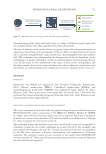
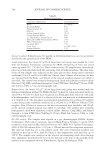
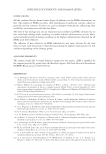
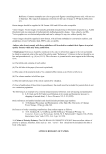
705 UV OXIDATION From these data, a reaction scheme can be proposed (Scheme 3) for possible pathways following the excitation of tyrosine by UV irradiation. Multiple pathways are involved, but it has been shown that redox metals, such as iron, and oxygen play an important role in degradation and antioxidants such as BHT can intercept at least some of these pathways. This information identifies several strategies for potentially reducing UV-induced oxidative damage in hair. The first is the removal of redox metals to prevent the acceleration of radical formation, as shown in Scheme 3. This strategy has been demonstrated to be successful in the case of copper removal (27). The second is through the addition of antioxidants that can scavenge the ROSs formed. The literature on wool has indicates success with this strategy in protecting wool from photoyellowing (28). More recently, botanical extracts that have traditionally been used as antioxidants in food have also been shown to provide benefits to hair. Protein protection has been measured for artichoke (Cynara cardunculus var. scolymus L.) and rice grain (Oryza sativa L.) extracts (29). However, none of these studies included an analysis of extract compositions or a correlation between the antioxidant activity of these botanical extracts and the prevention of hair damage. Table II Effect of BHT at Low Concentration on Tyrosine Degradation Over 24 h in 0.172 mM PEG2000–Tyr5 Micellar Systems Degradation (%) System No BHT 0.05 mM BHT Suppression by antioxidant No metal 16.7 5.9 64.7 0.5 ppm Fe(stearate)3 28.0 26.6 5.0 0.5 ppm Fe(acac)3 66.0 22.4 66.1 Scheme 3. Summary of tyrosine degradation in model systems. Oxygen-dependent pathways are shown in blue the involvement of iron is shown in red.
Purchased for the exclusive use of nofirst nolast (unknown)
From: SCC Media Library & Resource Center (library.scconline.org)