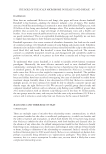
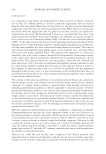
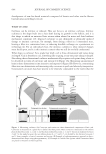
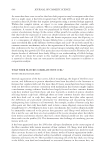
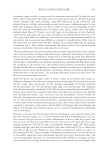
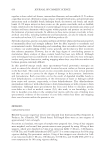
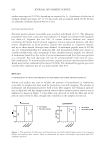
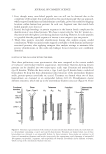
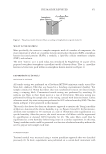
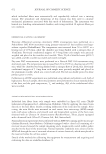
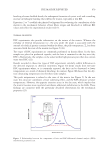
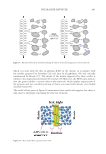
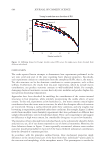
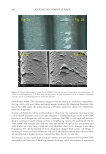
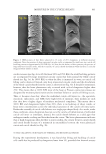
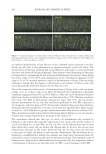
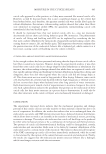
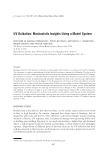
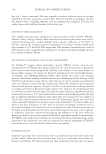
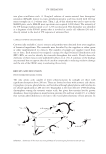
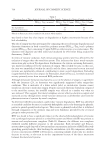
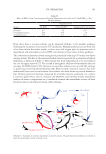
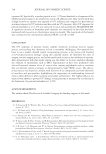
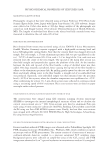
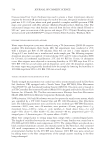
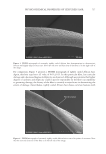
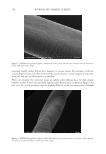
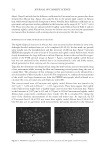
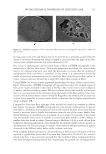
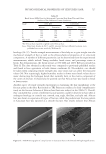
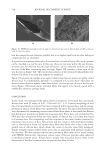
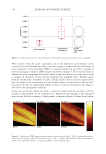
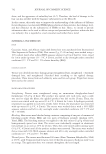
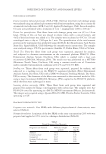
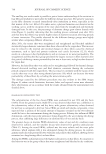
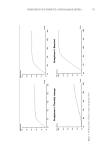
718 JOURNAL OF COSMETIC SCIENCE extremely tightly curled African hair, however, to a lesser extent. For example, it still has a more elliptical structure than Caucasian hair and contains a certain degree of concavity along the hair axis on the large face of the fiber. When we examine the curvature point in tightly curled African hair, we find similar behavior to that observed in extremely tightly curled African hair, as shown in Figure 6. In this case, the overall geometry appears slightly different at the curvature point, although Figure 5. FESEM micrograph of tightly curled African hair. Note that the root end direction of the fiber is on the right side of the image. Figure 6. FESEM micrograph of tightly curled African hair at one of its points of curvature. Note that the root end direction of the fiber is at the top of the image.

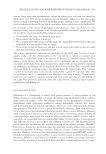
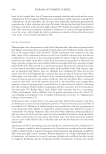
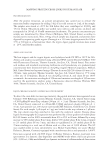
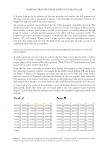
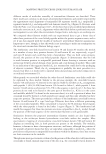
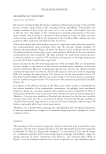
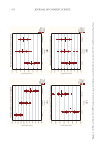
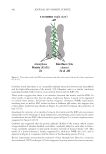
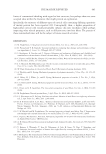
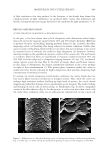
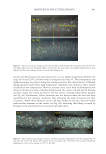
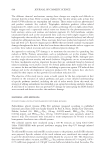
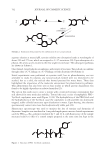
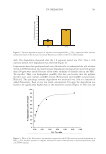
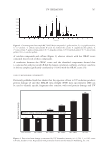
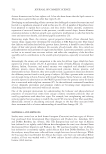
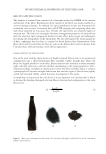
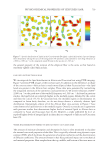
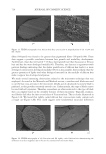
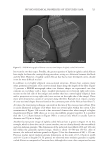
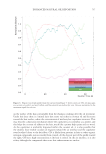
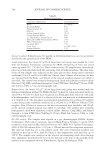
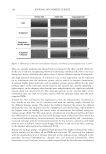
719 PHYSICOCHEMICAL PROPERTIES OF TEXTURED HAIR the general property of the rotation of the elliptical fiber is the same as that found in extremely tightly curled African hair. HAIR LIPID DISTRIBUTION IN HAIR We investigated the lipid distribution in African and Caucasian hair using FTIR imaging. Figure 7 presents FTIR images of the two hair types. In addition to the differences in shape of the cross-sections—African hair is much more elliptical than Caucasian hair—the lipid levels are greater in the African hair samples. These data were generated by normalizing the integrated intensity of the symmetric and asymmetric C–H stretch vibrations (2,800– 2,980 cm−1) to the peak area of the amide II frequency at 1,548 cm−1. As found in previous studies, the lipid levels are relatively higher in the medulla region, followed by the cortex and then the cuticle (33,34). In Caucasian hair, the medulla region is discontinuous (as compared to Asian hair) therefore, we do not always observe a relatively distinct lipid distribution. Interestingly, almost all of the African fiber cross-sections in Figure 7 have some element of a lipid reservoir in the medulla region. Overall, our results are in agreement with previous studies that demonstrate higher levels of external lipids in African hair as compared to Asian and Caucasian hair (8–10). However, a study published by Ji et al. reported higher levels of integral lipids in Asian hair as compared to African and Caucasian hair (29). WATER MANAGEMENT PROPERTIES OF AFRICAN VERSUS CAUCASIAN HAIR The amount of moisture absorption and desorption by hair is often monitored to elucidate the internal structural properties of the fiber. This is typically achieved using dynamic vapor sorption (DVS), which facilitates the generation of sorption isotherms and the determination of diffusion coefficients. The amount of water in hair has a profound impact on its mechanical and material properties. Hair samples from the top, middle, and bottom of the tress were cut Figure 7. Spatial distribution of lipids in (A) Caucasian and (B) tightly curled African hair. Spectral images were obtained by taking the ratio of the integrated C–H symmetric and asymmetric stretching vibrations at 2,800 to 2,980 cm−1 to the integrated amide II band in the spectra at 1,548 cm−1.
Purchased for the exclusive use of nofirst nolast (unknown)
From: SCC Media Library & Resource Center (library.scconline.org)