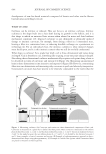
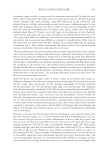
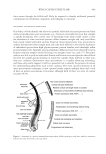
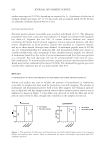
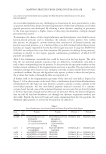
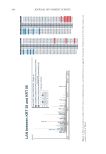
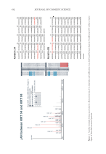
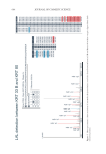
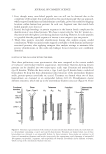
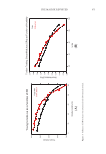
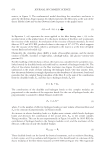
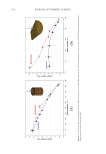
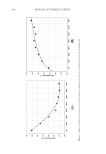
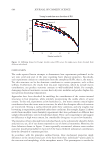
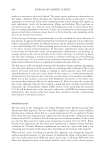
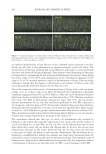
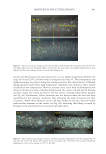
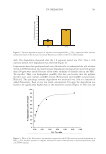
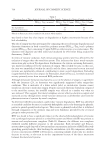
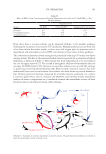
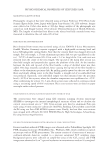
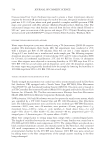
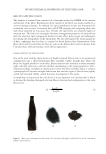
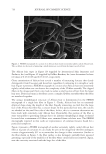
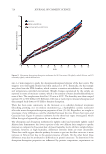
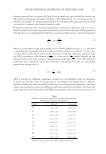
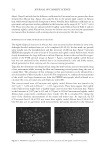
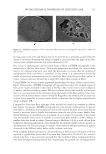
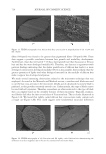
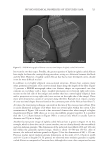
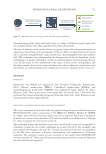
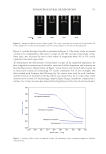
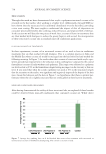
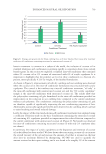
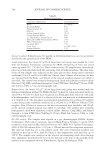
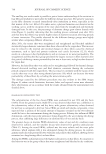
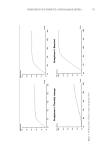
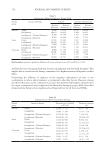
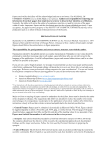
720 JOURNAL OF COSMETIC SCIENCE into 1–2 mm snippets to probe the absorption/desorption behavior of the hair cortex. The snippets were thoroughly blended and then analyzed at 25°C. Essentially, the hair sample was placed into the DVS chamber, which contains a sensitive microbalance in a humidity- and temperature-controlled environment. Weight changes experienced by the sample are reported in terms of moisture content, which is the amount of water absorbed/desorbed per mass of hair. The samples were dried for 120 min at 60°C. The humidity was then ramped up from 0% to 90% RH at 10% RH steps (720 min at each step) to measure absorption and then ramped back down to 0% RH to monitor desorption. There has been some controversy in the literature as to whether chemical treatments (bleaching, perming, etc.) or cosmetic treatments (e.g., a hydrophobic cationic surfactant) affect the water absorption/desorption properties of hair (35–38). Regardless, we sought to investigate if any differences could be identified between the two African hair types and Caucasian hair. Figure 8 contains isotherms for the three hair types investigated, which follow the typical sigmoidal pattern for an isotherm of hair. The absorption and desorption isotherms for tightly curled and extremely tightly curled African hair demonstrate the lower capacity of the two African hair samples to uptake moisture as compared to Caucasian hair. At lower humidity levels, all three samples behave similarly however, at high humidity, differences between them are more discernible. These data could suggest that the pathway for water to get into the fiber structure is more tortuous in African hair due to the greater presence of lipids. On the other hand, these differences may also be attributed to differences in protein structure. To determine if the absorption-desorption properties are influenced by protein composition, experiments on 0 5 10 15 20 25 0 10 20 30 40 50 60 70 80 90 100 % RH Caucasian Tightly curled African Extremely tightly curled African Figure 8. Hair-water absorption-desorption isotherms for (A) Caucasian, (B) tightly curled African, and (C) extremely tightly curled African hair. MoistureContent (

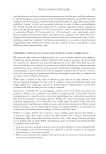
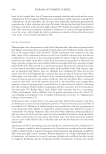
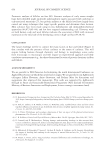
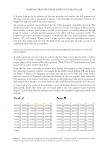
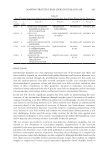
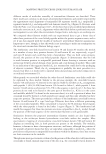
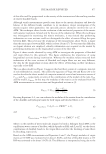
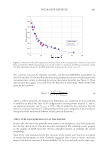
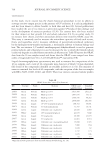
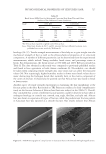
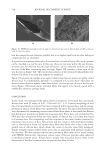
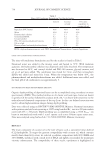
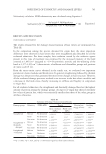
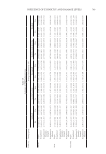
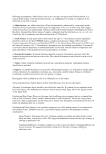
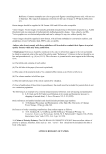
721 PHYSICOCHEMICAL PROPERTIES OF TEXTURED HAIR solvent-extracted hair (to remove all lipids) for the three hair types should be carried out. The reported absorption-desorption isotherms were obtained for one tress from one lot of hair for each sample. To ensure reproducibility, we conducted the same series of tests with a second set of samples and obtained similar results. Diffusion coefficients were calculated using Fick’s second law of diffusion, which we use to describe diffusion of water vapor into (absorption) the hair fibers during a DVS experiment (39). Equation 2 is a simplified form of Fick’s second law of diffusion for a cylindrical material: m m Dt r2 ∞ = 4√ π (2) where m is the mass at any given point in the relative humidity step, m ∞ is the mass at equilibrium (essentially when the plateau in mass change is reached), t is the time, r is the radius of the fiber, and D is the diffusion coefficient. The data obtained from the DVS experiment were plotted as m m∞ as a function of √t r , which allowed for the determination of the linear slope at the beginning of the plot ( m m∞ 0.5). The diffusion coefficient was calculated using the following relationship in units of centimeters squared per second (cm2/s): D slope2 = ⋅ π 16 (3) Table I contains the diffusion coefficients calculated at each humidity value for absorption of water into the hair. Since Caucasian hair is oval shaped and African hair is elliptical, diffusion coefficients were calculated for the major and minor radius dimensions, and these values were averaged to obtain the diffusion coefficients reported in the table. The major and minor axes radii were obtained from FESEM measurements of hair cross-sections (at least 50 Table I Diffusion Coefficients Determined at Each Humidity Step During DVS Absorption Experiments % RH Africana Caucasian 10 7.50 × 10⁻⁹ 2.10 × 10⁻⁸ 20 9.50 × 10⁻⁹ 2.60 × 10⁻⁸ 30 9.50 × 10⁻⁹ 2.55 × 10⁻⁸ 40 7.50 × 10⁻⁹ 2.60 × 10⁻⁸ 50 6.50 × 10⁻⁹ 2.15 × 10⁻⁸ 60 3.40 × 10⁻⁹ 1.17 × 10⁻⁸ 70 4.10 × 10⁻⁹ 1.02 × 10⁻⁸ 80 5.55 × 10⁻⁹ 1.50 × 10⁻⁸ 90 7.50 × 10⁻⁹ 2.20 × 10⁻⁸ a The African hair reported is tightly curled African hair.
Purchased for the exclusive use of nofirst nolast (unknown)
From: SCC Media Library & Resource Center (library.scconline.org)