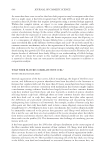
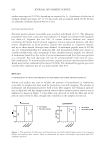
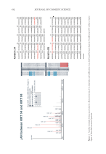
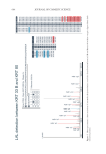
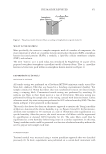
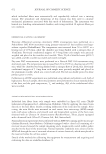
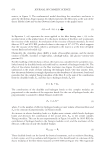
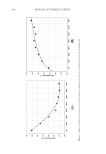
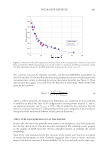
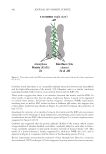
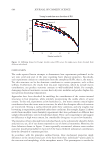
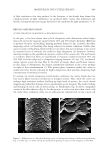
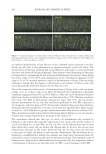
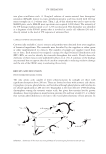
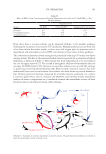
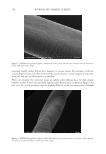
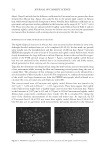
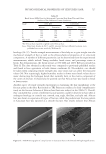
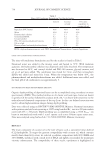
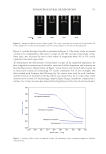
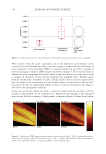
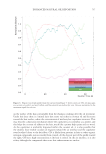
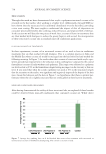
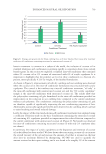
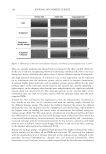
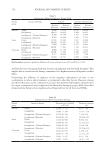
722 JOURNAL OF COSMETIC SCIENCE fibers). Overall, we find that the diffusion coefficients for Caucasian hair are greater than those obtained for African hair. Again, this could be due to the greater lipid content in African hair, which would impede the absorption of water. Notably, these diffusion coefficients are in agreement with previous studies published in the literature in the range of 10−8 to 10−9 cm2/s (36). Please note that data are only provided for tightly curled African hair in Table I, and not extremely tightly curled African hair, because we did not carry out cross-section experiments (to measure fiber diameters with scanning electron microscopy) for this hair type. MORPHOLOGY OF AFRICAN HAIR CROSS-SECTIONS The highly elliptical character of African hair cross-sections has been known for some time, although detailed analyses have yet to be completed (24,40,41). In this work, we provide some insight into the morphological and fine structure of African hair. Figure 9 presents FESEM micrographs of cross-sections of Caucasian and tightly curled African hair, which clearly demonstrate the large differences in hair ellipticity between the two hair fiber types, similar to the FTIR spectral image in Figure 7. Again, extremely tightly curled African hair was not analyzed by this method due to its extraordinarily curly and kinky nature, which prevented us from carrying out the cross-sectioning procedure. Typically, the dimensions and shape of hair along the shaft (or hair axis) are measured using a laser micrometer while rotating the fiber and examining several points along the axis of a single fiber. The advantage of this technique is that good statistics can be obtained for a selected number of fibers (usually at least 100). For comparison, we conducted measurements of the small- and large-diameter axes from the FESEM micrograph, which allowed us to calculate the cross-sectional area and ellipticity index (EI). The cross-sectional area of Caucasian and tightly curled African hair was found to be 4,677 μm2±1,429 and 6,206 μm2 ± 1,223, respectively. These data suggest that tightly curled African hair might have a slightly larger cross-section than Caucasian hair. Values in the literature of 3,857 μm2±132 and 4,274 μm2±215 for Caucasian and tightly curled African hair, respectively, corroborate these results (40). EI is calculated by taking the ratio of the diameter measurements of the major and minor axes. As expected, the EI of Caucasian hair (1.34 ± 0.19) was lower than tightly curled African hair (1.98 ± 0.28). Our EI data are in agreement with measurements previously reported in the literature Figure 9. FESEM micrographs of cross-sections of (A) Caucasian and (B) tightly curled African hair.

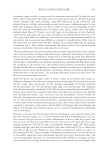
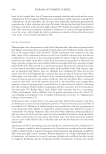
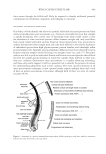
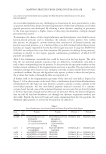
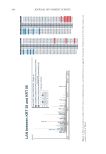
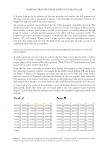
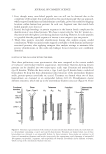
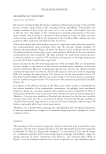
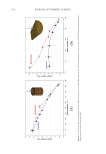
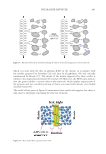
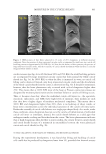
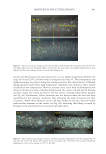
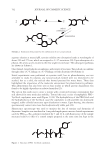
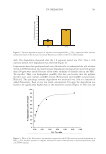
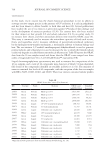
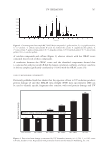
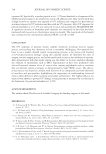
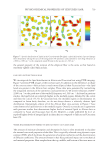
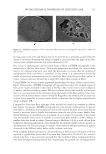
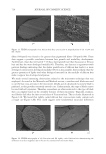
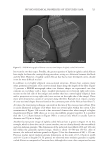
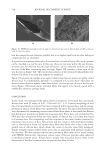
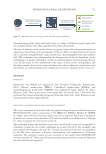
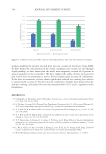
723 PHYSICOCHEMICAL PROPERTIES OF TEXTURED HAIR for Caucasian (1.43–1.56) and African hair (1.67–2.01) (6). It is generally accepted that the extent of curvature of human hair along its length is associated with the shape of the fiber cross-section–cylindrical versus oval versus elliptical (42,43). One caveat to analyzing the cross-sectional shape of fibers in FESEM micrographs is the uncertainty of the hair fiber source. During the preparation procedure, the cross-sections need to be collected after each slice with the microtome to ensure that the number of measurements from each fiber is controlled. In any event, it is impossible to know the results of successive measurements on the same hair fiber using this procedure, unless, of course, cross-sections are obtained for a single fiber rather than a group of fibers. Using FESEM, we observed many important morphological features of hair cross-sections. Figure 10A provides a FESEM micrograph of Caucasian hair where the medulla region of hair can be clearly identified in the center of the fiber. The overall cross-section is elliptical in nature, and the medulla is porous. We do not always observe the medulla in Caucasian hair as it can sometimes be discontinuous along the length of the fiber (unlike Asian cross- sections, which almost always contain a medulla). Regardless, the medulla of Caucasian hair is often characterized by its porous nature, which is illustrated by the higher-magnification image in Figure 10B. Compared to Caucasian hair, sightings of the medulla are much less common in African hair. Figure 11 presents a FESEM micrograph of a cross-section of African hair. It appears that there is a medullary structure present close to the center of the fiber. Closer examination reveals a structure that is slightly discontinuous from the rest of the cortex. Studies have shown differences in medullary structure based on racial origin. For example, it was shown that the medulla index (ratio of medulla to overall hair fiber width) in ethnic Malays is smaller than that found in ethnic Chinese living in Malaysia (44). In a study of hair from indigenous Ghanaian individuals, it was found that the medulla could be absent, present, or discontinuous (45). The percentage occurrence of medulla for different anatomical regions decreased in the followed order: pubic, axilla, eyebrow, and scalp. From a slightly different perspective, the growth rate of African hair (256 μm/d±44) was reported as significantly slower than Caucasian hair (396 μm/d±55) (46,47). In a study of female scalp hair, it was previously reported that the medulla of white, nonpigmented hair was more developed than pigmented hair. Surprisingly, the growth rate of nonpigmented Figure 10. FESEM micrographs of a Caucasian hair fiber cross-section at magnifications of (A) ×1,800 and (B) ×10,000.
Purchased for the exclusive use of nofirst nolast (unknown)
From: SCC Media Library & Resource Center (library.scconline.org)