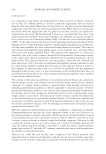
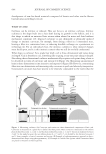
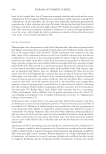
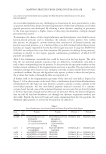
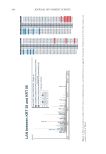
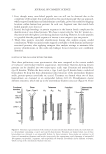
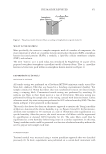
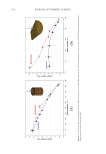
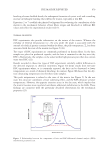
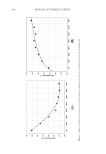
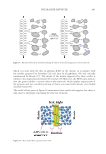
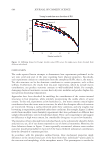
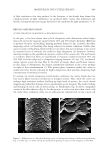
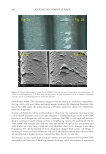
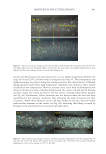
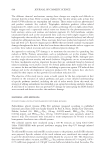
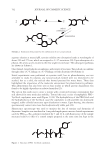
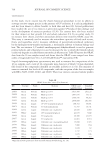
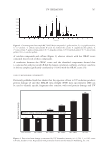
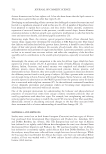
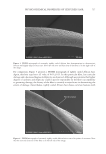
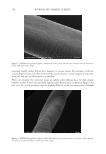
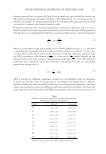
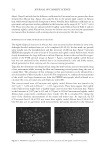
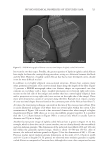
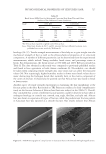
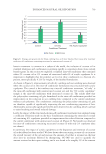
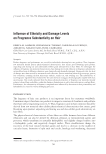
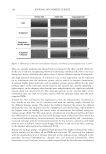
724 JOURNAL OF COSMETIC SCIENCE fibers (380 μm/d) was found to be greater than pigmented fibers (350 μm/d) (48). These data suggest a possible correlation between hair growth and medullary development. Furthermore, Asian hair (411 μm/d±53) has a faster growth rate than Caucasian or African hair and has the most developed medulla (43). Therefore, our data are in agreement with previous findings indicating that the slower growth rate of African hair leads to a more developed cortex (or less developed medulla) (49). It is also possible, but less likely, that the greater quantities of lipids (and other biological material) in the medulla of African hair make it appear less developed and porous. We made several interesting observations related to the microtome technique that was employed. As noted in the Materials and Methods section, a stainless-steel blade was used to cut the hair cross-sections in the microtome. Ideally, use of a diamond microtome blade is preferred, as this provides extremely smooth cuts. Unfortunately, this type of blade cannot be used with all cryotomes. Therefore, researchers are often restricted to the type of blade they can employ based on the available features of their microtome. Typically, stainless- steel blades dull after the first several slices of Caucasian hair. This is clearly illustrated in Figure 12A. We found that tightly curled African hair cross-sections rarely contain such a rough cut (Figure 12B). This could suggest some fundamental structural differences Figure 11. FESEM micrographs of an African hair fiber cross-section at magnifications of (A) ×1,100 and (B) ×8,000. Figure 12. FESEM micrographs of (A) Caucasian and (B) tightly curled African hair demonstrating the difference in surface roughness due to the use of a stainless-steel microtome blade.

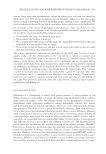
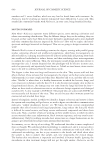
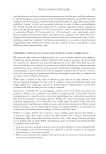
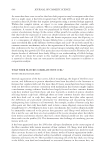
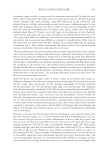
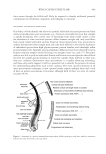
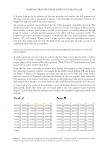
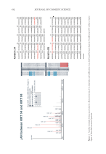
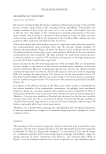
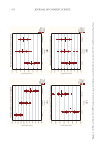
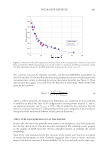
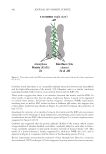
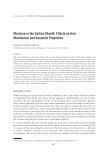
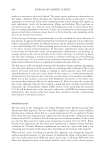
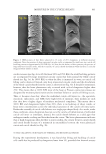
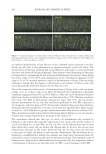
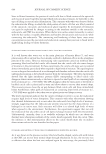
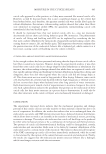
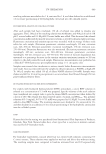
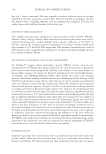
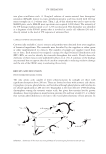
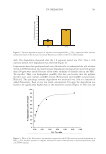
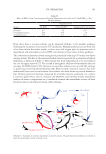
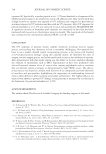
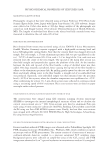
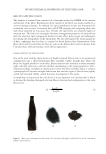
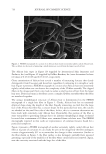
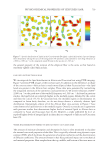
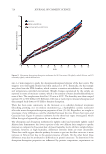
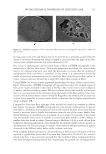
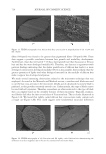
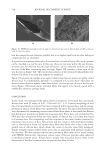
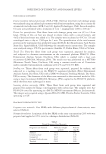
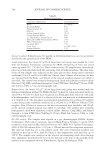
725 PHYSICOCHEMICAL PROPERTIES OF TEXTURED HAIR between the two hair types. Possibly, the greater quantity of lipids in tightly curled African hair might facilitate the cutting/slicing procedure, acting as a lubricant between the blade and the fiber. However, if tightly curled African hair had a more developed cortex, should it not be more difficult to slice? In addition to its highly elliptical cross-sectional structure, African hair contains many other geometrical variants of its cross-sectional shape along the length of the fiber. Figure 13 presents a FESEM micrograph where two distinct shapes are represented: one that contains an oval shape with a large, rounded protrusion on its bottom right side (cross- section on the left side of the image) and another that has a more highly elliptical form with a projection on its top right side (cross-section on the right side of the image). These slices were obtained at a point of curvature along the fiber. Kamath et al. report a variety of cross-sectional shapes that are found at the curvature point of the African hair fiber (7). At times, the microtome technique can result in fracture of the cross-sections of hair. This is nicely illustrated in Figure 14A where there are several splits within the cortex. Close examination of Figure 14A reveals a fine structural element that when imaged at higher magnification (Figure 14B) allows us to view macrofibrils grouped together. It is possible that the 3.2 × 2.0 μm feature in Figure 14B is a cortical cell, which is usually 5 μm in diameter and 50 μm in length. Another fracture point image of tightly curled African hair is given in Figure 15. In this example, which is from the cuticle–cortex interface, we can clearly identify the macrofibrils and even melanin granules. The dimensions of the indicated macrofibrils (200 and 420 nm) fall within the generally reported range, which is about 40–500 nm (50–52). Also of interest, the indicated melanin granule in Figure 15 has the dimensions of 883 × 453 nm. Previous studies report melanin granule dimensions on the order of 0.3–0.6 μm in width and 0.8–1.2 μm in length (53). In general, we observed more melanin granules in tightly curled African as compared to Caucasian hair, although this is not a fair comparison because Figure 13. FESEM micrograph of diverse cross-sectional shapes of tightly curled African hair.
Purchased for the exclusive use of nofirst nolast (unknown)
From: SCC Media Library & Resource Center (library.scconline.org)