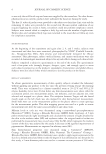
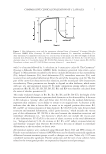
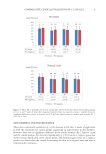
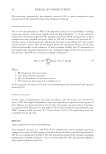
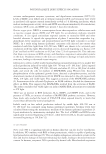
23 TESTING OF HAND CREAMS Physical and chemical performance. The NDJ-5T digital rotary viscometer with the No. 4 rotor was used to measure the viscosity of the product. Three groups were measured in parallel, and the average value was considered the final viscosity value of the product (32). To obtain the pH value measurement, deionized water was used to dilute the sample to 10−1 according to the operating instructions of the pH meter. The average from three sets of samples was used as the final pH value. Emulsion stability test. For the centrifugation experiment, two-thirds of the height of the sample was injected into the centrifuge tube, which was centrifuged at 2,000 r min−1 for 30 min. To test heat and cold stability, The samples were incubated at high (40°C) and low (−10°C) temperatures alternately every 12 h for 7 d. After the product returned to room temperature, whether there was any oil-water separation was determined. Evaluation of sensory and skin care efficacy. Hand cream instructions: After cleaning the skin, place an appropriate amount of the product on your palm, spread it evenly on your hands, and rub until it is completely absorbed. Use twice daily. After using the hand cream, 30 volunteers participated in sensory evaluations (33) for five items: odor, irritation, moisturization, refreshment, and tightness. Each item was scored as either good, slightly better, medium, slightly worse, or poor, with a maximum score of 5. To evaluate skin care efficacy (34), four volunteers were selected to wash their hands with warm water, and a skin tester was used to measure the moisture content of the stratum corneum and the amount of transdermal water loss before use and 1 and 2 weeks after use. The skin moisture test probe CM825 was used to test the moisture content of the volunteers’ stratum corneum. The change in skin moisture content before and after 1 and 2 weeks of use (change rate) was calculated using the following formula: Change rate of skin moisture content Data after use data be = - efore use Date before use ×100% The transdermal water loss test used the Tewameter® Triple TM 330T (Courage + Khazaka Electronic GmbH, Köln), a three-probe skin water loss test system, to test the volunteers’ transcutaneous water loss. Comparisons between the transdermal water loss (loss change rate) before and after use (1 and 2 weeks) were performed using the following equation: Change rate of transdermal water loss Data after use data = - b before use Date before use ×100% RESULTS AND DISCUSSION MINIMUM INHIBITORY CONCENTRATION The minimum inhibitory concentration is a measure of bacteriostatic activity. Substances with a lower minimum inhibitory concentration are more effective bacteriostatic agents. Figures 1 to 4 show the inhibitory effects of different concentrations of extracts of S baicalensis, L erythrorhizon, S flavescens, and C reticulata peel on S aureus, C albicans, and E coli.

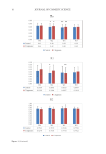
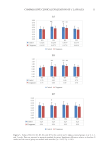
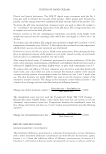
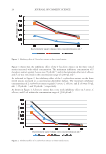
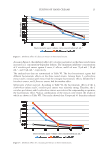
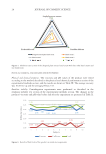
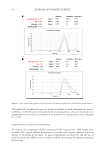
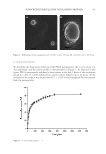
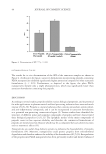
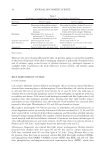
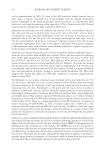
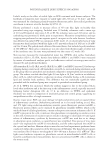
24 JOURNAL OF COSMETIC SCIENCE Figure 1 shows that the inhibitory effect of the S baicalensis extract on the three tested strains increased with added concentration. The minimum inhibitory concentration of S baicalensis extract against S aureus was 75 μL mL−1, and its bacteriostatic effect on C albicans and E coli was very weak in the concentration range of ≤100 μL mL−1. As indicated in Figure 2, the inhibitory effect of the L erythrorhizon extract on the three tested strains increased in a concentration-dependent fashion. The minimum inhibitory concentrations of L erythrorhizon extract against S aureus, C albicans, and E coli were 50 μL mL−1, 25 μL mL−1, and 50 μL mL−1, respectively. As shown in Figure 3, S flavescens extract has a very weak inhibitory effect on S aureus, C albicans, and E coli within the concentration range of ≤100 μL mL−1. Bacteriostatic agent volume ratio concentration/μL mL-1 Figure 1. Inhibitory effect of S baicalensis extract on three tested strains. Bacteriostatic agent volume ratio concentration/μL mLv1 Figure 2. Inhibitory effect of L erythrorhizon extract on three tested strains. OD change value OD change value
Purchased for the exclusive use of nofirst nolast (unknown)
From: SCC Media Library & Resource Center (library.scconline.org)