204 JOURNAL OF COSMETIC SCIENCE
Natural gray hair was treated in 20% ethanolamine solution at pH 9–10 for 1 hour, followed
by removal of excess liquid using absorbent paper and allowing it to dry naturally. In this
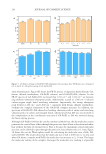
study, the single-factor test was conducted to access the dyeing time of GA-Fe(II)-stained
natural white hair, the pH of GA-Fe(II) solution, and the molar ratio of GA-Fe(II) to Fe(II).
The optimal dyeing conditions for GA-Fe(II)-stained natural white hair were determined
by measuring the color difference value of stained white hair.
ETHANOLAMINE EMULSION FOR UNFOLDING NATURAL WHITE HAIR SCALES
First, 2 mL of ethanolamine was added to 8 mL of water and mixed, and the pH was adjusted
to 9.2–9.4. Then, 0.8 mL of glycerol, 0.4 mL of Tween-80, 0.2 g of sodium dodecyl sulfate,
0.1 g of sodium sulfite, 0.2 g of sodium benzoate, 2 mL of propylene glycol, and 2.3 mL of
water were added to the ethanolamine solution and mixed at 65°C for 15 minutes to obtain
the aqueous phase solution. Additionally, 2 mL of isopropanol and 2 mL of oleic acid were
heated and stirred at 65°C for 15 minutes to create the oil phase solution. The oil phase
was added to the aqueous phase solution while heating and stirring at 65°C for 10 minutes,
resulting in the formation of the oil-in-water ethanolamine emulsion. The emulsion was
allowed to cool to room temperature, and 0.2 g of natural white hair was immersed in the
emulsion for 1 hour. Subsequently, the emulsion was removed, and the residual solution on
the white hair was wiped off with absorbent paper to be set aside.
GA-FE(II)+DA HAIR DYE FOR DYEING NATURAL WHITE HAIR
0.035 g GA was dissolved in 30 mm of 5 mL Tris solution to obtain GA solution. Next,
0.2088 g of ferrous chloride tetrahydrate was dissolved in 3 mL of water to create the Fe(II)
solution (with a molar ratio of GA to Fe(II) at 1:5). The two solutions were mixed by vortex
vibration for 10 seconds. Then, 0.035 g of DA was dissolved in the mixture, and the pH
was adjusted to 5.0–5.2. Afterward, it was centrifuged (2,000 g for 5 minutes) to remove
the precipitate, resulting in the preparation of the GA-Fe(II)+DA solution.
To prepare the aqueous phase solution, 2 mL of propylene glycol, 0.4 mL of Tween-80,
0.2 g of sodium dodecyl sulfate, 0.1 g of sodium thiosulfate, 0.1 g of sodium sulfite, 0.1 g
of ascorbic acid, 0.2 g of sodium benzoate, 0.8 mL of glycerol, and 3.8 mL of water at 65°C
with heating and stirring for 15 minutes. The GA-Fe(II)+DA solution was then added
under the same conditions and further heated and stirred for 10 minutes.
The oil phase solution was prepared by mixing 2 mL of isopropanol and 2 mL of oleic acid
at 65°C with heating and stirring for 15 minutes. The oil phase was added in a fine stream
to the aqueous phase solution while heating and stirring at 65°C, and the mixture was
stirred for an additional for 10 minutes to obtain the oil-in-water emulsion. The emulsion
was cooled to room temperature to yield GA-Fe(II)+DA hair dye. The natural white hair,
unfolded by ethanolamine, was dipped into the hair dye for 2 hours. Then the residual
solution was washed off with water and dried with a hair dryer.
MEASUREMENTS OF COLOR PARAMETERS
Color parameters, including L* (luminance), a* (red/green coordinates), and b* (yellow/blue
coordinates), were obtained using a colorimeter (HP-2136, Shanghai HanPat Optoelectronics
Natural gray hair was treated in 20% ethanolamine solution at pH 9–10 for 1 hour, followed
by removal of excess liquid using absorbent paper and allowing it to dry naturally. In this
study, the single-factor test was conducted to access the dyeing time of GA-Fe(II)-stained
natural white hair, the pH of GA-Fe(II) solution, and the molar ratio of GA-Fe(II) to Fe(II).
The optimal dyeing conditions for GA-Fe(II)-stained natural white hair were determined
by measuring the color difference value of stained white hair.
ETHANOLAMINE EMULSION FOR UNFOLDING NATURAL WHITE HAIR SCALES
First, 2 mL of ethanolamine was added to 8 mL of water and mixed, and the pH was adjusted
to 9.2–9.4. Then, 0.8 mL of glycerol, 0.4 mL of Tween-80, 0.2 g of sodium dodecyl sulfate,
0.1 g of sodium sulfite, 0.2 g of sodium benzoate, 2 mL of propylene glycol, and 2.3 mL of
water were added to the ethanolamine solution and mixed at 65°C for 15 minutes to obtain
the aqueous phase solution. Additionally, 2 mL of isopropanol and 2 mL of oleic acid were
heated and stirred at 65°C for 15 minutes to create the oil phase solution. The oil phase
was added to the aqueous phase solution while heating and stirring at 65°C for 10 minutes,
resulting in the formation of the oil-in-water ethanolamine emulsion. The emulsion was
allowed to cool to room temperature, and 0.2 g of natural white hair was immersed in the
emulsion for 1 hour. Subsequently, the emulsion was removed, and the residual solution on
the white hair was wiped off with absorbent paper to be set aside.
GA-FE(II)+DA HAIR DYE FOR DYEING NATURAL WHITE HAIR
0.035 g GA was dissolved in 30 mm of 5 mL Tris solution to obtain GA solution. Next,
0.2088 g of ferrous chloride tetrahydrate was dissolved in 3 mL of water to create the Fe(II)
solution (with a molar ratio of GA to Fe(II) at 1:5). The two solutions were mixed by vortex
vibration for 10 seconds. Then, 0.035 g of DA was dissolved in the mixture, and the pH
was adjusted to 5.0–5.2. Afterward, it was centrifuged (2,000 g for 5 minutes) to remove
the precipitate, resulting in the preparation of the GA-Fe(II)+DA solution.
To prepare the aqueous phase solution, 2 mL of propylene glycol, 0.4 mL of Tween-80,
0.2 g of sodium dodecyl sulfate, 0.1 g of sodium thiosulfate, 0.1 g of sodium sulfite, 0.1 g
of ascorbic acid, 0.2 g of sodium benzoate, 0.8 mL of glycerol, and 3.8 mL of water at 65°C
with heating and stirring for 15 minutes. The GA-Fe(II)+DA solution was then added
under the same conditions and further heated and stirred for 10 minutes.
The oil phase solution was prepared by mixing 2 mL of isopropanol and 2 mL of oleic acid
at 65°C with heating and stirring for 15 minutes. The oil phase was added in a fine stream
to the aqueous phase solution while heating and stirring at 65°C, and the mixture was
stirred for an additional for 10 minutes to obtain the oil-in-water emulsion. The emulsion
was cooled to room temperature to yield GA-Fe(II)+DA hair dye. The natural white hair,
unfolded by ethanolamine, was dipped into the hair dye for 2 hours. Then the residual
solution was washed off with water and dried with a hair dryer.
MEASUREMENTS OF COLOR PARAMETERS
Color parameters, including L* (luminance), a* (red/green coordinates), and b* (yellow/blue
coordinates), were obtained using a colorimeter (HP-2136, Shanghai HanPat Optoelectronics