243 Magnesium Myristate
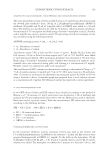
%compressibility (Tapped density bulk density)
Tapped densi =-
y 100 × (eq. 3)
Hausner’s Tapped density
Bulk density =(eq. 4)
Angle of repose. Angle of repose is the maximum angle formed by the surface of pile of
powder and the horizontal plane. It was determined by the funnel method. Weighed
powder was poured into a funnel fixed on a stand with the tip of the funnel closed. The
powder formed a heap on the surface when allowed to flow freely. The diameter of the heap
was noted when the tip of the funnel touched the tip of the pile formed. Noted values were
substituted in eq. 5 to calculate angle of repose.10
Θ =-1 tan h/r (eq. 5)
Where, h =height of the pile, and r =radius of the pile.
Loss on drying. A calibrated rapid infrared moisture analyzer (METTLER TOLEDO
GmbH, Giessen, Germany) was used to precisely assess the moisture content of the powder
sample. 1 g of powder sample was placed into the disk and the dial reading was noted for
its final weight. Noted values were substituted in eq. 6 to calculate moisture content.11
Moisturecontent Initialwt Finalwt)
Initialwt =-×100 ((eq. 6)
PREPARATION OF LIQUID FOUNDATION
The liquid foundation was prepared in two steps. Initially, the oil phase was prepared
by melting stearic acid, propylene glycol monostearate, dimethicone, cetyl alcohol, liquid
paraffin, and cosmetic pigments (iron oxide and titanium dioxide) on a water bath at 70°C.
The aqueous phase was prepared by dissolving tween 80, methyl paraben, and xanthan
gum in distilled water heated at 70°C, followed by the addition of propylene glycol. The oil
phase was transferred into the aqueous phase with continuous stirring using a homogenizer
at 1,500 rpm for 30 minutes.12
EXPERIMENTAL DESIGN
OPTIMIZATION OF LIQUID FOUNDATION USING CONVENTIONAL EXCIPIENTS
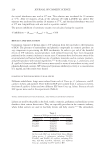
Design-Expert® software (13.0.11.0 version, Stat-Ease, Inc., Minnesota, USA) was used to
develop three factors and a two level (23) design, generating eight experimental runs.13 The
factor interaction between the variables was assessed using response surface graphs. The
concentration of three independent variables used was stearic acid (X1), propylene glycol
monostearate (X2), and dimethicone (X3). The dependent variables were viscosity (Y1) and
%compressibility (Tapped density bulk density)
Tapped densi =-
y 100 × (eq. 3)
Hausner’s Tapped density
Bulk density =(eq. 4)
Angle of repose. Angle of repose is the maximum angle formed by the surface of pile of
powder and the horizontal plane. It was determined by the funnel method. Weighed
powder was poured into a funnel fixed on a stand with the tip of the funnel closed. The
powder formed a heap on the surface when allowed to flow freely. The diameter of the heap
was noted when the tip of the funnel touched the tip of the pile formed. Noted values were
substituted in eq. 5 to calculate angle of repose.10
Θ =-1 tan h/r (eq. 5)
Where, h =height of the pile, and r =radius of the pile.
Loss on drying. A calibrated rapid infrared moisture analyzer (METTLER TOLEDO
GmbH, Giessen, Germany) was used to precisely assess the moisture content of the powder
sample. 1 g of powder sample was placed into the disk and the dial reading was noted for
its final weight. Noted values were substituted in eq. 6 to calculate moisture content.11
Moisturecontent Initialwt Finalwt)
Initialwt =-×100 ((eq. 6)
PREPARATION OF LIQUID FOUNDATION
The liquid foundation was prepared in two steps. Initially, the oil phase was prepared
by melting stearic acid, propylene glycol monostearate, dimethicone, cetyl alcohol, liquid
paraffin, and cosmetic pigments (iron oxide and titanium dioxide) on a water bath at 70°C.
The aqueous phase was prepared by dissolving tween 80, methyl paraben, and xanthan
gum in distilled water heated at 70°C, followed by the addition of propylene glycol. The oil
phase was transferred into the aqueous phase with continuous stirring using a homogenizer
at 1,500 rpm for 30 minutes.12
EXPERIMENTAL DESIGN
OPTIMIZATION OF LIQUID FOUNDATION USING CONVENTIONAL EXCIPIENTS
Design-Expert® software (13.0.11.0 version, Stat-Ease, Inc., Minnesota, USA) was used to
develop three factors and a two level (23) design, generating eight experimental runs.13 The
factor interaction between the variables was assessed using response surface graphs. The
concentration of three independent variables used was stearic acid (X1), propylene glycol
monostearate (X2), and dimethicone (X3). The dependent variables were viscosity (Y1) and