247 Magnesium Myristate
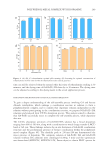
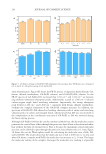
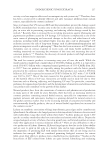
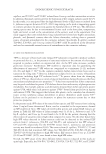
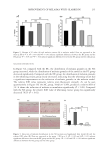
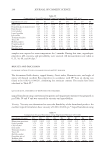
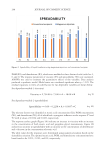
conventional excipients showed viscosity in the range from 2,608 ± 6.50 to 2,880 ± 23.06
cps, while liquid foundation using magnesium myristate showed viscosity in the range
from 2,618 ± 6.55 to 3,304 ± 15.04 cps. The results have been depicted in Figure 1.
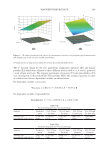
Spreadability. The spreadability of the formulated product was determined to assess if it
spreads well when applied to the skin. Good topical preparation has a spreadability of 7–31
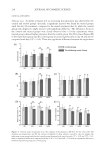
gm.cm./sec. The spreadability of liquid foundation using conventional excipients was found
from 6.33 ± 0.14 to 7.12 ± 0.12 gm.cm./sec, while the spreadability of liquid foundation
using magnesium myristate was found in the range from 6.41 ± 0.144 to 8.18 ± 0.288
gm.cm./sec. The results have been depicted in Figure 2.
OPTIMIZATION OF LIQUID FOUNDATION USING CONVENTIONAL EXCIPIENTS
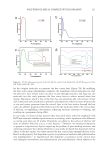
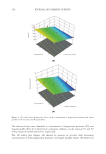
Design-Expert® software (Stat-Ease, Inc., Minnesota, USA) projected a total eight
experimental runs from the 23 factorial design for the three components: stearic acid (X1),
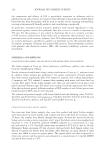
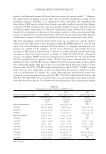
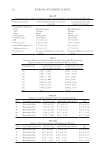
Table VI
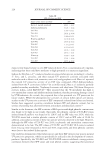
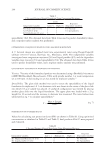
Preformulation Parameters of Magnesium Myristate Powder
Parameters Result Flow property
Bulk density (g/ml) 0.436 ± 0.011 Excellent Flow
Tapped density (g/ml) 0.573 ± 0.025
Carr’s index (%)10.88 ± 2.671
Hausner ratio 1.13 ± 0.036
Angle of repose (°) 24.204° ± 1.645
Loss on drying (%)0.019 ± 0.000
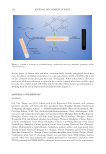
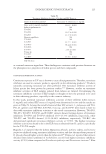
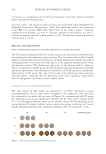
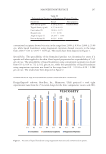
Figure 1. Viscosity of liquid foundation using magnesium myristate and conventional excipients.
conventional excipients showed viscosity in the range from 2,608 ± 6.50 to 2,880 ± 23.06
cps, while liquid foundation using magnesium myristate showed viscosity in the range
from 2,618 ± 6.55 to 3,304 ± 15.04 cps. The results have been depicted in Figure 1.
Spreadability. The spreadability of the formulated product was determined to assess if it
spreads well when applied to the skin. Good topical preparation has a spreadability of 7–31
gm.cm./sec. The spreadability of liquid foundation using conventional excipients was found
from 6.33 ± 0.14 to 7.12 ± 0.12 gm.cm./sec, while the spreadability of liquid foundation
using magnesium myristate was found in the range from 6.41 ± 0.144 to 8.18 ± 0.288
gm.cm./sec. The results have been depicted in Figure 2.
OPTIMIZATION OF LIQUID FOUNDATION USING CONVENTIONAL EXCIPIENTS
Design-Expert® software (Stat-Ease, Inc., Minnesota, USA) projected a total eight
experimental runs from the 23 factorial design for the three components: stearic acid (X1),
Table VI
Preformulation Parameters of Magnesium Myristate Powder
Parameters Result Flow property
Bulk density (g/ml) 0.436 ± 0.011 Excellent Flow
Tapped density (g/ml) 0.573 ± 0.025
Carr’s index (%)10.88 ± 2.671
Hausner ratio 1.13 ± 0.036
Angle of repose (°) 24.204° ± 1.645
Loss on drying (%)0.019 ± 0.000
Figure 1. Viscosity of liquid foundation using magnesium myristate and conventional excipients.