218 JOURNAL OF COSMETIC SCIENCE
the composition and efficacy of ELF is particularly important in industries such as
pharmaceuticals and cosmetics. It is expected that the large-scale production of ELF, whose
bioactivity has been determined, will be used in various sectors, ensuring sustainability,
creating environmentally friendly products, and contributing economically.
In particular, consumers prefer sunscreen products with natural ingredients to take
precautions against various skin problems that may occur as a result of exposure to
UV rays. For this purpose, it was aimed to determine the in vitro cosmetic activities
of ELF extracts isolated from lichen thalli and to determine their potential use as a
potential source in the cosmetic industry. First, ELF isolation was performed from Usnea
sp., Lobaria pulmonaria, and Bryoria capillaris to determine in vitro the potential efficacy
of cosmetic potentials of lichens and isolated ELF extracts. Total antioxidant activities,
total phenolic and flavonoid contents, SPFs, and tyrosinase inhibitory activities were
determined.
MATERIALS AND METHODS
COLLECTION LICHEN SAMPLES AND ISOLATION OF THE ENDOLICHENIC FUNGAL SPECIES
The lichen samples of Usnea sp., Lobari pulmonaria, and Bryoria capillaris were collected
from the Aladağ region of Bursa.
For the isolation of endolichenic fungi, surface sterilization of Usnea sp., L. pulmonaria and
B. capillaris lichen samples was performed.23 For surface sterilization of lichen samples,
they were treated sequentially with 95% ethanol (1 minute), 10% sodium hypochlorite
(3 minutes), and 70% ethanol (1 minute) after washing with water, and then dried on
a sterile filter paper. Sterile lichen samples were then cut into small 1x1 cm pieces and
plated on potato dextrose agar. The plates were incubated at room temperature for 14 days.
After the incubation period, different numbers of ELF samples of each lichen species were
purified and pure ELF cultures were obtained.
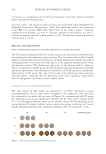
The isolated and purified samples of ELF were labeled with the following codes: T04-P01,
T04-P03, and T04-P13 for Lobari pulmonaria T20-B02, T20-P07, T20-P10, T20-P26, and
T20-P27 for Bryoria capillaris and T22-P07 and T22-B07 for Usnea sp.
EXTRACTION OF LICHEN AND ELF SAMPLES
For extraction from lichen samples, they were first washed and dried. Lichen samples
were then placed in sterile bottles with acetone and left in the dark for 24 hours. After
24 hours, the samples were filtered through filter paper. Acetone was removed from the
lichen extracts using a rotary evaporator, and 1 mg of the lichen extracts was weighed and
dissolved in 1 mL of dimethyl sulfoxide (DMSO), adjusted to a concentration of 1 mg/
mL and stored at +4°C. Pure ELF isolates were incubated at 25°C for 21 days in 250 mL
Erlenmeyer flasks containing 150 mL of potato dextrose broth. Each fungal culture was
filtered to separate the filtrate from the molds. After filtration, an equal amount of ethyl
acetate was added to create an organic phase. The organic phase was then evaporated to
obtain dry extracts and the extracts were adjusted at a concentration of 1 mg/mL DMSO
and which were stored at +4°C.
the composition and efficacy of ELF is particularly important in industries such as
pharmaceuticals and cosmetics. It is expected that the large-scale production of ELF, whose
bioactivity has been determined, will be used in various sectors, ensuring sustainability,
creating environmentally friendly products, and contributing economically.
In particular, consumers prefer sunscreen products with natural ingredients to take
precautions against various skin problems that may occur as a result of exposure to
UV rays. For this purpose, it was aimed to determine the in vitro cosmetic activities
of ELF extracts isolated from lichen thalli and to determine their potential use as a
potential source in the cosmetic industry. First, ELF isolation was performed from Usnea
sp., Lobaria pulmonaria, and Bryoria capillaris to determine in vitro the potential efficacy
of cosmetic potentials of lichens and isolated ELF extracts. Total antioxidant activities,
total phenolic and flavonoid contents, SPFs, and tyrosinase inhibitory activities were
determined.
MATERIALS AND METHODS
COLLECTION LICHEN SAMPLES AND ISOLATION OF THE ENDOLICHENIC FUNGAL SPECIES
The lichen samples of Usnea sp., Lobari pulmonaria, and Bryoria capillaris were collected
from the Aladağ region of Bursa.
For the isolation of endolichenic fungi, surface sterilization of Usnea sp., L. pulmonaria and
B. capillaris lichen samples was performed.23 For surface sterilization of lichen samples,
they were treated sequentially with 95% ethanol (1 minute), 10% sodium hypochlorite
(3 minutes), and 70% ethanol (1 minute) after washing with water, and then dried on
a sterile filter paper. Sterile lichen samples were then cut into small 1x1 cm pieces and
plated on potato dextrose agar. The plates were incubated at room temperature for 14 days.
After the incubation period, different numbers of ELF samples of each lichen species were
purified and pure ELF cultures were obtained.
The isolated and purified samples of ELF were labeled with the following codes: T04-P01,
T04-P03, and T04-P13 for Lobari pulmonaria T20-B02, T20-P07, T20-P10, T20-P26, and
T20-P27 for Bryoria capillaris and T22-P07 and T22-B07 for Usnea sp.
EXTRACTION OF LICHEN AND ELF SAMPLES
For extraction from lichen samples, they were first washed and dried. Lichen samples
were then placed in sterile bottles with acetone and left in the dark for 24 hours. After
24 hours, the samples were filtered through filter paper. Acetone was removed from the
lichen extracts using a rotary evaporator, and 1 mg of the lichen extracts was weighed and
dissolved in 1 mL of dimethyl sulfoxide (DMSO), adjusted to a concentration of 1 mg/
mL and stored at +4°C. Pure ELF isolates were incubated at 25°C for 21 days in 250 mL
Erlenmeyer flasks containing 150 mL of potato dextrose broth. Each fungal culture was
filtered to separate the filtrate from the molds. After filtration, an equal amount of ethyl
acetate was added to create an organic phase. The organic phase was then evaporated to
obtain dry extracts and the extracts were adjusted at a concentration of 1 mg/mL DMSO
and which were stored at +4°C.