251 Magnesium Myristate
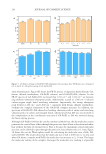
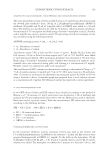
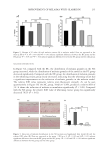
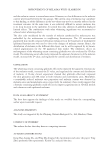
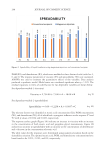
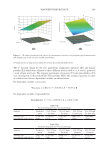
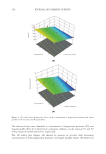
increase in spreadability with increasing both concentrations of magnesium myristate and
liquid paraffin.
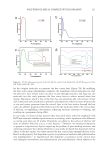
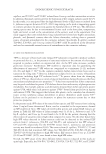
Numerical calculations were used to determine the ideal values for responses based on
the desirability criterion. The optimal concentrations of magnesium myristate and liquid
paraffin were determined to be 2.130% and 7.00%, respectively.
COMPARATIVE STUDY OF MAGNESIUM MYRISTATE WITH CONVENTIONAL EXCIPIENTS IN THE
FORMULATION OF COSMETIC LIQUID FOUNDATION.
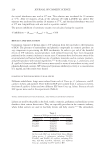
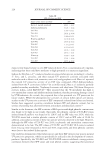
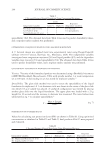
Using optimized concentrations as tabulated in Table IV and V, final products F1 and
F7 were prepared and evaluated. The formulated liquid foundation using magnesium
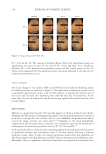
myristate and conventional excipients appeared to be a brownish-yellow color, odourles,
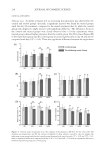
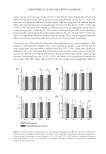
smooth textured, and had a pH in the range of skin. The obtained adhesivity values were as
per the requirements (more than four seconds). Liquid foundation containing magnesium
myristate exhibited lower viscosity than conventional excipients, which is suitable for
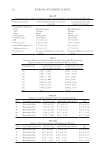
topical preparations with good spreadability (Table IX).
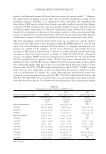
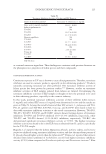
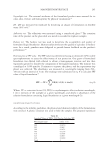
SPF VALUE
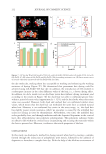
According to the results obtained, formulated liquid foundation using conventional
excipients showed absorption maxima at 295 nm (0.997), whereas liquid foundation
using magnesium myristate showed absorption maxima at 305 nm (1.06). Using these
λmax values for both liquid foundations using conventional excipients and magnesium
myristate, the SPF value was calculated to be 9.11 and 11.02, respectively (Table X).
Therefore, the SPF value of magnesium myristate showed better UV protection than
conventional excipients.20
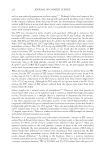
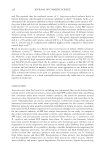
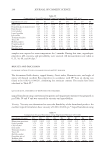
SHORT-TERM STABILITY STUDIES
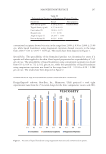
Stability studies ensure quality, safety, and efficacy criteria for consumer acceptance. No
changes in color, odor, and texture were observed during storage.There were very slight
alterations in the physical features of the liquid foundation. Those results were tabulated
in Table XI and Table XII. After 90 days of incubation, the viscosity was found to be
increased with reduced spreadability. No change in pH was observed, suggesting good
stability properties of the prepared formulations.
CONCLUSION
Liquid foundation was sucessfully prepared using magnesium myristate as a multifunctional
excipient, offering suitable characteristics of flowability, spreadability, coverage, texture,
and UV protection. It was demonstrated that a multifunctional excipient could suitably
replace the different excipients used in liquid foundation to attribute to various functions,
thereby reducing process time and cost in production.
increase in spreadability with increasing both concentrations of magnesium myristate and
liquid paraffin.
Numerical calculations were used to determine the ideal values for responses based on
the desirability criterion. The optimal concentrations of magnesium myristate and liquid
paraffin were determined to be 2.130% and 7.00%, respectively.
COMPARATIVE STUDY OF MAGNESIUM MYRISTATE WITH CONVENTIONAL EXCIPIENTS IN THE
FORMULATION OF COSMETIC LIQUID FOUNDATION.
Using optimized concentrations as tabulated in Table IV and V, final products F1 and
F7 were prepared and evaluated. The formulated liquid foundation using magnesium
myristate and conventional excipients appeared to be a brownish-yellow color, odourles,
smooth textured, and had a pH in the range of skin. The obtained adhesivity values were as
per the requirements (more than four seconds). Liquid foundation containing magnesium
myristate exhibited lower viscosity than conventional excipients, which is suitable for
topical preparations with good spreadability (Table IX).
SPF VALUE
According to the results obtained, formulated liquid foundation using conventional
excipients showed absorption maxima at 295 nm (0.997), whereas liquid foundation
using magnesium myristate showed absorption maxima at 305 nm (1.06). Using these
λmax values for both liquid foundations using conventional excipients and magnesium
myristate, the SPF value was calculated to be 9.11 and 11.02, respectively (Table X).
Therefore, the SPF value of magnesium myristate showed better UV protection than
conventional excipients.20
SHORT-TERM STABILITY STUDIES
Stability studies ensure quality, safety, and efficacy criteria for consumer acceptance. No
changes in color, odor, and texture were observed during storage.There were very slight
alterations in the physical features of the liquid foundation. Those results were tabulated
in Table XI and Table XII. After 90 days of incubation, the viscosity was found to be
increased with reduced spreadability. No change in pH was observed, suggesting good
stability properties of the prepared formulations.
CONCLUSION
Liquid foundation was sucessfully prepared using magnesium myristate as a multifunctional
excipient, offering suitable characteristics of flowability, spreadability, coverage, texture,
and UV protection. It was demonstrated that a multifunctional excipient could suitably
replace the different excipients used in liquid foundation to attribute to various functions,
thereby reducing process time and cost in production.