248 JOURNAL OF COSMETIC SCIENCE
PGM (X2), and dimethicone (X3), which were modified at three distinct levels (coded as -1,
0, and 1). The response parameters of viscosity (Y1) and spreadability (Y2) were examined.
ANOVA was used to estimate the quantitative effects of the variables. Data analysis
produced a quadratic model. Model terms are considered significant when p 0.05. The
residual equations in terms of coded factors for two dependent variables are shown below.
For dependent variable 1 (viscosity):
Viscosity 2,754.00 73.00 A B =+-18.00 × × (eq. 9)
For dependent variable 2 (spreadability):
Spreadability A C =-+6 68 0.2238 0.0937 .× × (eq. 10)
The relevant factors were identified as stearic acid concentration (X1), PGM concentration
(X2), and dimethicone (X3), all of which had a synergistic influence on the response Y1 and
Y2 with p values of 0.0124 and 0.0452, respectively.
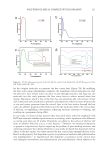
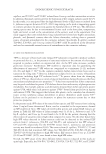
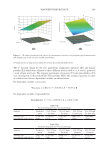
The response surface graph (Figure 3A) indicates an increase in viscosity with an increase
in the concentration of both stearic acid and propylene glycol monostearate. Figure 3B
indicates an increase in spreadability with an increase in the concentration of dimethicone
and a decrease in the concentration of stearic acid.
The ideal values for the responses were determined using numerical analysis based on the
desirability criterion. The optimal stearic acid, PGM, and dimethicone concentrations have
been found to be 2.01%, 2.24%, and 6%, respectively.
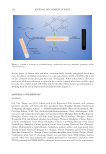
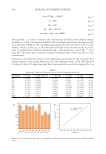
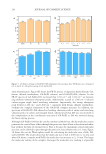
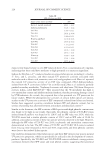
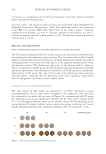
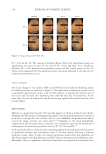
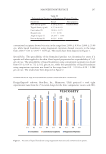
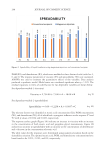
Figure 2. Spreadability of liquid foundation using magnesium myristate and conventional excipient.
PGM (X2), and dimethicone (X3), which were modified at three distinct levels (coded as -1,
0, and 1). The response parameters of viscosity (Y1) and spreadability (Y2) were examined.
ANOVA was used to estimate the quantitative effects of the variables. Data analysis
produced a quadratic model. Model terms are considered significant when p 0.05. The
residual equations in terms of coded factors for two dependent variables are shown below.
For dependent variable 1 (viscosity):
Viscosity 2,754.00 73.00 A B =+-18.00 × × (eq. 9)
For dependent variable 2 (spreadability):
Spreadability A C =-+6 68 0.2238 0.0937 .× × (eq. 10)
The relevant factors were identified as stearic acid concentration (X1), PGM concentration
(X2), and dimethicone (X3), all of which had a synergistic influence on the response Y1 and
Y2 with p values of 0.0124 and 0.0452, respectively.
The response surface graph (Figure 3A) indicates an increase in viscosity with an increase
in the concentration of both stearic acid and propylene glycol monostearate. Figure 3B
indicates an increase in spreadability with an increase in the concentration of dimethicone
and a decrease in the concentration of stearic acid.
The ideal values for the responses were determined using numerical analysis based on the
desirability criterion. The optimal stearic acid, PGM, and dimethicone concentrations have
been found to be 2.01%, 2.24%, and 6%, respectively.
Figure 2. Spreadability of liquid foundation using magnesium myristate and conventional excipient.