j. Soc. Cosmet. Chem., 47, 157-166 (May/June) A natural lipid mixture improves barrier function and hydration in human and murine skin MAN MAO-QIANG, KENNETH R. FEINGOLD, FUSHENG WANG, CARL R. THORNFELDT, and PETER M. ELIAS, Dermatology and Medicine Services, Veterans Administration Medical Center, San Francisco, CA 94121 (M.M-Q., K.R.F., P.M.E.) Departments of Dermatology (M.M-Q., K.R.F., P. M. E. ) and Medicine (t•. if. t • . ), University of California School of Medicine, San Francisco, CA Department of Dermatology, Yuhuangding Hospital, Yantai, P. R. China (F. W. ) and Cellegy Pharmaceutical Corporation, Foster City, CA (C.R. T). Accepted for publication July 18, 1996. Synopsis Previous studies have demonstrated that three key lipids, cholesterol, free fatty acids, and ceramides, are required for maintenance of the epidermal permeability barrier function in murine and human epidermis. Moreover, it has been shown that all three lipids are required together for barrier function, because only topical applications of complete, equimolar three-component lipid mixtures allow normal barrier recovery in disrupted skin. In contrast, single- or two-component lipid mixtures delay normal barrier recovery. Furthermore, increasing the ratio of any single lipid species, i.e., cholesterol, ceramides, or free fatty acid, to the other two lipids in the three-lipid component mixture actually accelerates barrier recovery in murine and human epidermis. Here we assess whether a natural lipid mixture, containing these three key lipids in addition to a large amount of phospholipids, influences barrier recovery and skin hydration in both murine and human skin. Our results show that this natural lipid mixture enhances barrier recovery significantly in acetone-treated mouse skin. Moreover, this natural lipid mixture also accelerates barrier recovery in acetone- treated and tape-stripped human skin. Finally, this natural lipid mixture increases stratum corneum hydration in both acutely disrupted and normal human skin. These studies show that this naturally occurring lipid mixture can both accelerate permeability barrier recovery and enhance stratum corneum moisturization. INTRODUCTION Because of their acknowledged importance for barrier homeostasis, increasing attention has focused on stratum corneum lipids as potential topical therapeutic agents. Prior studies indicated that disruption of barrier function by either tape stripping or organic solvent treatment increases epidermal synthesis of the three major stratum corneum lipids, cholesterol, ceramides, and free fatty acids (1-3). Moreover, each of these three key lipids is required for barrier function, as demonstrated by the ability of pharmaco- 157

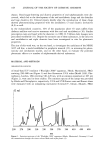
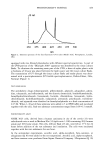
158 JOURNAL OF THE SOCIETY OF COSMETIC CHEMISTS logical inhibitors of each synthetic pathway to alter barrier homeostasis (4-6), ascribable to specific lipid biochemical and membrane structural abnormalities in the stratum corneurn (4-7). Whereas these findings showed the separate requirement for each of the three key lipids for barrier homeostasis, previous studies also have demonstrated that maintenance of normal barrier function requires all three species of stratum corneum lipids together. Topical application of any one or two of the three key lipids delays or worsens barrier recovery following acetone-induced barrier disruption (8). In contrast, topical applica- tion of a lipid mixture, containing free fatty acid, cholesterol, and ceramide in an approximately equimolar ratio, allows normal barrier recovery (8). Moreover, optimal ratios of these three lipids accelerate barrier recovery following either acetone treatment or tape stripping, and some types of surfactant treatment of mouse skin, regardless of the extent of barrier disruption (9,10, 13). Because the large quantities of the ceramides needed to formulate such optimized mixtures may not be commercially available or affordable, we determined whether a naturally occurring, lipid-enriched mixture of animal origin, containing the three key lipids primarily as complex precursors, could enhance stratum corneum function. Our findings show that a natural lipid mixture, with an approximate lipid ratio of 1:1:3 (cholesterol:ceramides:fatty acids), accelerates barrier recovery following acute barrier disruption of murine and human skin. Moreover, this lipid mixture also enhances stratum corneum moisturization in both normal and damaged murine and human skin. METHODS AND MATERIALS MATERIALS Six- to eight-week-old male hairless mice were purchased from Simonsen Laboratories (Gilroy, CA) and fed Purina mouse diet and water ad libitum. Acetone and propylene glycol were purchased from Fisher Scientific (Fairlawn, N J). Cholesterol, ceramides, and palmitate were purchased from Sigma Chemical Company (St. Louis, MO). The natural lipid mixture, Y2, derived from animal porcine tissue, was purchased from Ocean Pharmaceutical (Weihai, P. R. China). LIPID BIOCHEMISTRY The lipid composition of Y2 was quantitated by high-performance thin-layer chroma- tography (HPTLC) followed by charring and scanning densitometery, as previously published (11). Briefly, 2-5 Ixg of the lipid extract was applied to the TLC plates for neutral lipid analysis, while 20 or 100 Ixg were utilized for polar lipid analysis. 0.2 to 1.0 Ixg of a polar lipid standard and 0.12 to 1.0 Ixg of a neutral lipid standard were applied to each side of the plates to generate standard curves, as well as to identify the major species. Neutral lipids were fractionated by developing the plates in petroleum ether:diethyl ether:acetic acid (80:20:1, vol), as described previously. Polar lipids were developed to 35 and 55 mm in chloroform:ethyl acetate:ethylmethylketone:2-propanol: ethanol:methanol:glacial acetic acid:hexyl acetate (34:4:4:6:20:28:4:1, vol), to 70 mm in chloroform:ethyl acetate:2-propanol:ethanol:methanol:H20 (46:4:4:6:28:6, vol), and then to the top of the plates in chloroform:methanol:acetone (80:10:10, vol). Sphin-
Purchased for the exclusive use of nofirst nolast (unknown)
From: SCC Media Library & Resource Center (library.scconline.org)