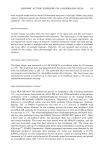
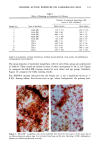
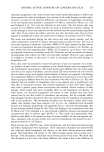
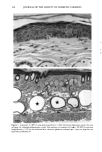
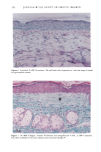
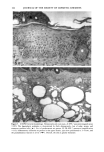
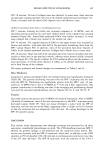
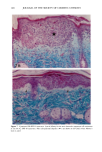
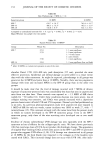
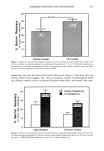
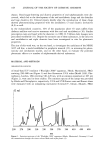
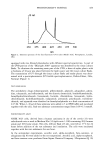
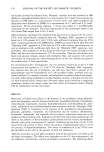
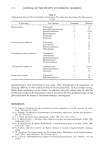
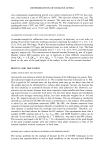
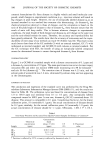
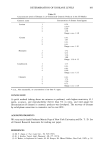
CHRONIC ACTINIC EXPOSURE ON LANGERHANS CELLS 12 l Table l Effect of Bleaching on Langerhans Cell Density Sample Number of epidermal Langerhans cells (mean + SD cells/mm 2) no. Type of antibody Before bleach After bleach ! HLA-DR 776 + 151 832 -+ 155 2 HLA-DR 590 + 80 595 + 57 3 HLA-DR 600 + 69 586 + 65 4 HLA-DR 733 + 106 701 + 49 5 HLA-DR 718 + 90 696 + 87 6 CDla 686 + 61 683 + 71 7 CDla 638 + 68 613 + 46 8 CDla 653 + 69 683 + 76 9 CDla 922 + 96 885 +-- 166 10 CDla 618 + 106 621 + 90 EFFECT OF CHRONIC ACTINIC EXPOSURE, ETHNIC BACKGROUND, AND AGING ON EPIDERMAL LANGERHANS CELL DENSITY The mean densities of epidermal Langerhans cells for each ethnic group are summarized in Table II. These results are similar to those of other investigators (5,10,13,19). Figure 2a compares the HLA-DR staining results for each ethnic and age group. Similarly, Figure 2b compares the CDIa staining results. The ANOVA analysis indicated that the biopsy site is not a significant factor (p) 0.05). Among others, four factors such as age, ethnic background, the primary anti- Figure 1. HLA-DR + Langerhans cells in the epidermal sheet from the inner aspect of the upper arm of an African-American subject (age 23), (a) before bleaching and (b) after bleaching (x200, alkalinephos- phatase anti-alkalinephosphatase staining).

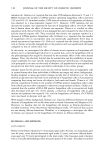
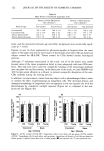
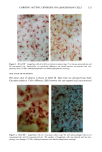
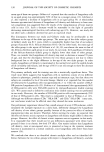
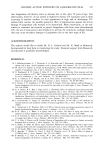
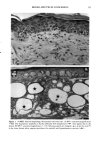
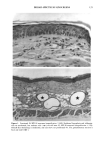
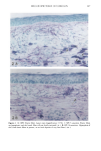
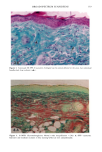
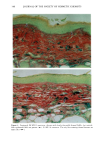
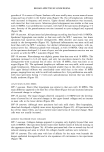
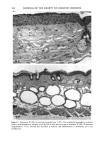
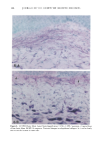
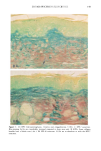
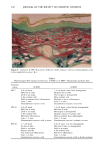
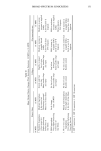
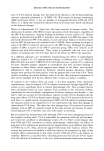
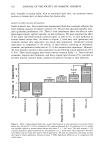
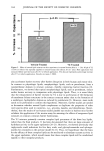
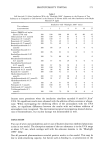
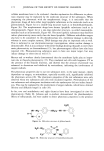
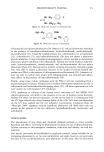
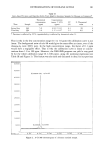
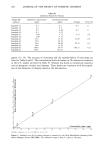
122 JOURNAL OF THE SOCIETY OF COSMETIC CHEMISTS Table II Mean Density of Epidermal Langerhans Cells Density of HLA-DR-positive cells (cells/mm 2) Density of CDla-positive cells (cells/mm 2) Ethnicity/age Sun-exposed Sun-protected Sun-exposed Sun-protected Caucasian/old 705 + 104 700 + 115 745 + 154 748 + 120 Caucasian/young 721 + 119 682 + 62 810 + 121 755 + 134 African-American/old 625 -+ 71 638 + 70 640 -+ 71 656 + 55 African-American/young 729 + 39 709 -+ 59 713 + 80 762 -+ 61 body, and the interaction between age and ethnic background were statistically signif- icant (p 0.05). Figures 3a and 3b show representative photomicrographs of biopsies from the inner aspect of the upper arm and the outer aspect of the forearm of an older African-American subject stained for HLA-DR. Tissues stained for CDla showed similar histological patterns. Although 37 volunteers participated in this study, not all of the results were usable because some of the tissue preparations failed to stain adequately with anti-CDla anti- body. This may have been caused by nonspecific binding of the monoclonal antibody onto the glass vial used for staining. In the latter part of the study, we used DMEM with 10% bovine serum albumin as a diluent to prevent nonspecific absorption of the anti- CDIa antibody during the staining process. In addition, we also stained a tissue from one subject with a photodamaged skin in order to confirm the effect of photodamage on Langerhans cells. The decreased density and damaged morphology of Langerhans cells was apparent at the sun-exposed site with the photodamage by cumulative sunlight exposure (Figure 4a) as compared to the sun- protected site (Figure 4b). a) b) 1000 1000 80O 600 ß .• • 800 • m 600 '*- 400 E 200 z 0 0 Young Old Young I I J Black Old Old Young Old Young I I I I I Caucasian Caucasian Black Age / Ethnicity Age / Ethnicity Figure 2. (a) The number of HLA-DR + Langerhans cells for each ethnic and age group. (b) The number of CDla + Langerhans cells for each ethnic and age group. Langerhans cell density of the African-American elderly group is slightly lower than those of other groups (I sun-exposed site, IU sun-protected site).
Purchased for the exclusive use of nofirst nolast (unknown)
From: SCC Media Library & Resource Center (library.scconline.org)