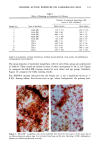
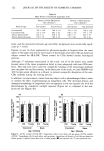
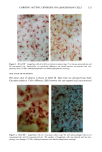
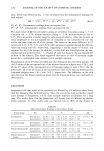
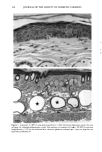
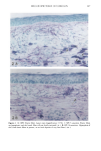
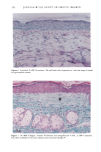
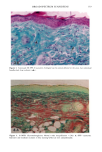
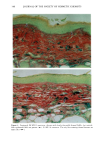
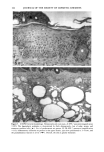
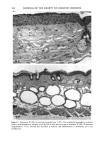
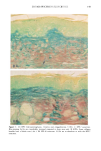
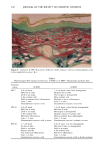
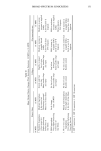
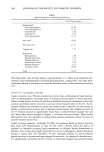
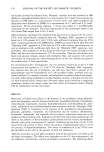
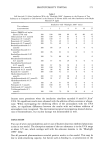
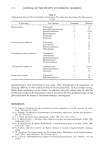
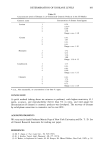
BROAD-SPECTRUM SUNSCREENS 145 SPF-18 sunscreen. No loss of collagen stain was observed. In some areas, short stretches of a pale-grey staining material were seen at the dermal-epidermal junction (Figure 7C). These co-located with the dense GAG deposits seen with Mowry's stain. MOWRY'S COLLOIDAL IRON STAIN: GLYCOSAMINOGLYCANS S?F-7 sunscreen. Staining for GAGs was increased compared to 10 MPDs, with all specimens having numerous foci and short shallow bands of the stippled blue staining material (Figure 8A). Intercellular epidermal GAGs were further increased. In some areas collagen had a bluish tone instead of the normal red color. S?F-16 sunscreen. The stippled deposits of GAGs in the upper dermis were increased in density and number, with more than half of the specimens resembling those from the SPF-7 group (Figure 8B). In addition, most of the specimens had dense deposits of GAGs at the dermal-epidermal junction. Collagen had a bluish tone in some areas. S?F-18 sunscreens. More than half of the specimens had a few tiny foci of GAGs that were similar to those seen in age-matched controls, whereas others showed mildly increased GAGs (Figure 8C). The specific evidence for UVA-radiation effects was the presence, in most specimens, of several dense deposits of GAGs at the dermal-epidermal junction and a focal bluing of the collagen. The major epidermal and dermal changes are summarized in Tables I and II. Skin Thickness Compared to normal unirradiated skin, all irradiated skins were significantly thickened (Table III). The greatest thickening was seen with the SPF-7 sunscreen and the least with the SPF-18. Thickening was significantly greater with the SPF-7 and -16 sun- screens at 16 MPDs than it was at 10 MPDs (p = 0.02 and 0.002, respectively). The greatest contribution to thickening was that of the enlarging and proliferating dermal cysts and the associated granulomatous reaction (Figures lB, D, F, and 5B, D, F). Tumors No visible tumors were present after 10 MPDs (18 weeks of irradiation). After 16 MPDs (30 weeks of irradiation), three of the nine surviving mice in the SPF-7 sunscreen group had small tumors (Table IV). Only one mouse developed a tumor with the SPF-16 sunscreen, and this was low on the flank, suggesting either it might not be UV-related or that the sunscreen did not adequately cover this area. No tumors developed in the SPF- 18 sunscreen group. DISCUSSION This chronic study demonstrates that although erythema was prevented by all three sunscreens, considerable photodamage occurred. The UVB-absorbing sunscreen (SPF-7) allowed the greatest damage to the epidermis and the connective tissue matrix. Pro- tection was increased with the SPF-16 sunscreen, which had, in addition to the UVB absorber, a UVA II absorber (320-340 nm) and an erythema protection factor twice that of the UV dose delivered. The SPF-18 sunscreen, with the addition of the UVA I

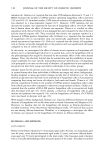
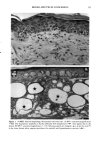
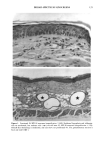
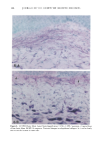
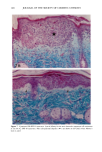
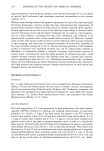
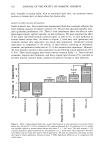
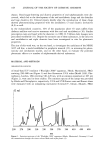
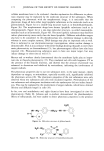
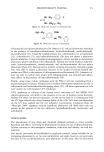
146 JOURNAL OF THE SOCIETY OF COSMETIC CHEMISTS Figure 6. 16 MPD: Elastic fibers. Luna's Stain (magnification x 370). A: SPF-7 sunscreen. A typical focus of fine elastic fibers. B: SPF-16 sunscreen. Tinctorial changes in subepidermal collagen ( • ) can be clearly seen as can the increase in mast cells.
Purchased for the exclusive use of nofirst nolast (unknown)
From: SCC Media Library & Resource Center (library.scconline.org)