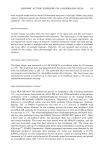
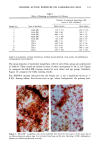
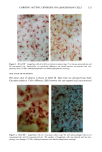
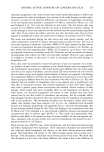
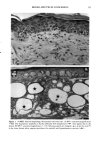
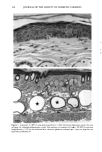
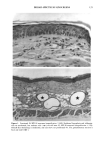
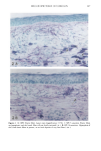
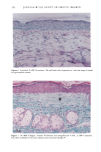
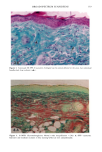
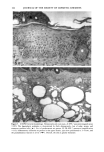
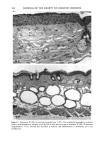
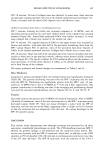
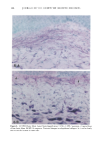
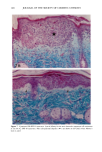
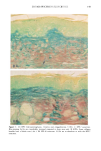
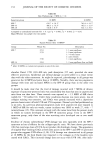
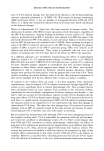
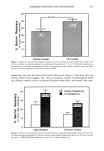
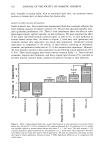
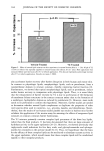
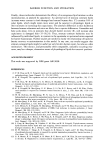
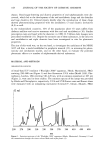
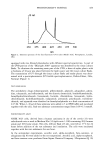
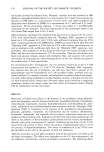
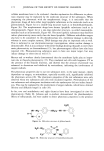
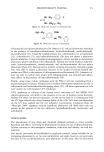
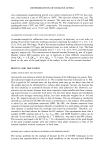
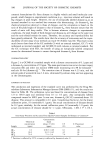
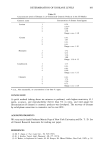
CHRONIC ACTINIC EXPOSURE ON LANGERHANS CELLS 123 Figure 3. HLA-DR + Langerhans cells of an African-American subject (age 71) at (a) sun-protected site and (b) sun-exposed site. Statistically, no significant difference was found between sun-exposed and sun- protected sites (x 200, alkalinephosphatase anti-alkalinephosphatase staining). SKIN COLOR MEASUREMENT The mean color of subjects is shown in Table III. Data were not obtained from three Caucasian subjects. Color difference (AE) between the sun-exposed and sun-protected Figure 4. HLA-DR + Langerhans cells of a Caucasian subject (age 56) with photodamaged skin at (a) sun-exposed site and (b) sun-protected site. The number of Langerhans cells was reduced and the mor- phology was damaged (x200, alkalinephosphatase anti-alkalinephosphatase staining).

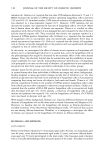
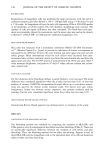
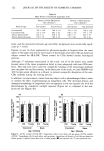
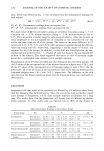
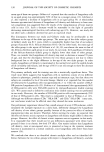
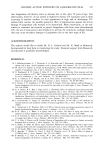
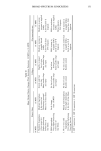
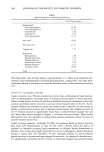
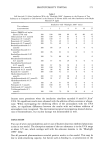
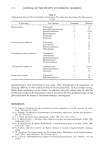
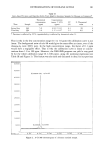
124 JOURNAL OF THE SOCIETY OF COSMETIC CHEMISTS sites, which was defined by Eq. 1, was calculated from the chromameter readings for each subject: AE = V'(L*-L*') 2 + (a*-a*') 2 + (b*-b*') 2 (Eq 1) L*, a*, b*: Chromameter readings from sun-exposed site L*', a*', b*': Chromameter readings from sun-protected site The mean values of AE for each subject group are as follows: Caucasian young = 7.32 Caucasian old = 5.79 African-American young = 5.58 African-American old = 6.55. They are within a similar range for each group of subjects. Also, the decrease in mean brightness of the sun-exposed site as compared to the sun-protected site was within the same range for all of the groups. The values of the mean difference in L* values were 4.91, 4.59, 5.31, and 5.87 for the Caucasian young and old and the African- American young and old, respectively, suggesting a similar degree of chronic sun exposure for all of the groups. In addition, a color shift was found between the sun- exposed and sun-protected sites, i.e., a higher a* value was found in the sun-exposed site in most of the subjects. This result suggested that traces of color of erythema might persist for a considerable time without recent sunlight exposure. Measurements of the L* value provided data that delineated the two ethnic groups. All the L* values of the sun-exposed sites of the African-American subjects were 58.1, and all the L* values of the sun-exposed sites of Caucasian subjects were 58.9. On the other hand, all of the L* values of the sun-protected sites of the African-American and Caucasian subjects were 63.1 and 65.1, respectively. The difference in the skin color between the African-American group and the Caucasian group was confirmed by these results. DISCUSSION Langerhans cells that reside in the epidermis are affected by UV radiation doses lower than the damaging dose for keratinocytes. Thus, the core of this study is whether a small acute damage to Langerhans cells by daily sunlight exposure accumulates for a long time. The results show that the Langerhans cell density was not affected by chronic actinic exposure. In other words, past sun exposure has no effect on the density of Table III Mean Chromameter Readings for Each Subject Group Ethnicity/age Site L* a* b* AE Caucasian/old Sun-exposed 63.96 + 3.12 7.93 - 1.24 15.03 - 1.79 5.79 -+ 1.96 Sun-protected 68.55 -+ 2.04 5.54 + 1.45 12.81 + 1.07 Caucasian/young Sun-exposed 64.80 + 3.09 8.67 - 1.43 14.44 -+ 1.77 7.32 - 2.02 Sun-protected 69.71 - 2.17 5.37 -+ 0.89 10.48 + 1.70 African-American/old Sun-exposed 52.63 - 4.93 8.03 -+ 0.86 17.64 -+ 1.53 6.55 - 2.45 Sun-protected 58.50 -+ 5.22 6.64 + 0.93 17.27 - 1.89 African-American/ Sun-exposed 48.33 - 3.97 9.03 -+ 0.89 17.69 - 1.16 5.58 -+ 1.93 young Sun-protected 53.64 -+ 5.06 7.46 + 1.47 17.92 - 1.05
Purchased for the exclusive use of nofirst nolast (unknown)
From: SCC Media Library & Resource Center (library.scconline.org)