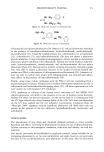
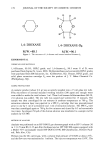
DETERMINATION OF DIOXANE LEVELS 179 oven temperature programming started at an initial temperature of 40øC for four min- utes, then raised at a rate of 10øC/min to 100øC. The injection volume was 2 •1. The running time was approximately six minutes. The mass was set at the E1 and SIM acquisition mode: monitoring ions at m/z 88 and 96. The temperatures of source and quadrupoles were 150øC and 100øC, respectively. The ionizing electrons and electrical multiplier (EM) were set at 70 eV and 2000V, respectively. CALIBRATION STANDARD CURVE AND QUANTITATIVE ANALYSIS A standard sample for calibration curve was prepared, in duplicate, in a test tube, by adding 50 •1 of the respective working solution (containing the analyte: 0.1, 0.5, 5.0, 25.0, 50.0, and 100.0 •g), 50 •1 of the internal standard working solution (containing the internal standard 10.0 •g), and deionized water to a total volume of 1 mi. The final concentrations of six dioxane standards were 0.1, 0.5, 5.0, 25.0, 50.0, and 100.0 ppm (•g/ml), respectively. The concentration of internal standard dioxane-d 8 was 10.0 ppm. Quality control (QC) samples were run in duplicate at three different concentration levels: QC L = 1.0, QC M = 10.0, QC H = 75.0 ppm. The quantitative analysis was based on the ratio of the peak height of the analyte to that of the internal standard. RESULTS AND DISCUSSION SAMPLE EXTRACTION AND RECOVERY Acetonitrile was chosen as solvent for dioxane because of the following two points: First, the molecular weight ofacetonitrile (m.w. 44) is smaller than that of dioxane (m.w. 88). This is good for GC analysis since the big solvent peak may go out faster than that of the analyte and can be eliminated by a solvent delay program. Second, the dioxane has the best solubility in acetonitrile because of their close polarities (10). However, ace- tonitrile can not extract dioxane from most cosmetics (water-soluble and those contain- ing water) because it is miscible with water. On the other hand, hexane and methylene chloride have stronger extracting ability, but their molecular weights (m.w. 84 and m.w. 85, respectively) are too close to that of dioxane. The use of hexane or methylene chloride as a solvent for GC/MS will result in interference in the analysis. This problem is solved by the solid-phase extraction (SPE). By SPE, the dioxane extracted from cosmetics by hexane and methylene chloride is transferred to a solid-phase cartridge, and then dioxane is washed from the cartridge and eluted by acetonitrile. Therefore, ace- tonitrile is the final solvent for dioxane for GC analysis. Our experiments show that a number of SPE columns such as C2, C 8, C18 , NH2, and SiOH bonded to silica can do this job. In our work the C 8 cartridge by J. T. Baker Inc. was used as the SPE column. The recovery was found to be 86.7% (n = 6), calculated by the ratio of the peak height of the same standard sample with and without solid phase extraction to that of the internal standard without extraction in both cases. ISOTOPICALLY LABELED INTERNAL STANDARD AND REPRODUCIBILITY The serious problem for the analysis of dioxane by GC or GC/MS techniques is low accuracy and reproducibility as well as high variability in the recovery from different

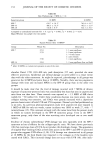
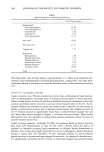
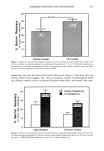
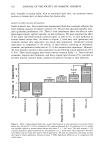
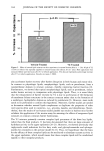
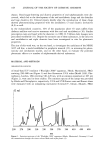
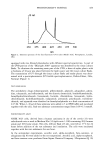
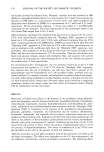
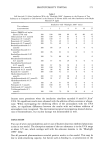
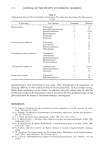
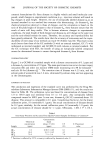
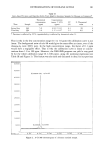
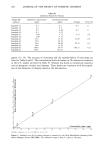
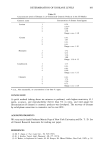
180 JOURNAL OF THE SOCIETY OF COSMETIC CHEMISTS cosmetic formulations (8). Since dioxane is a highly volatile and small molecular com- pound, small changes in experimental conditions (e.g., injection volume) will result in big changes in peak height. However, the use of isotopically labeled dioxane-d 8 as an internal standard in our method has overcome this shortcoming. As dioxane-d 8 has chemical properties identical to those of dioxane, and the calculation is based on the ratio of the peak height of dioxane to that of dioxane-d 8, these features ensure that the result of ratio will keep stable. This is because whatever changes in experimental conditions, the peak height of both dioxane and dioxane-d 8 will change in the same way and the ratio should remain the same. Therefore, the accuracy and reproducibility has been greatly enhanced. The results show that the accuracy of intra-assay and the repro- ducibility of inter-assay of our method can reach 5% (Tables I and II). This result is also much better than those of the GC methods (5) with an external standard, GC (7) with isobutanol as internal standard, and GC/MS (9) with toluene as internal standard. For the GC technique with FID, the benefit of using an isotopically labeled compound cannot be determined because it cannot distinguish dioxane-d 8 from dioxane. CHROMATOGRAPHY Figure 2 is a GC/MS of a standard sample with a dioxane concentration of 0.1 ppm and a dioxane-d 8 concentration of 10 ppm. The mass spectrometer was set at electron impact ionization (El) and select ion monitor (SIM) mode monitoring m/z 88 for [dioxane] + and m/z 96 for [dioxane-d 8] +. The retention time of dioxane was 4.23 min, and the solvent peak of acetonitrile was 3.6 min, eliminated by solvent delay and not appearing in the chromatogram. SUMMARY OF RESULTS The calculation and regression of the standard curve was performed by the Drug Me- tabolism Laboratory Information Manager System (DM-LIMS) (11), and the results are listed in Table III. The calibration curve was linear for concentrations of dioxane from 1.0 to 100.0 ppm and nonlinear from 0.1 to 1.0 ppm. Any isotopically labeled compound cannot be 100% pure. In our case, dioxane-d 8 (98.5%) contained about 1% dioxane. This amount is comparable to 0.1 ppm. Considering this factor, for the lowest calibration point, S 1 (nominally 0.1 ppm), the actual concentration of dioxane should be 0.2 ppm similarly, for the second calibration point, S2 (nominally 1.0 ppm), the actual concentration of dioxane should be 1.1 ppm. Obviously, 1.0/0.1 • 1.1/0.2. Table I Intra-Assay Precision and Accuracy From Quality-Control Samples for Dioxane in Cosmetics* Sample Concentration Theoretical found concentration (mean -+ S.D.) CV % Theoretical (ppm) (ppm) (%) value QC L 1.0 0.98 + 0.09 9.1 98 QC M 10.0 9.9 + 0.45 4.5 99 QCx_x 75.0 71 + 5.4 7.6 95 * Precision is reflected by CV% accuracy is reflected by theoretical value %.
Purchased for the exclusive use of nofirst nolast (unknown)
From: SCC Media Library & Resource Center (library.scconline.org)