BROAD-SPECTRUM SUNSCREENS 151

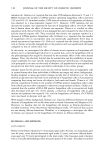
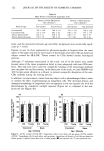
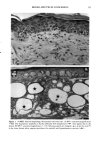
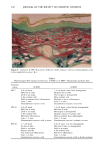
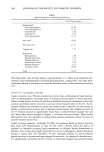
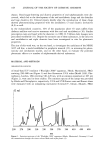
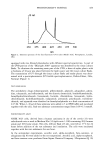
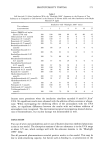
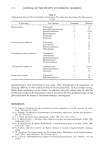
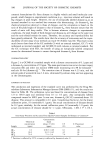
152 JOURNAL OF THE SOCIETY OF COSMETIC CHEMISTS Table III Skin Thickness (•) - SEM (n = 6) Sunscreen group 10 MPD 16 MPD SPF-7 626.7 + 30.1 a 783.8 + 41.7 a SPF-16 586.3 + 16.4 a 782.0 + 32.7 a SPF-18 516.8 + 9.5 b 546.3 --- 29.1 c Compared to unirradiated controls (461 -+ 9.1 •): ap = 0.002 bp ---- 0.004 Cp = 0.04. Mann-Whitney two-sample test (two-tailed). Table IV Tumors Present After 16 MPD* Group Mouse No. Description SPF-7 3731 1: 1-mm papilloma 3735 1: 2-mm papilloma 1: 5-mm tumor 2: cystic lesions 3736 1: 2-mm papilloma 3764 SPF- 16 1: 2-mm papilloma (low on flank) * After 10 MPD, no tumors were present on any of the mice. absorber Parsol 1789 (330-400 nm peak absorption 355 nm), provided the most effective protection. Epidermal and dermal damage occurred albeit to a lesser extent than with the other sunscreens. As might be expected, photodamage in all groups was greater at the 16 MPD end point than at t0 MPDs. Notably, there was less progressive damage with time and increased MPDs in the SPF-18 group than in the other two groups. It should be made clear that the level of damage incurred with 7 MEDs of chronic exposure of sunscreen-protected mice was considerably less than that seen in unprotected mice from our data base. These controls were exposed to --1.5 MED of SSR thrice weekly for --30 weeks (10). Under these conditions elastosis was more severe, loss of collagen staining was extensive, and GAGs were greatly increased with a deposition pattern characteristic of both UVB and UVA exposure. Dermal cysts had proliferated up to six rows. In a previous photocarcinogenesis study with unprotected mice exposed to t MED of SSR for only ten weeks, tumor incidence was 100% at week 27, with --7 tumors/mouse (15). This contrasts strongly with the tumor data from the present study in which no tumors developed in the SPF-18 sunscreen group. Even in the SPF-7 sunscreen group, only three of the nine surviving mice developed one or two small tumors. Evidence of chronic suberythemal UVB damage was seen especially with the SPF-7 sunscreen as loss of affinity for the collagen-specific stain. We have shown previously (t0) that even large doses of UVA do not produce this histologic change. The appearance of stippled-blue-staining GAGs at both dose points in the SPF-7 and SPF-16 protected groups also suggests UVB effects (3, t0). UVA damage was characterized in all groups at 16 MPDs by the focal bluish tone imparted to the collagen as if the bundles were coated with GAGs. This tinctorial change does not occur with UVB (10). Also indic-
Purchased for the exclusive use of nofirst nolast (unknown)
From: SCC Media Library & Resource Center (library.scconline.org)